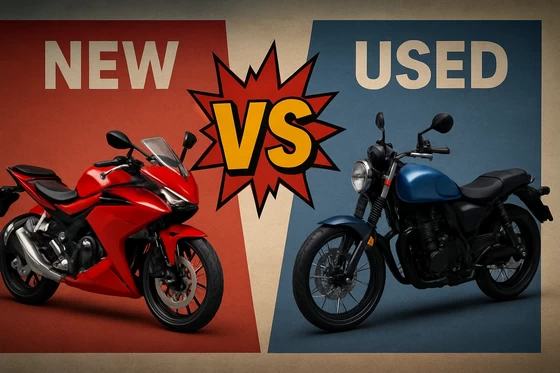
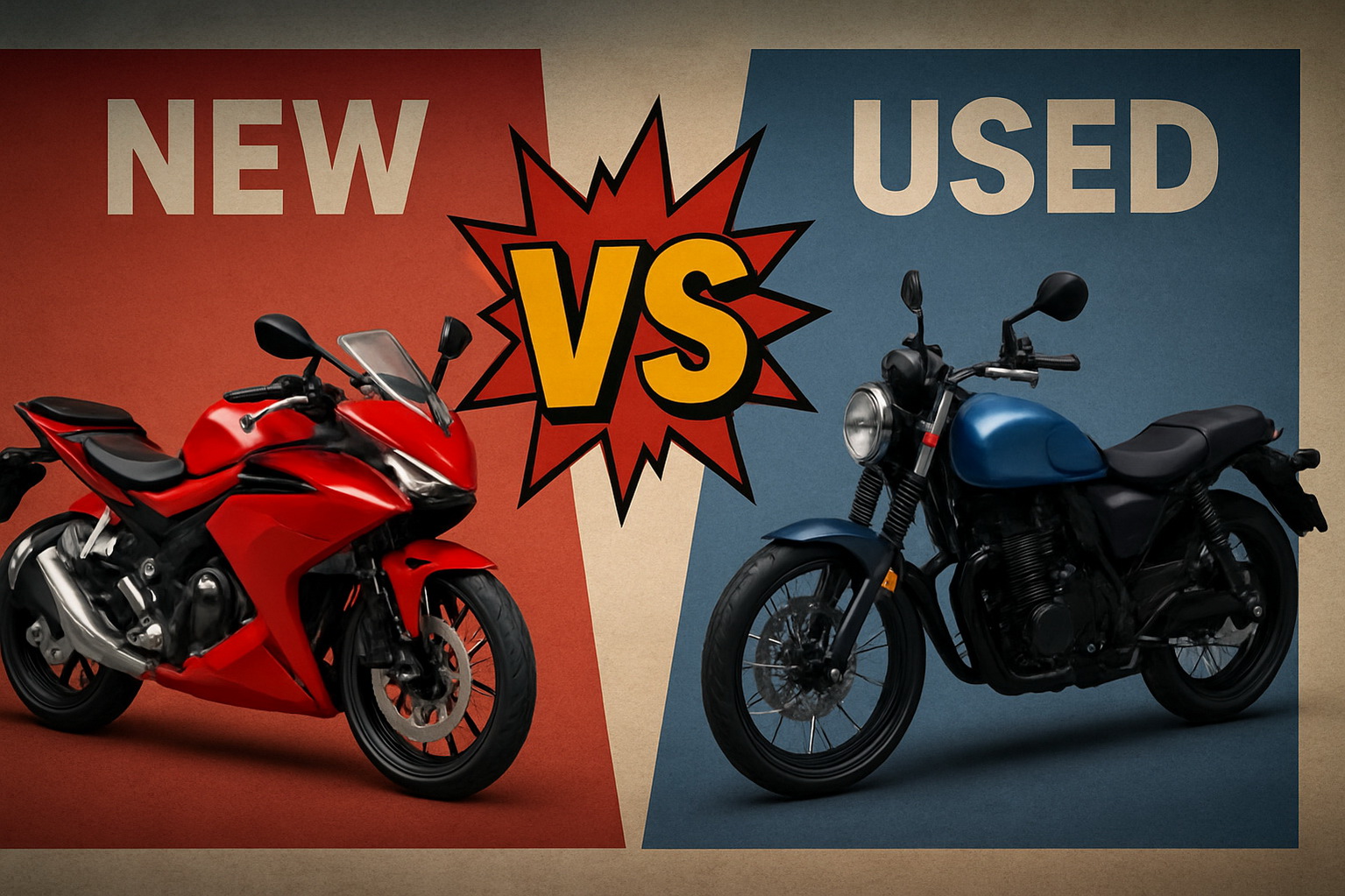
Choosing your first motorcycle requires careful consideration. One of the key decisions is whether to buy a new or used motorcycle. Both options have technical and financial implications that affect your purchase. Understanding these implications will help you ride with confidence and enjoyment.
Understanding the New Motorcycle Advantage
New motorcycles are distinguished primarily by their reliability. “Factory parts ensure mechanical harmony” between the engine, transmission and chassis. Components such as the clutch and brakes wear evenly from the outset. As a result, the likelihood of unexpected problems occurring at the beginning of operation is significantly reduced.
Modern motorcycles are equipped with advanced systems that provide better performance and safety. Most new models are equipped with modern fuel injection systems, on-board diagnostics and anti-lock braking systems (ABS). These systems help improve throttle control, reduce fuel consumption and ensure greater safety during emergency braking.
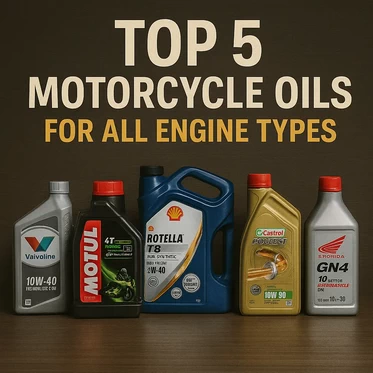
In addition, the seller of a new motorcycle provides you with a full warranty. This means that repairs for defects or premature malfunctions will be covered by the manufacturer. Maintenance intervals are clearly defined in the instructions, and spare parts are easy to find. This makes maintenance planning more predictable for beginners. By the way, we recommend that you read our post about Top 5 Motorcycle Oils for Every Engine Type
Technical and financial disadvantages of new motorcycles
New motorcycles are usually more expensive. You pay for the motorcycle, delivery, assembly and dealer commission. Some countries also levy taxes on new vehicles. One thing to bear in mind is that a new motorcycle quickly loses its value after purchase, especially during the first year.
In addition, repairs to high-tech systems such as electronic throttle valves or electronic suspension can be more expensive. If you are not familiar with such systems, it will take time to understand how they work. Plastic parts in the bodywork and coating are also easily scratched, which reduces the resale value. This is a risk for beginners who are just learning to ride a motorcycle.
Technical Insights on Used Motorcycles
Used motorcycles can be a smart choice for learning. You get access to proven engines that are not as technologically advanced and may have simpler mechanics. For example, carburettor motorcycles may be easier to repair at home. Mechanical throttle cables and analogue sensors are easier to understand and repair yourself than digital instrument panels.
Many used motorcycles may already have upgrades. These upgrades include protective bars, luggage racks or exhaust systems installed on the secondary market. Some sellers even provide complete maintenance documentation. With proper care, a used motorcycle can provide good reliability at a lower price.
Challenges in Buying Used Motorcycles
But used motorcycles carry risks, and you need to remember that. Some owners may not adhere to the correct maintenance intervals. Chains, sprockets and brake pads wear out quickly if not properly maintained. If the motorcycle has been dropped or used for racing, frame alignment or fork damage may not be noticeable without a detailed inspection.
You will also not have warranty service. Repairs become your responsibility. Again, parts for older models may be rare or expensive. Over time, problems with wiring and frame corrosion may arise. These problems can affect fuel delivery, lighting, or ignition systems.
So, what would be the right choice from a technical point of view?
So if you want modern safety technology, a clean history and warranty service, a new motorcycle will provide you with all of these things. It is suitable for motorcyclists who want convenience and less risk in the first year. Training will cost more, but there will be fewer surprises.
But if you are interested in motorcycles, have a limited budget, or plan to ride infrequently, a used bike will give you more freedom and fewer worries. You should be prepared for technical inspections, periodic repairs, and additional research on repairing your iron horse. But in the process, you will certainly learn more about motorcycle mechanics, and it is not as painful to experiment on a used bike as it is on a new one.
Ultimately, both paths lead to the same result — experience. Choose based on how you ride, what you know technically, and what you can afford.