Power, cutting-edge innovation and perfect ergonomics make Tracer 9 2025 the best for those who crave freedom without compromise. Be prepared to dominate city roads as much as borderless routes with nothing but wide-open gripped eyes left on the trail. Will the motorcycle be your friend on the trip? Read in our review
Contents
- Design
- Chassis and Handling
- Electronics and Safety
- Engine and Transmission
- Fule Consuption
- Ride Experience
- Pricing
- Competitors
- FAQ
DESIGN
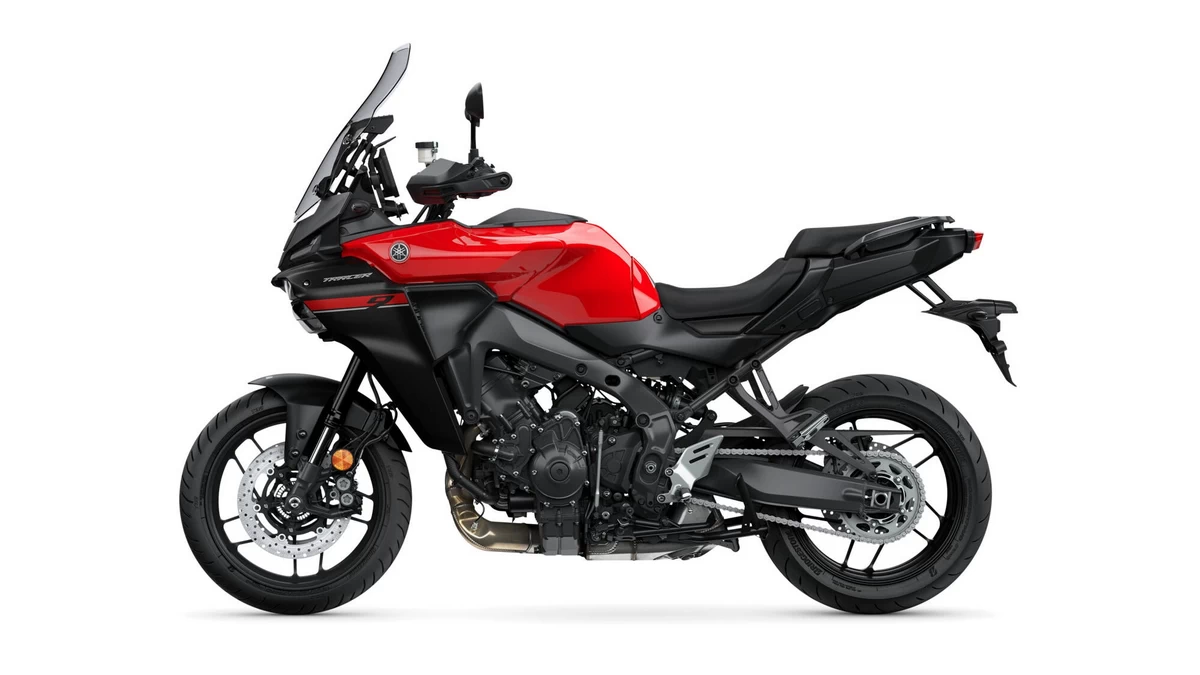
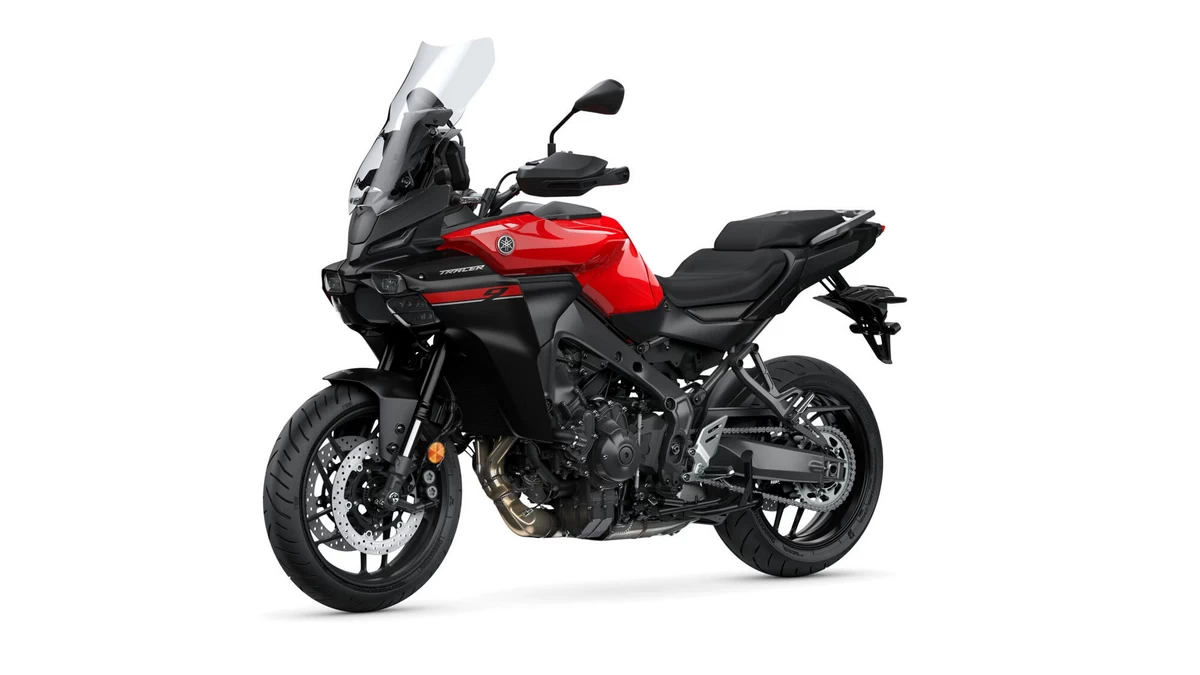
Imagine: you approach a motorcycle, and from the first glance it is clear — is not just a technique, but a real creation of art. Yamaha Tracer 9 — is just like that. It combines everything: sports aggressiveness, tourist comfort and technological genius.
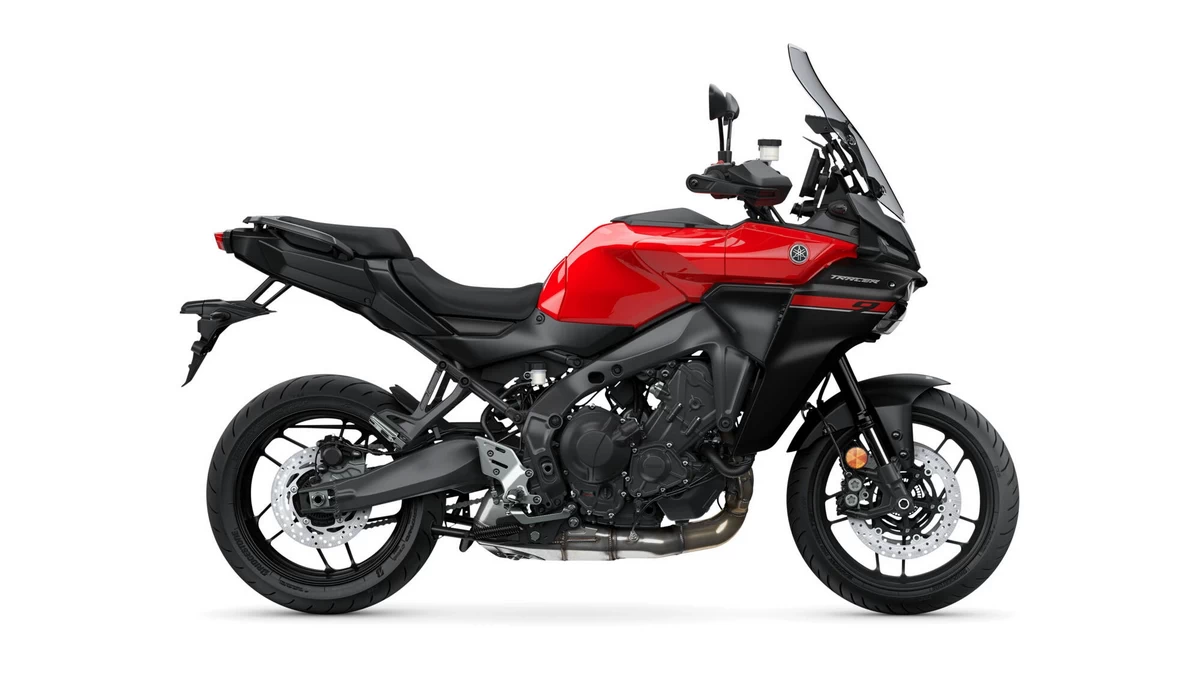
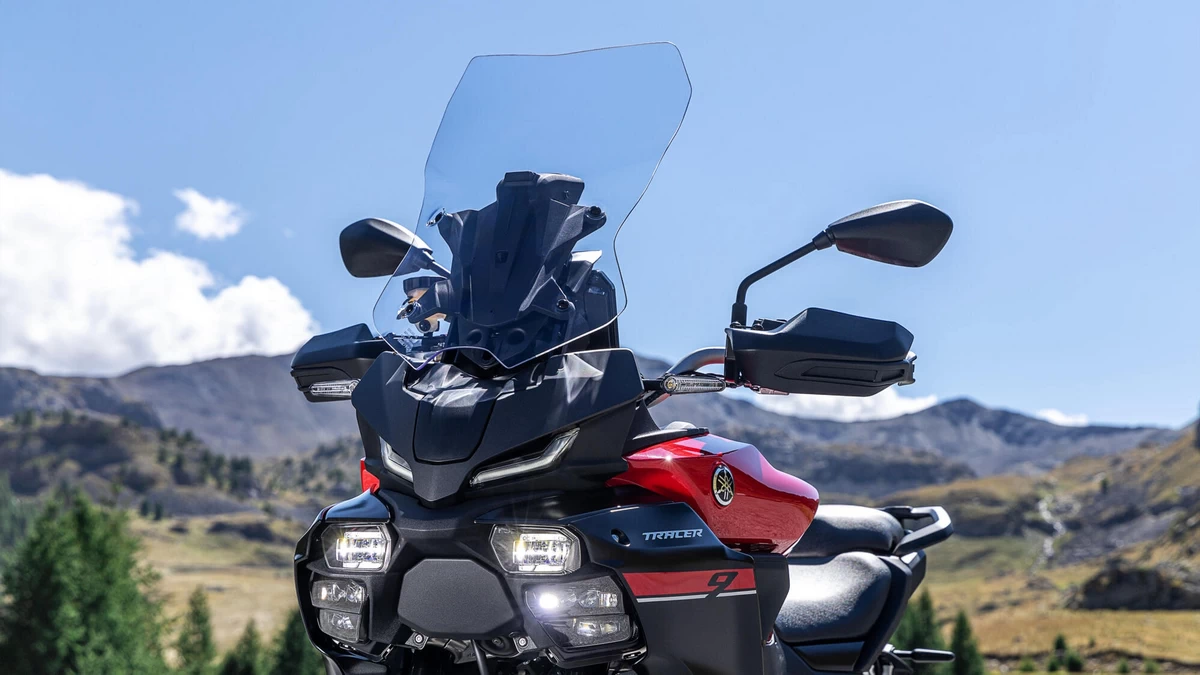
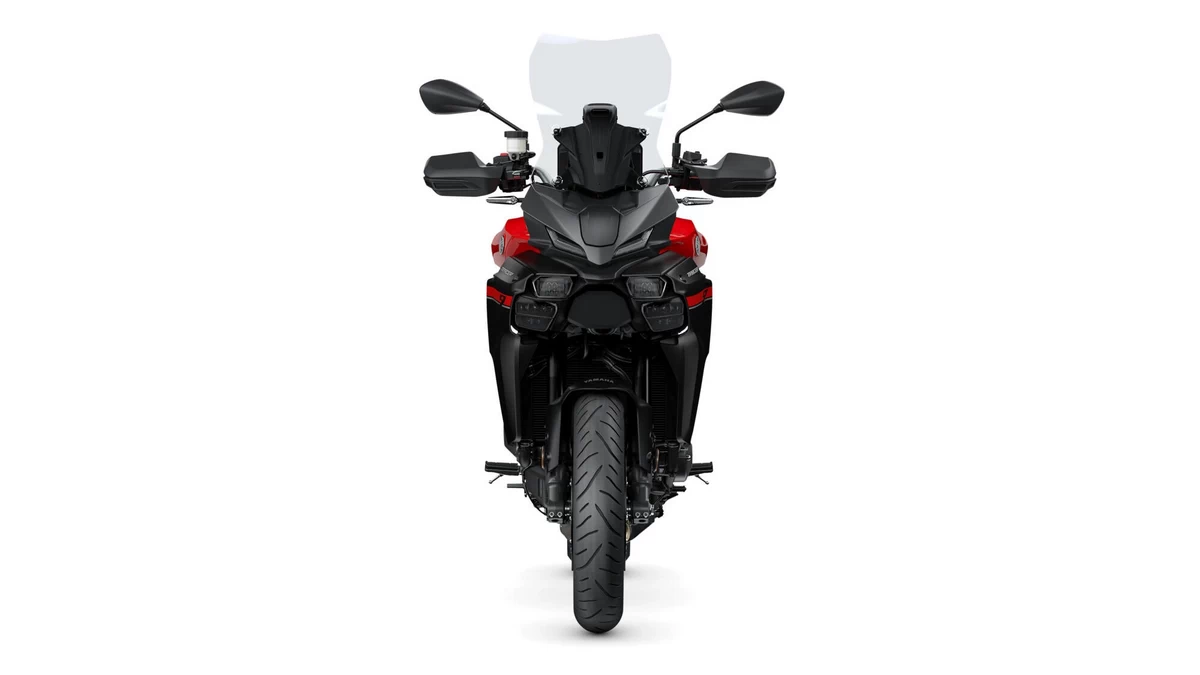
At first glance, the aggressive LED headlight — is narrow, sharp, like the gaze of a predatory cat. It not only shines brightly, but also instantly betrays you as a fan of speed. What about streamlined shapes? Smooth lines, sharp bends, minimalist details — all make it feel like the motorcycle is about to crash.
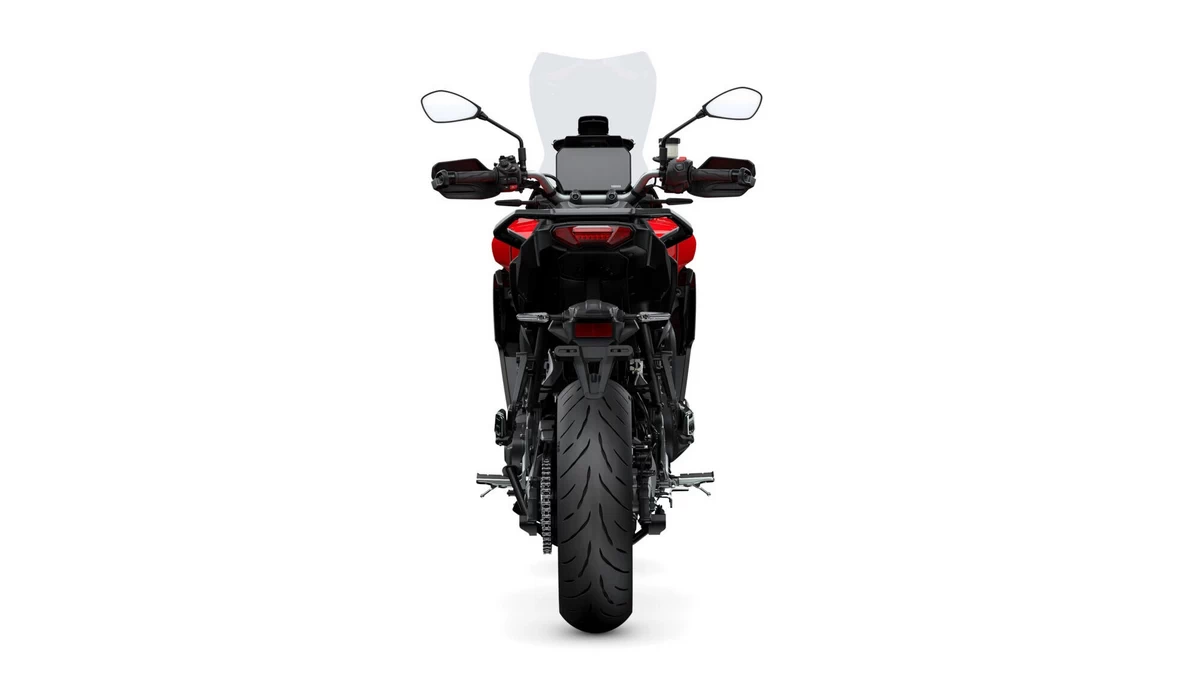
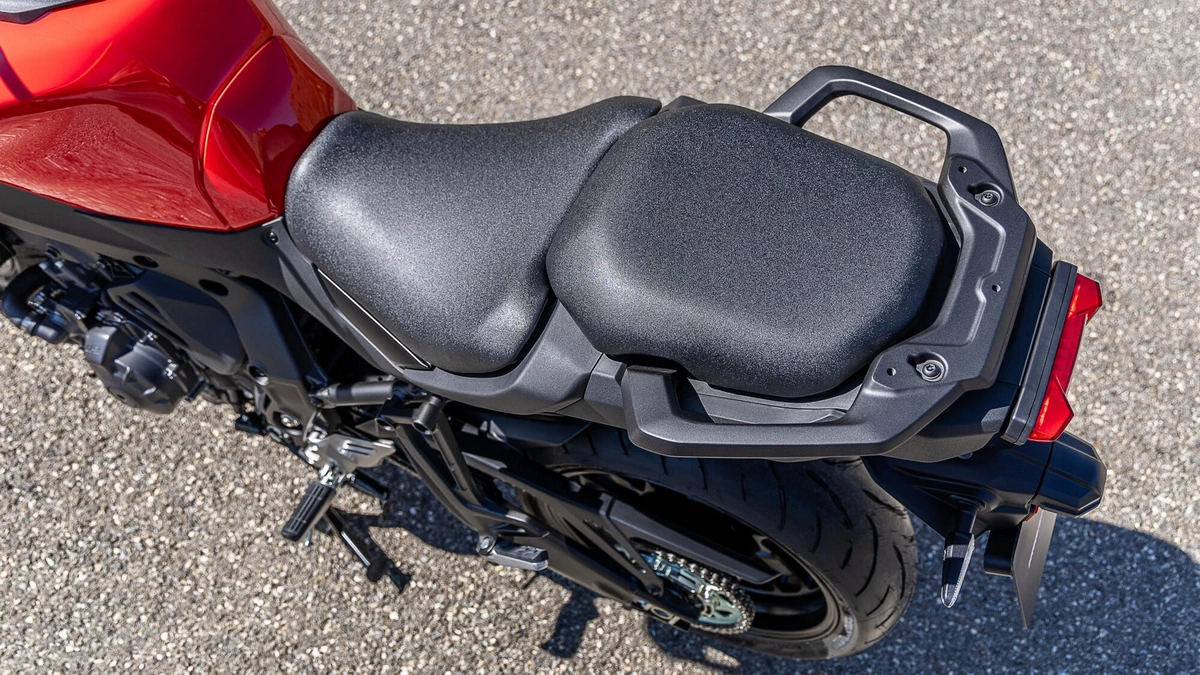
The — seat is soft but supports the back even after hours of driving. The steering wheel is located so that you feel complete control. Even the windshield — is not just a detail, but a carefully thought-out element that protects against the wind without disturbing the view. And side panels? They are streamlined and stylish, like the wings of a bird in flight!
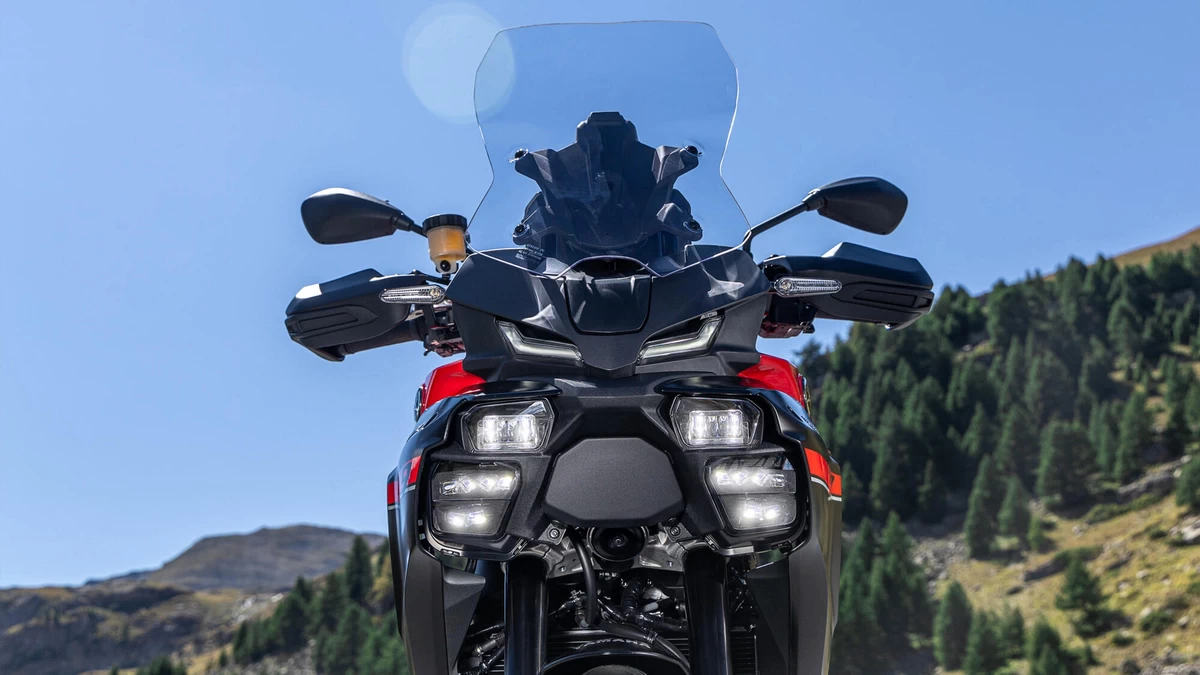
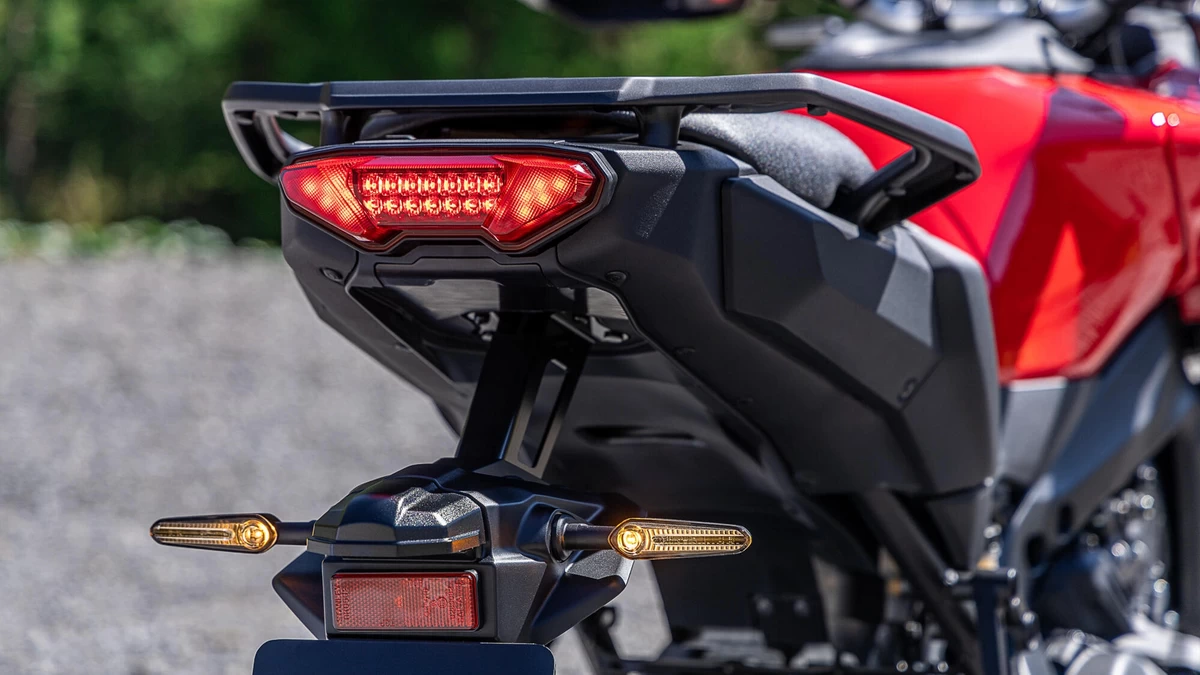
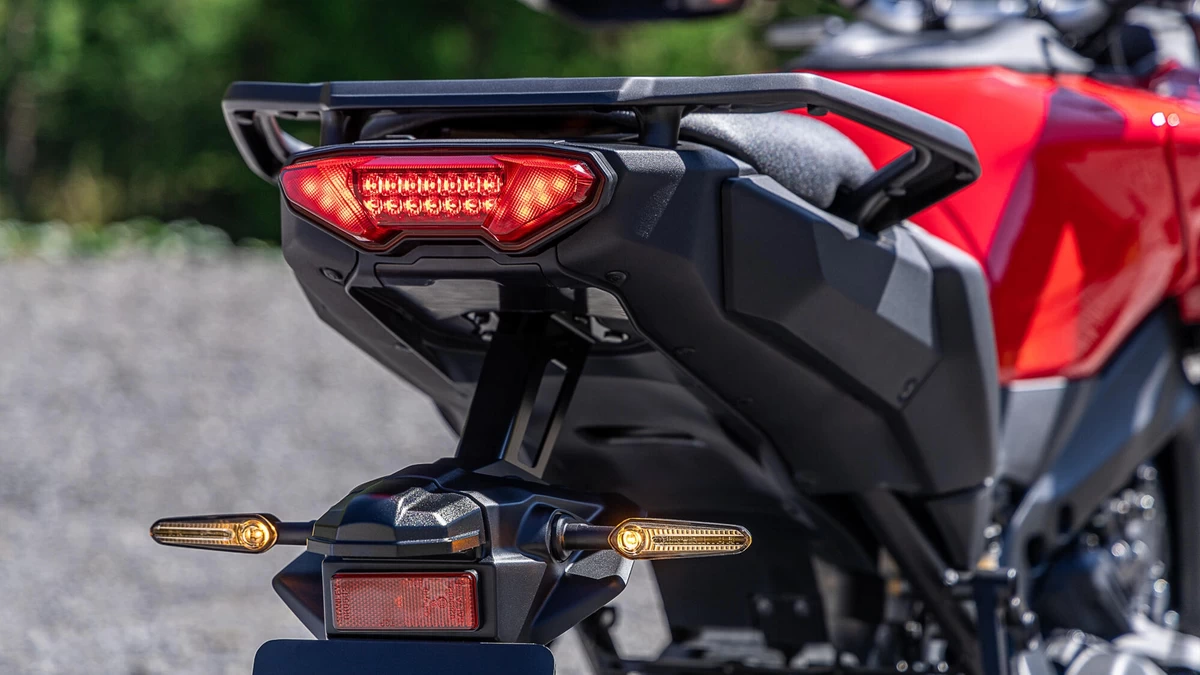
Yamaha does not skimp on materials. Every detail — from LED turntables to sleek rear light — is made of the best materials. Even touching plastic makes you happy! Color solutions? Classic black and gray shades with bright accents — is exactly what will emphasize your style.
Tracer 9 — is a motorcycle for those who want everything at once: speed, comfort, style and technology. It is suitable both for daily trips around the city and for long journeys beyond its borders. It's not just a transport — it's your friend in search of adventure on your head!
| Dimension | Value |
|---|---|
| Overall Length | 2,175 mm |
| Overall Width | 900 mm |
| Overall Height | 1.460 mm - 1.505 mm |
| Wheelbase | 1.500 mm |
| Seat Height | 845 mm - 860 mm |
| Ground Clearance | 135 mm |
| Fuel Tank Capacity | 19 L |
| Wet weight (including full oil and fuel tank) | Standard 6-speed manual: 219 kg; Y-AMT: 224 kg |
| Oil tank capacity | 3.5 L |
CHASSIS and HANDLING
When you get on Tracer 9 2025, the first feeling — this iron horse is ready for adventure. A secret in the aluminum delta box frame: hard, but not overloads the weight. Thanks to the angle of inclination of the fork in 25° and the wheelbase of 1500 mm, the motorcycle stays confident and you are not nervous on the track, but obediently enters the bends. This is the case when you don't have to «fight the steering wheel » easy enough movement.
Suspension
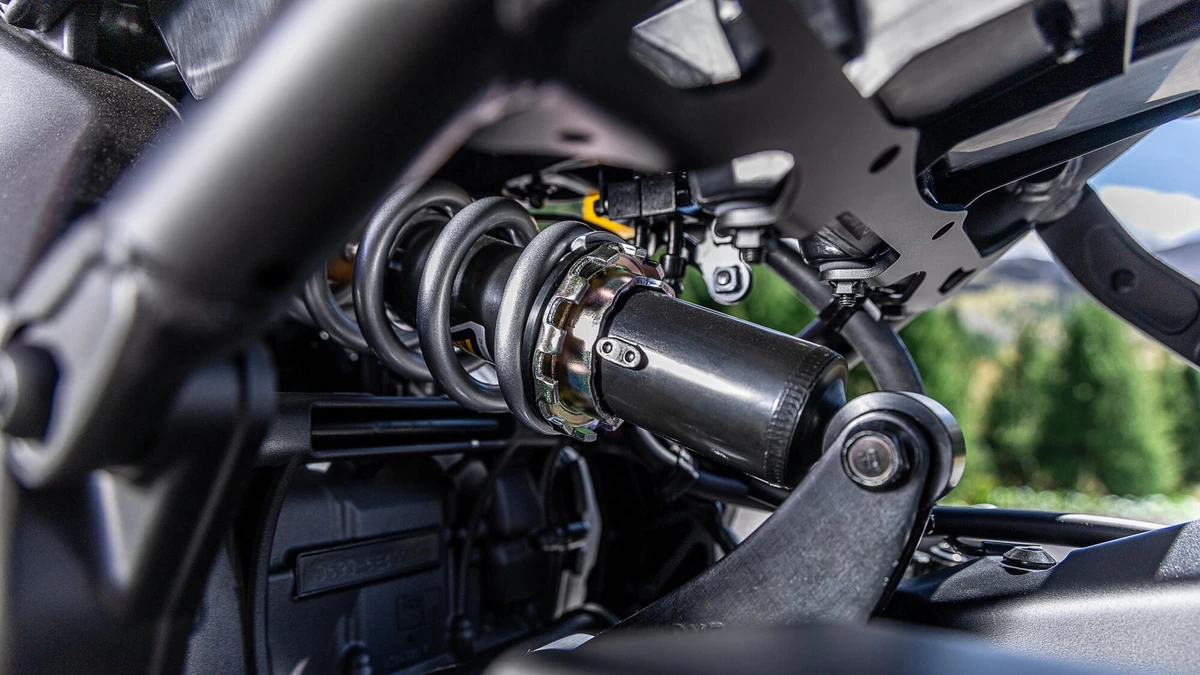
Front — 41 mm inverted fork with a stroke of 137 mm, rear — mono-shock absorber for 142 mm. And all this with a full set of adjustments: preload, compression, rebound. In practice, this means that you can customize Tracer 9 «to suit yourself»: make it softer for the city or harder for an aggressive style. And what is important — even on bad asphalt it does not «knock out teeth».
In the city, the steering wheel is light and sensitive — ideal for traffic. On the track, even after 120 km/h, no «shakes» or unnecessary oscillations. In long turns, the motorcycle keeps its trajectory in such a way that you feel like a sports tourer pilot, and not just a tourist.
Brakes
The dual 298 mm front discs with 4-piston calipers and the rear 245 mm disc with ABS work very predictably. Braking is sharp, but without panic —, even in the rain, the motorcycle behaves calmly. The ABS system does not interfere excessively, leaving the motorcyclist with a sense of complete control.
Wheels and rubber
Metzeler Roadtec 01 in sizes 120/70-ZR17 front and 180/55-ZR17 rear — universal choice. In dry weather, — cling, in rain, — give confidence that the wheel will not float«. For a touring and sports motorcycle, this is a good balance between resource and grip.
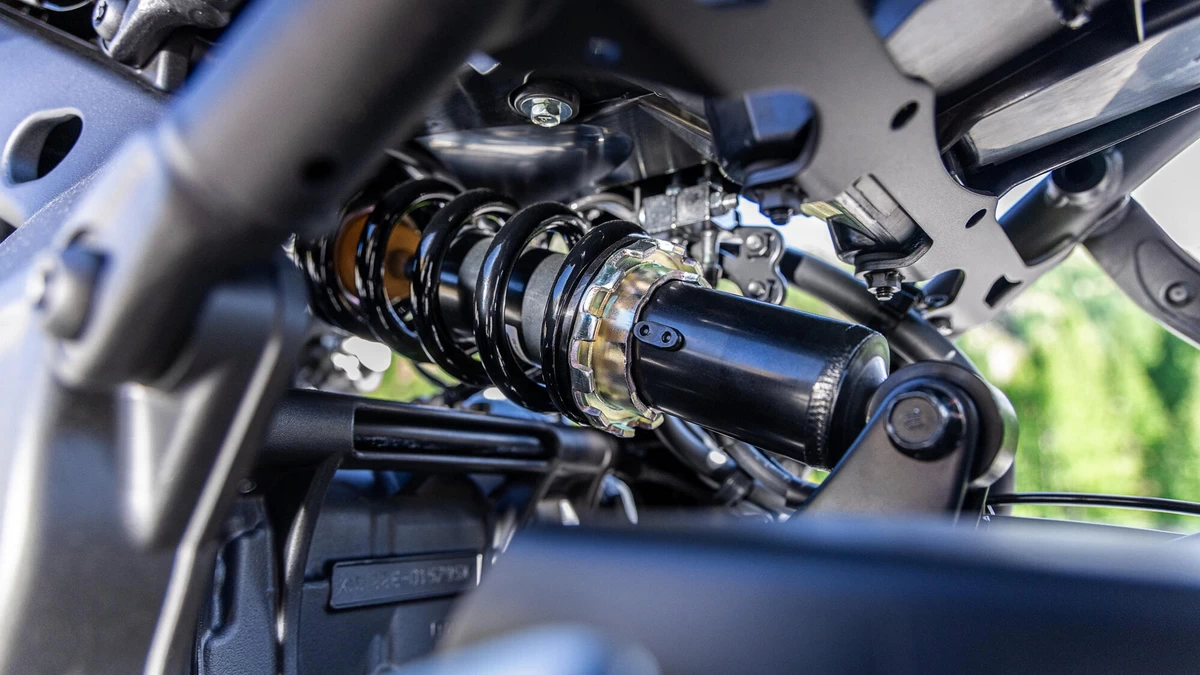
The motorcycle has 220 kg of dry weight, but thanks to the center of mass of 590 mm, it seems lighter. Even with full luggage and a passenger (maximum 215 kg load), handling is not lost. Suspension adjustments help to quickly adjust the bike for a trip or a daily trip.
In the city of —, you easily maneuver between cars, on the track — you feel iron stability, in turns — Tracer seems to push you to a greater slope. It's not just «transport», but a bike that gives you a sense of control and freedom.
| Shassis | Value |
|---|---|
| Frame | Diamond |
| Caster angle | 24°25' |
| Trail | 106 mm |
| Front suspension system | Telescopic fork |
| Rear suspension system | (Link type suspension), Swingarm |
| Front travel | 130mm |
| Rear travel | 131 mm |
| Front brake | Hydraulic dual disc brake, Ø 298 mm |
| Rear brake | Hydraulic single disc brake, Ø 267 mm |
| Front tyre | 120/70ZR17M/C (58W) Tubeless |
| Rear tyre | 180/55ZR17M/C (73W) Tubeless |
SAFETY SYSTEMS
Modern sports tourists — is no longer just an engine and wheels. And Tracer 9 of 2025 proves once again: electronics can make a trip not only safer, but also much more interesting.
ECU
Let's start with the main — ECU that controls everything from injection to traction control. There is a 32-bit processor that processes data at an incredible speed. Through a CAN bus with a bandwidth of 1 Mbit/s, it constantly communicates with other systems, and updates take place every 8 ms. This means: when you unscrew the gas, the reaction is instantaneous.
The nozzles operate at a pressure of 350 kPa and the fuel delivery accuracy is almost perfect. As a result, the — engine breathes evenly and predictably at any revolution.
ABS
There is a Bosch Cornering ABS in Tracer 9. It is not just a «anti-lock» — system that analyzes the slope of the bike and allows braking even in a turn. The sensors are interrogated 100 times per second, so there is almost no chance of catching the wheel lock. In practice, this means: you can confidently press the brakes even on wet asphalt.
TCS
Here we have 6 modes of traction control plus the ability to turn off the system. It reacts in just 5 ms as soon as the wheels begin to slip, and adjusts the thrust so that the motorcycle remains under control. At the same time, the work feels soft — without sharp cuts of power. In the city, it is convenient on slippery asphalt, and on the — track in high-speed bends.
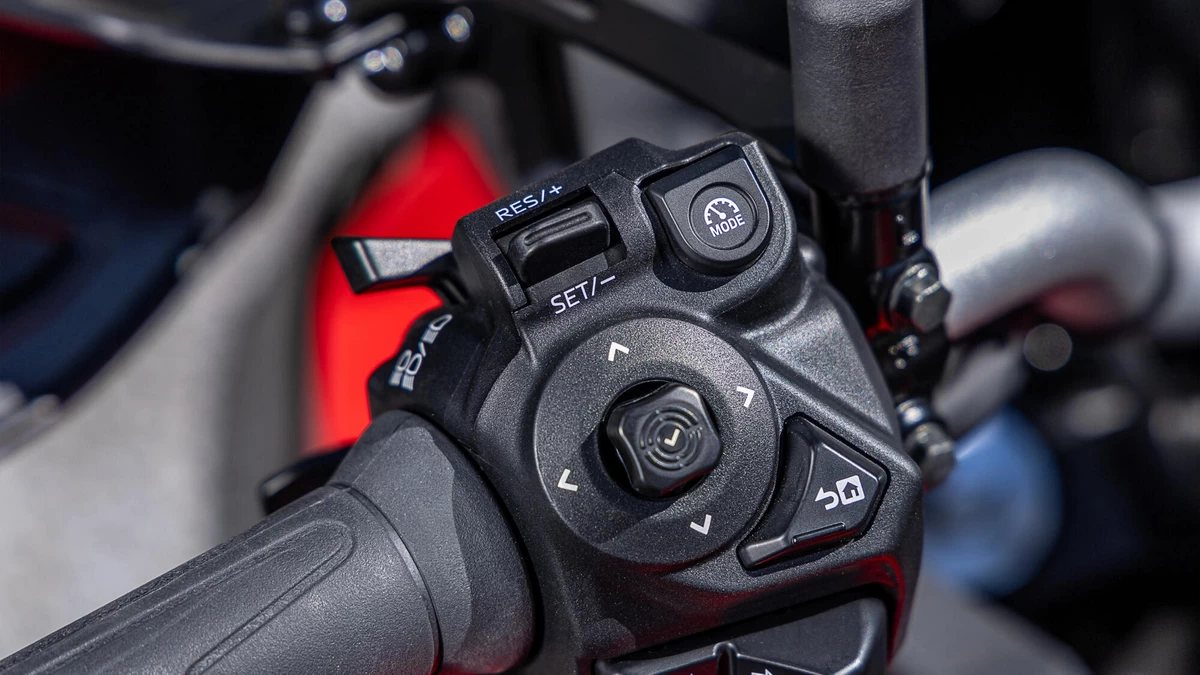
- Cruise control — turns on from the 4th gear at speeds from 50 km/h. Ideal for a freeway.
- Quickshifter — is two-way, works clearly and quickly: you can switch gears without clutch and without loss of traction.
- Immobilizer — is your personal bodyguard who will not allow you to start a bike without the correct key.
- TPMS (Tire Pressure Monitoring System) — shows real-time pressure on the TFT display and warns if it drops.
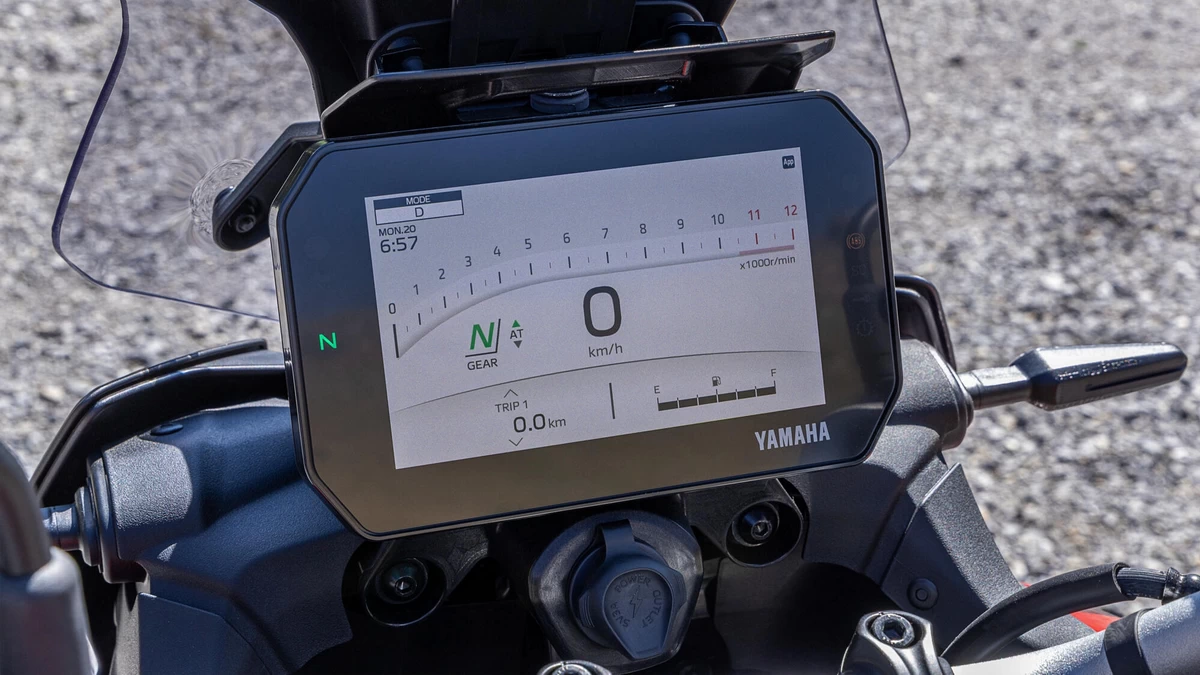
The heart of all electronics is the 6-axis IMU —, which tracks tilts, acceleration and braking. It is thanks to her that ABS and TCS work so accurately. Add Ride-by-Wire here and you get a bike that «understands» your riding style and adjusts to it.
ENGINE SPECIFICATIONS & PERFORMANCE
Engine
In 2025, Yamaha left the Tracer 9 with its main pride — three-cylinder CP3 engine. These are 890 cubic meters that work according to the company scheme with a cross-plaine crankshaft. And it is he who shapes the character of the motorcycle: on the bottom, the motor pulls up gently and evenly, on medium revolutions it adds elasticity, and when you spin to 10 thousand, you feel a real explosion of traction, which holds a smile under the helmet. The engine here sounds serious — 119 horsepower at 10.000 rpm and 93 N·m of torque at 7.000. All this is implemented with a compression ratio of 11.5:1 and a perfectly balanced piston diameter and stroke of — 78 by 62.1 millimeters.
The balancing shaft removes unnecessary vibrations, so even at speeds close to two hundred, the hands remain not tired, but an aluminum block with a nickel-ceramic coating. Liquid cooling stably keeps the temperature within 85–95 degrees, and the fuel consumption itself at the level of 4.8 liters per hundred allows you to calmly cover more than 350 km on one tank. It's not just numbers — it feels like you know you can race far and not think about refueling.
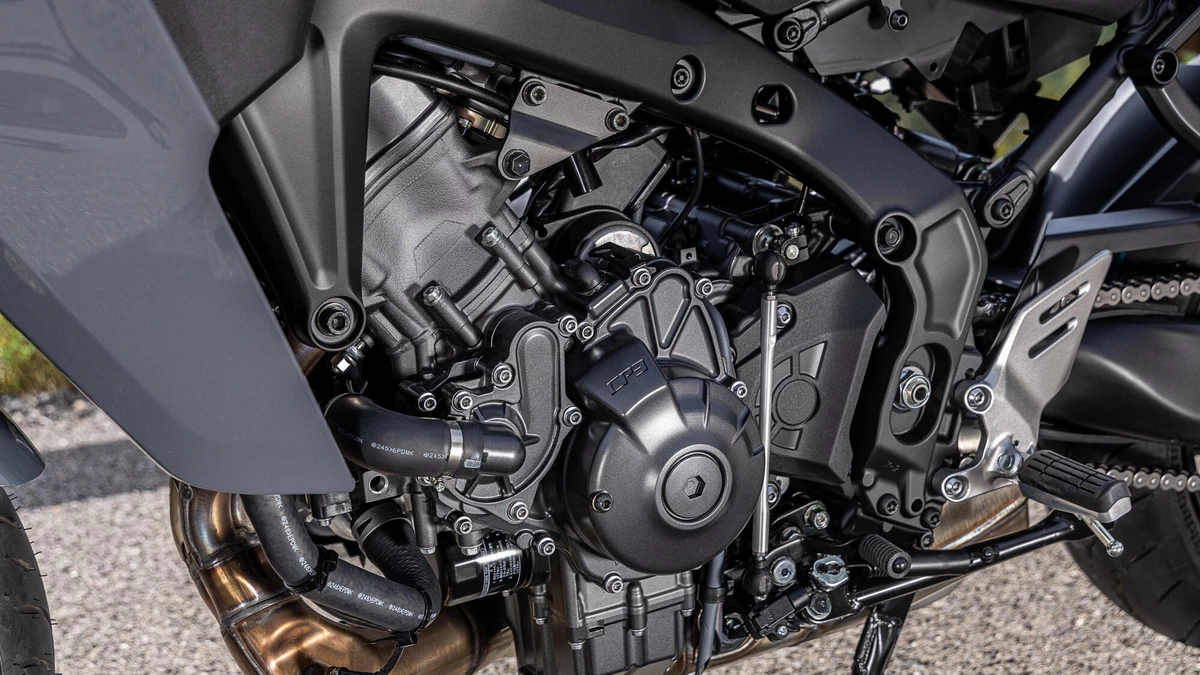
Transmission
Along with the engine, there is a six-speed — gearbox and this is exactly the transmission that feels almost telepathic. It is worth clicking the first — and the bike rushes forward so sharply and gamblingly, as if saying: «Well, ready for adventure?». The second and third — are ideal for the city: they give the same balance between liveliness and comfort when you have to easily slip out of traffic or calmly slip through traffic. On the fourth and fifth, the true essence of the track is revealed: the thrust is even, the acceleration is confident, there are no failures. But the sixth — is generally a separate story: a real «joker» for long straights, where the bike easily holds a cruising 130–140 km/h and does it as casually as if driving half the force.
A multi-disc oil bath clutch with a «reverse» effect works like a real savior: even when you drop gears abruptly before a turn, it dampens jerks and keeps the bike to beat. You can brake aggressively, but handling remains smooth and predictable. And the classic chain drive 525 pitch — is a reliable «robot»: it can withstand any loads and works honestly, the main thing is to give it a little care and care.
When it comes to acceleration, Tracer 9 immediately shows that it is a real sports tourer with character. From zero to a hundred, it shoots in just 3.4 seconds, and the feeling is as if you are riding a light sports bike, not a universal traveler. You just need to see the figure of 200 km/h on the — speedometer and after 9.8 seconds you are there. The maximum speed of 230 km/h is also not scary: even at this speed, the bike stays confident, obeys and is not nervous at all. And what looks like «engine efficiency 36%» on paper, in reality it feels like every drop of fuel is running at full capacity. And also a nice bonus for those who drive far: the motor is not prone to «sacrifice» oil — consumption is kept below 0.1 liters per thousand kilometers, so you can plan routes without unnecessary worries and unnecessary canisters in your luggage.
| Engine Feature | Specification |
|---|---|
| Engine Type | 4-stroke, Liquid-cooled, DOHC, 4-valves, 3-cylinder |
| Displacement | 890cc |
| Bore x Stroke | 78 x 62.1 mm |
| Compression Ratio | 11,5 : 1 |
| Maximum Power Output | 87.5 kW (119 PS) @ 10,000 rpm |
| Maximum Torque | 93 Nm (9.5 kg-m) @ 7,000 rpm |
| Fuel System | Fuel Injection |
| Ignition system | TCI |
| Starter | Electric |
| Lubrication system | Wet sump |
| Clutch type | Wet, Multiple Disc |
| Transmission | Constant Mesh, 6-speed |
| Final transmission | Chain |
| Fuel consumption | 5 L/100 km |
| CO2 emission | 116 g / km |
FUEL CONSUMPTION
Yamaha in its official data states: 4.8 liters per 100 km according to the WMTC cycle. The tank here is 19 liters, so the range is almost 400 km. And it already sounds solid for a sports tourer who knows how to drive fast and far. But what does it look like in practice?
Everything is traditionally more complicated in the city. Frequent starts, traffic lights, traffic jams — and consumption rises to 5.2–5.5 liters. This is not critical, but it is felt, especially if you are standing in traffic jams. On the country track, the picture is completely different: here Tracer can drive economically, investing in 4.5–4.8 liters, especially if you keep the pace of 80–100 km/h. On the expressway, when the cruising 130 km/h becomes the norm, the consumption increases slightly — 5.0–5.3 liters. And in mixed mode, where there is everything little by little, it turns out 4.9–5.2 liters, that is, practically like in a passport.
Your riding style is the first thing that determines how much fuel your Tracer consumes. If you like to rev the engine hard and keep the tachometer needle in the red zone, be prepared for fuel consumption to increase by at least 20%. Add aerodynamics to this: with a Cx coefficient of 0.55, after 150 km/h, the air literally starts to pull the bike back, and this is immediately noticeable in fuel consumption. And then there's the weather — on cold days, the electronics specifically enrich the mixture so that the engine warms up faster. And then there are the obvious things that many people forget: a clean air filter and a properly tensioned chain can sometimes save those same 0.3–0.5 litres per 100 km.
The Tracer 9 has a Dual Injector system, and it works with precision — just the right amount of fuel is supplied. The best fuel economy is felt in the 4000-6000 rpm range: this is where the engine delivers both traction and reasonable fuel consumption at the same time. The combustion efficiency reaches 98.5%, and you can really hear and feel it — the engine runs smoothly, without unnecessary ‘jerking’ and without any dips.
There is also a break-in period: for the first few thousand kilometres, the bike is a little thirstier — 5.5–6.0 l/100 km. But as soon as the engine is ‘broken in’, the figures stabilise and drop to 4.8–5.3 l/100 km. To keep it that way, Yamaha recommends servicing every 6,000 km — and then the Tracer 9 continues to delight with its economy even on long journeys.
The Custom H-D Pan America by Powerbrick: Aggression, technology and uncompromising style
RIDE EXPERIENCE
You know, there are motorcycles that just take you from point A to point B. And then there are those that make your heart beat faster even before you press the start button. The Yamaha Tracer 9 2025 is one of those. It's not just a piece of metal on wheels, but a living companion: quiet and smart in the city, exciting and hot on the track, and your reliable guide on long journeys.
The LED headlights greet you defiantly, the aggressive lines of the body hint at its character, and the ergonomics immediately make it clear that this bike is not designed for short rides, but for long journeys. Just sit in the saddle, and you won't want to get off.
Then you press start, and the 890cc three-cylinder CP3 comes to life with a rich roar. In the city, it glides between cars easily and effortlessly, on the highway it challenges straights, and there's only one thought in your head: ‘Well, let's go!’
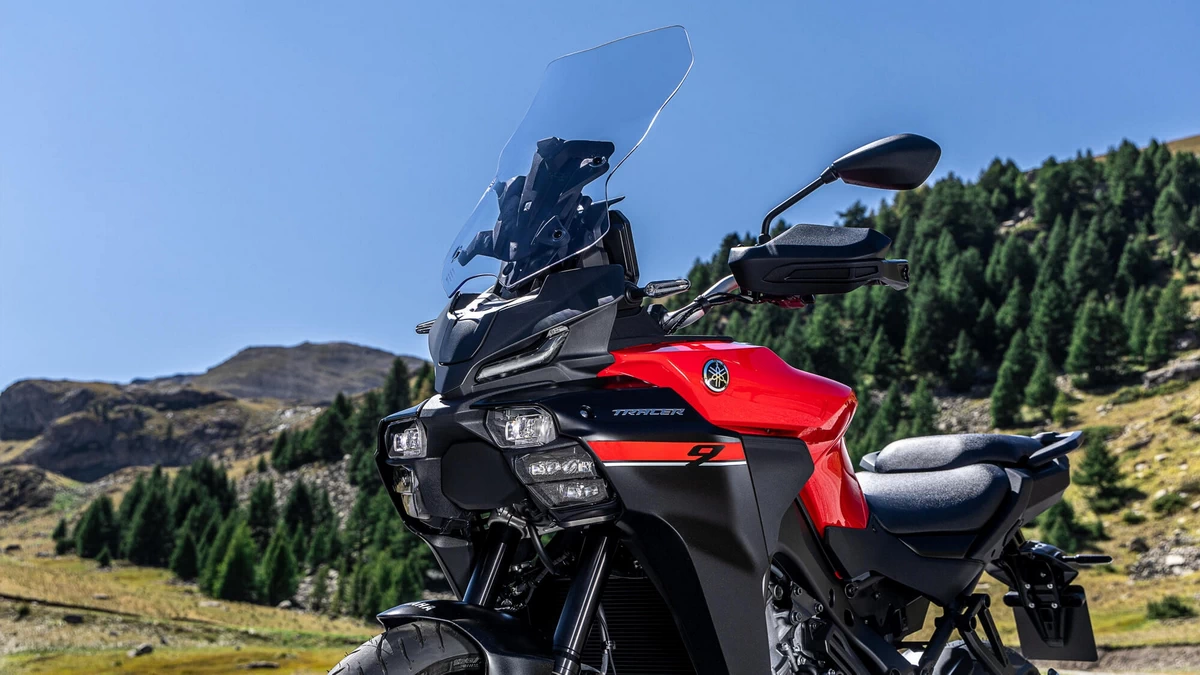
On the road, the Tracer 9 shows itself in a whole new light. Just twist the throttle a little, and the three-cylinder CP3 explodes with power, accelerating so fast that even at high speeds you get goosebumps. Turn on cruise control, and the road transforms from a marathon into a pleasure: you ride, listen to the sound of the engine, and simply enjoy yourself. And when you encounter joints or potholes, Yamaha Semi-Active Suspension instantly changes the stiffness, and you hardly feel the bumps.
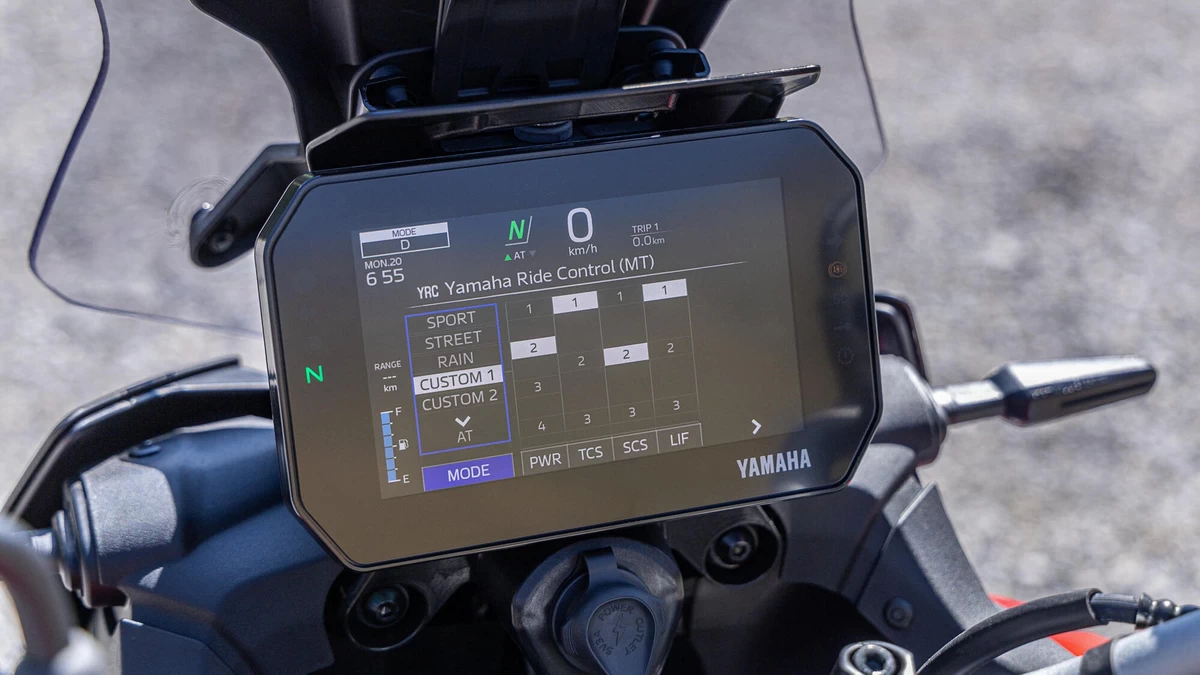
But the real fun begins in the corners. This is where all the electronics come into play — the six-axis IMU, Traction Control System, Anti-wheelie and Brake Control. It feels as if the bike is guiding you along the perfect trajectory, preventing the front wheel from lifting or losing control, even when braking while leaning. And all this happens imperceptibly — you just catch the drive and confidence, as if the bike reads your thoughts.
I was also impressed by the modernity of the cockpit: a 5-inch TFT display with wireless navigation via Yamaha MyRide. No wires, no hassle — just open the map and it's right there in front of your eyes.
After a whole day with the Tracer 9 2025, I found myself thinking that this is a versatile bike for all occasions. In the city, it is obedient and manoeuvrable, on the road — fast and stable, and on trips — a real tourist that provides comfort even after hundreds of kilometres. This is a motorcycle that you wake up in the morning and the first thing you want to do is come up with a new route.
Top 7 Beginner Motorcycles for New Riders in 2025
PRICING
Europe. Here, the Tracer 9 is not cheap. This is due to high taxes, VAT of almost 20% and strict environmental standards. In Germany or France, you will have to pay €13,500–14,000. In the US, the bike looks much more affordable: around $11,500–12,000. Import duties are lower, the tax system is more loyal — so Yamaha can afford a more attractive price tag. However, in Canada, you will have to pay an additional ten per cent — local taxes and logistics take their toll.
And now, attention to Japan. Here, the Tracer 9 is the cheapest because it is its ‘home’ market. There are no customs duties and minimal transportation costs. The price starts at 1.35 million yen, which is approximately £7,500–$9,500. In fact, this is the sweetest deal for Yamaha fans. In South Korea and Taiwan, the cost jumps 15–20% higher due to additional fees.
Australia, on the other hand, lives up to its reputation as the ‘expensive continent’. Delivery is long, the market is small, and the price is around 16,000 Australian dollars.
The conclusion is simple: before dreaming about the Tracer 9, it is worth looking not only at the specifications, but also at the world map. Because the difference in price between regions is not insignificant, but several thousand in currency.
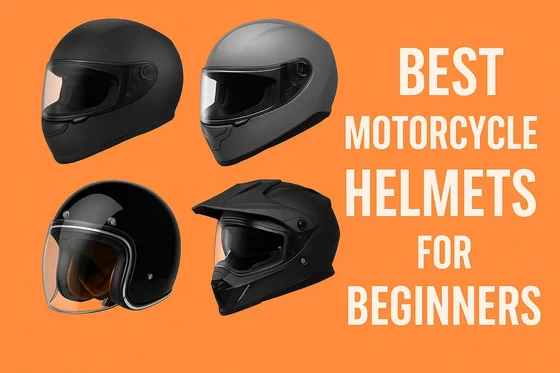
Best Motorcycle Helmets for Beginners
COMPETITORS
In a world where competition among sports tourists is only intensifying, it is interesting to understand whether the Tracer really remains a ‘universal soldier’ and how convincing it is against players such as the Triumph Tiger 900 GT, BMW F900 XR, Kawasaki Ninja 1000SX and Ducati Multistrada V2.
The Tracer is powered by the familiar three-cylinder CP3 (890 cc, 119 hp, 93 Nm). This heart responds instantly — it doesn't explode aggressively like the Kawasaki, but it doesn't ‘think’ like the two-cylinder BMW either. The Triumph, with its 900 cc ‘three’, delivers smoother traction, while the Ducati tries to play the role of a premium predator with its V2. However, Yamaha focuses on elasticity: at any speed, the engine sounds rich, as if playing in unison with the road.
Another pleasant surprise is the fuel consumption of around 5.0 l/100 km in the combined cycle. For 890 cc and 119 hp, this is very decent. Triumph and BMW are slightly more economical, Ducati is on par with Yamaha, and Kawasaki, as always, likes to ‘eat’ — about 6.0 litres. It seems that Tracer is once again striking a balance: enough power, but without unnecessary expense.
Acceleration to 100 km/h takes ≈3.6 seconds. That's fast, but not as fast as the Kawasaki (≈3.1 s). Triumph and BMW are slightly slower, Ducati is in the middle. In practice, the Tracer impresses not with its stopwatch, but with how it feels in the city and on the highway: always ready to overtake, always with traction ‘at hand’. Its dynamics are not nerve-wracking, but instil confidence.
The Tracer looks modern and high-tech, but most importantly, it is comfortable. Adjustable seat, well-designed wind protection, ergonomics for the driver and passenger — everything is designed so that you can sit down and immediately set off on a long journey. Triumph is more like a tour enduro, BMW is restrained and practical, Kawasaki is aggressive and sporty, Ducati is premium Italian. Yamaha, on the other hand, tries to be ‘at home’ in any environment — on winding roads and in the city.
This is where Yamaha reveals all its cards. The six-axis IMU controls a package of systems: Traction Control System, Anti-wheelie, Brake Control, riding modes. There is Yamaha Semi-Active Suspension, which changes the character of the motorcycle on the fly. And, as a bonus, Yamaha MyRide wireless navigation right on the 5-inch TFT. This is standard, not optional. Triumph and BMW also have good electronics, but they are not as deeply integrated. Kawasaki is on par, but without semi-active suspension. Ducati offers a rich package, but most of the interesting stuff comes at an extra cost.
Tracer in Europe starts somewhere from 15–16 thousand euros. Triumph and BMW — are in about the same range. Kawasaki is a little cheaper, but also simpler in configuration. Ducati hits the wallet noticeably and doesn't always give what Yamaha offers right out of the box.
Yamaha Tracer 9 2025 — is about the middle ground. It does not chase the status of «fastest» or «most expensive». Its feature — maximum technology and comfort is already in the base. This is a bike for those who want to ride far, but also feel easy and confident in the city.
For those who care about modern chips, but who are not ready to overpay only for the brand. In short: Tracer 9 GT 2025 — is the smartest choice for a modern two-wheeled traveler who values versatility and freedom on any road.
Yamaha Tracer 9 GT Service FAQ
1. What is the mileage for the first maintenance (maintenance) and what is included?
Answer: The first TO (run-in) is the most important! Drive it after 1000 km. What they do: Change the engine oil and oil filter, check all liquids, brakes, tire pressure, backlash in the suspension, the operation of electronics and all kinds of bolts. In fact, this is a comprehensive medical examination after the "childhood" of the motorcycle.2. What is the interval between the following TOs?
Answer: Standard interval — every 10,000 km or once a year (whichever comes first). If you ride very aggressively or in dusty conditions, it is better to do maintenance a little more often, for example, every 7-8 thousand km.3. What oil to pour into the engine?
Answer: Yamaha recommends high-quality synthetic or semi-synthetic motor oil with a viscosity class of 10W-40 and a JASO MA-2 specification (this is important for motorcycle wetting clutches!). For example, Yamalube or similar brands (Motul, Liqui Moly).4. Is it possible to be served in a non-official dealer to save money?
Answer: Yes, but there are nuances. If the motorcycle is under warranty (usually 2 years), it is better to do maintenance in the official service with an entry in the service book. Otherwise, there may be problems with warranty repair. After the warranty expires, the choice is yours.5. What to do with the chain?
Answer: This is your daily/weekly «ritual»! Cleaning and lubrication: Do every 500-600 km or after driving in the rain/dirt. Tension adjustment: Check every 1000-1500 km. The correct tension — when you can pull the chain 2-3 cm in the middle between the sprockets. Monitor the uniformity of tension on both regulators!6. How often to change the air filter?
Answer: It is usually changed every 20,000 km. But if you often drive on dust or dirt roads, change more often! The plugged filter — engine will "strangle" and eat more fuel.7. When to change fluids in brakes and cooling?
Recommended every 2 years, regardless of mileage. It absorbs moisture from the air and loses its properties over time. Cooling liquid (antifreeze): Change less often, approximately every 4-5 years or according to the mileage indicated in the manual.8. What else should you regularly check yourself?
Tire pressure: Every week! Incorrect pressure — loss of handling and rapid wear. Brake pads: With each maintenance, but you can also assess the wear through the window on the caliper yourself. Liquids (oil, cooling): Check the level weekly on a cold motorcycle. Light bulbs and signals: Before each trip.
Yamaha TRACER 9 Video Review


JoomShopping Download & Support