This technical foundation was so successful that it became the basis for all subsequent models, including the updated Classic 350, Bullet 350 and the all-new 2023 Hunter.
It has been two years since the Hunter 350 debuted in America. From the very beginning, this affordable roadster from Royal Enfield has gained immense popularity among both beginners and experienced riders looking for a light and energetic motorcycle.
Not resting on its laurels, in 2025 the brand is making it even more elegant to attract even more buyers. And that's just one of the reasons why the Hunter 360 remains an excellent choice in the new year.
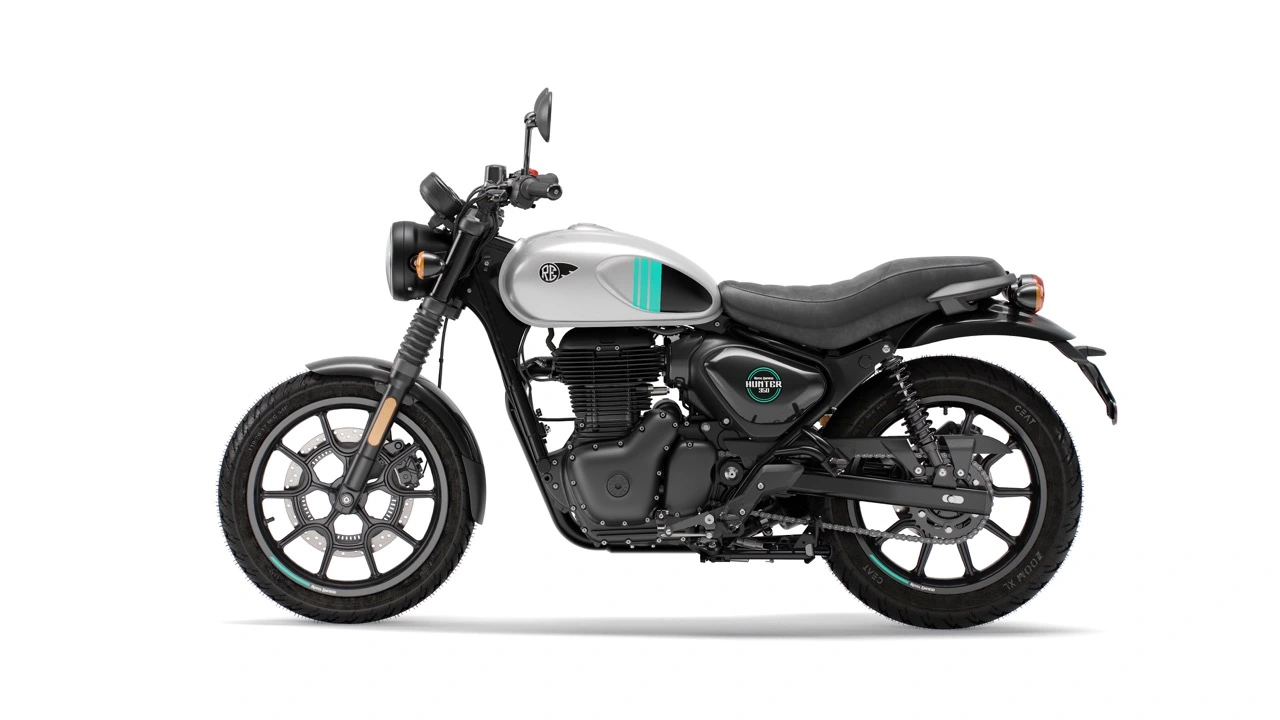
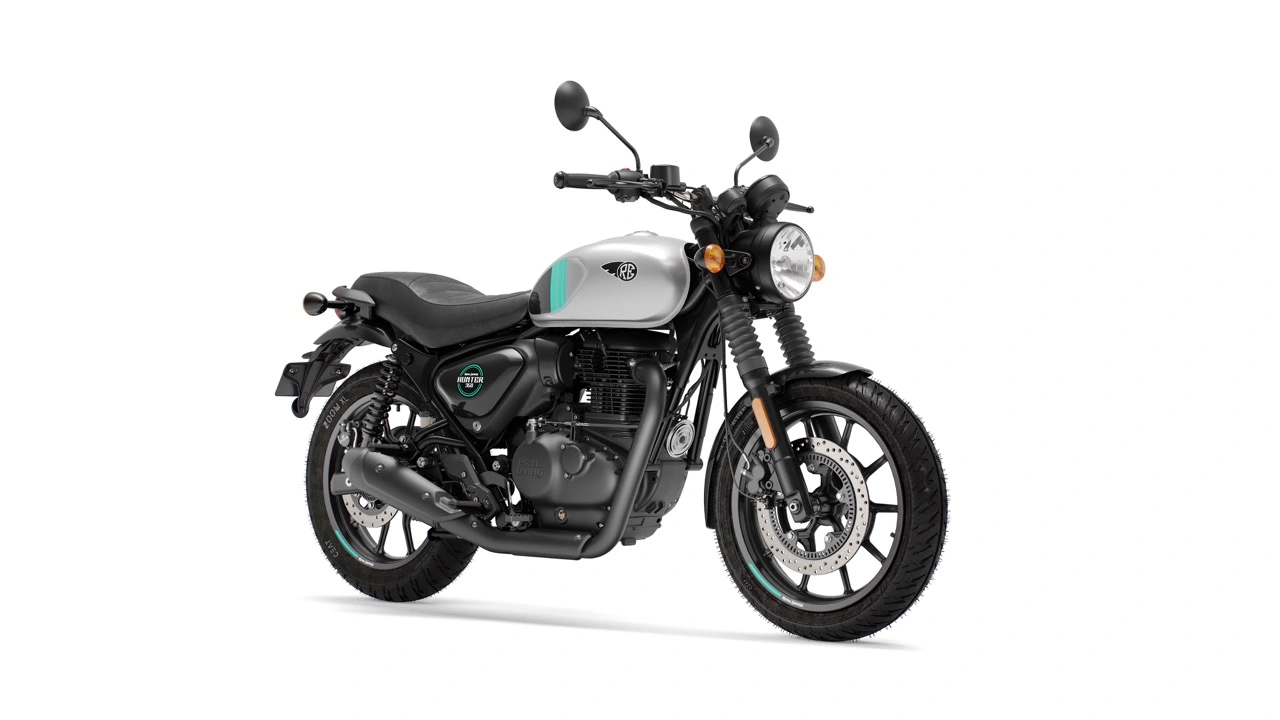
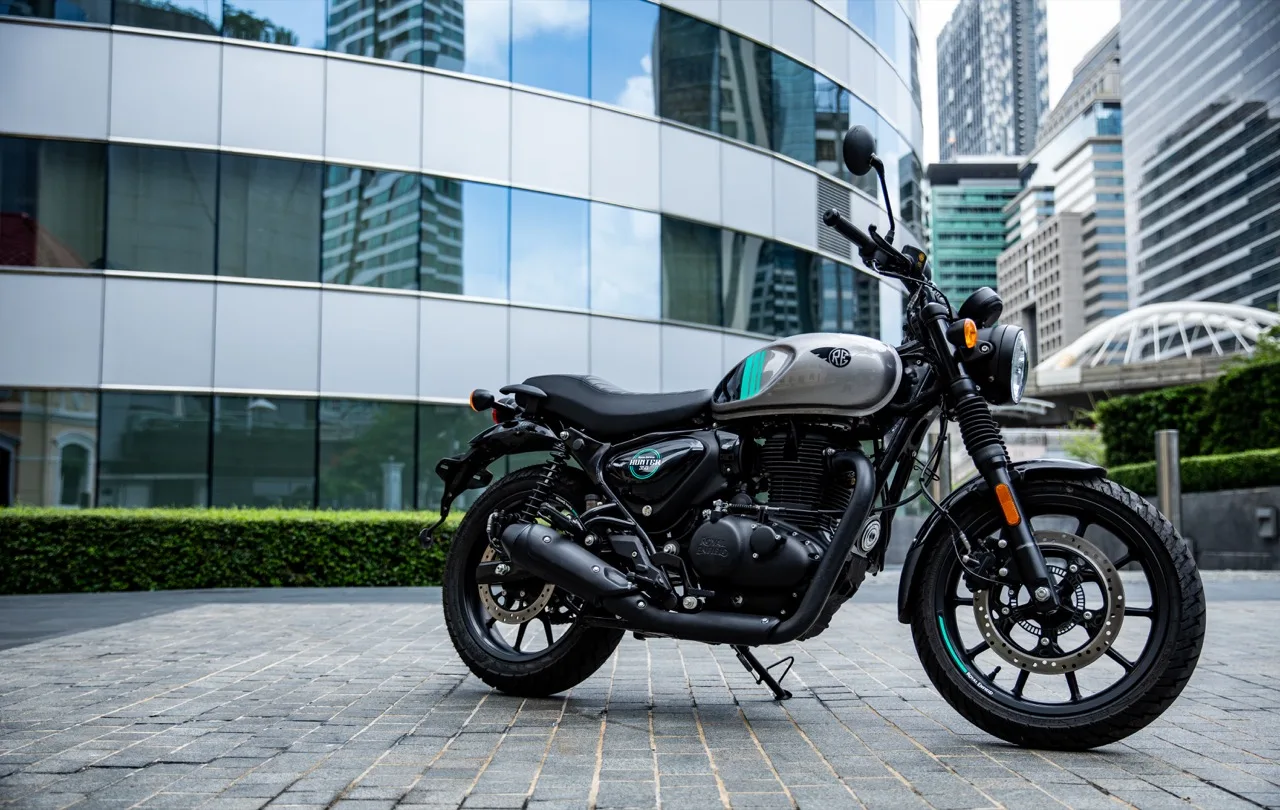
Royal Enfield Hunter 350 Design
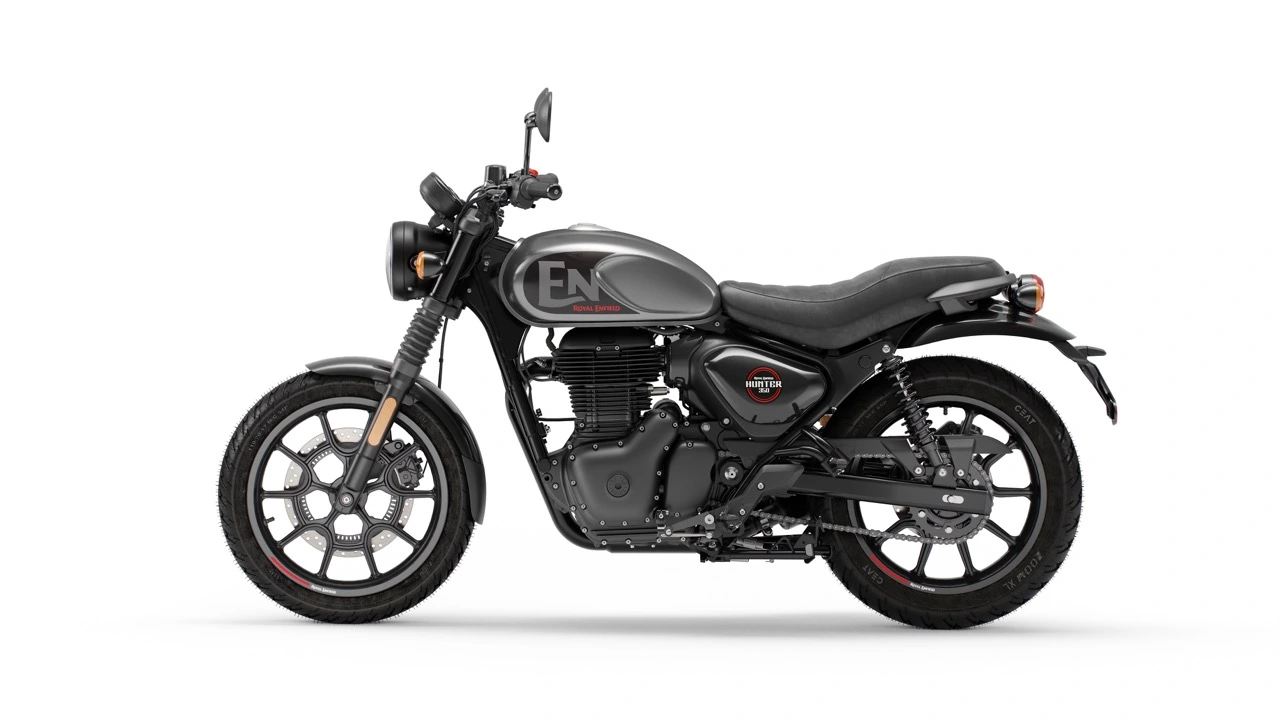
As soon as you see the Royal Enfield Hunter 350 (2025), your first thought is, "Wow, it looks too classic." It's not a huge tourer or a sport bike, but it's exactly what you've been looking for.
Firstly, the bike's frame gives it a compact style. At the same time, the rider feels light and free, even when traffic is pressing in from all sides. Its small size is a big plus.
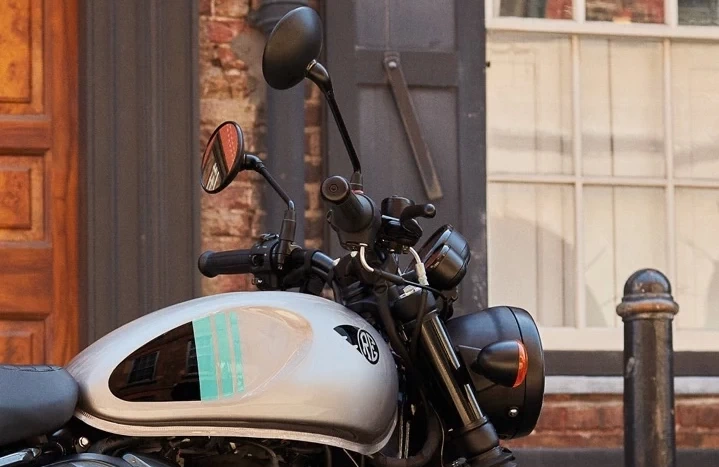
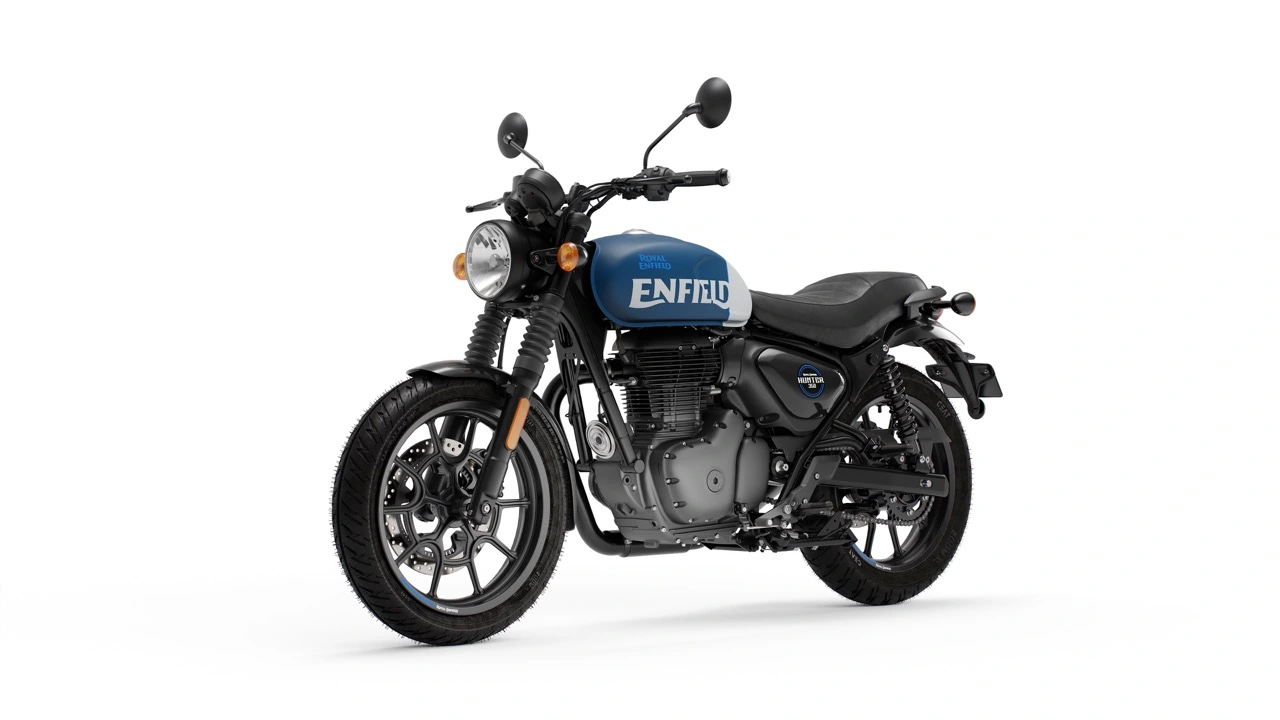
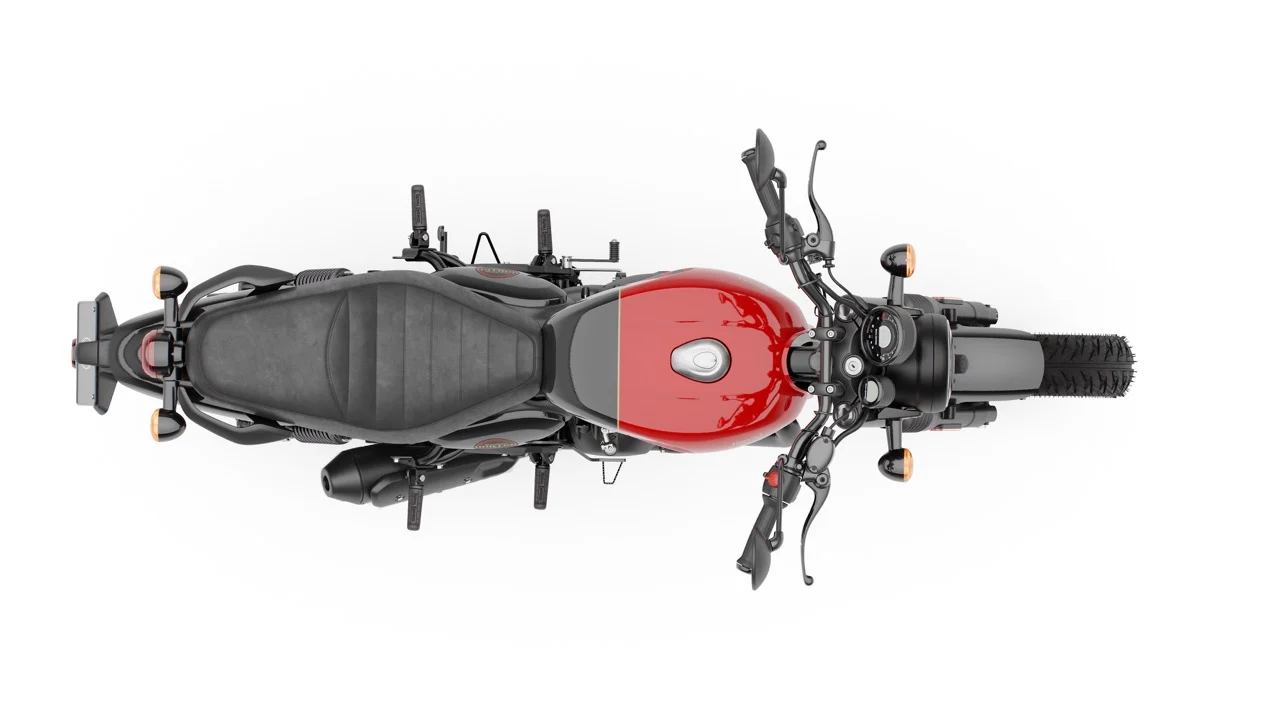
Now about the tank. It has smooth lines and beautiful curves. When you sit on the bike, you realise, ‘Yes, this is comfortable.’ And at the same time, it looks quite stylish. This is a balance between beauty and utility.
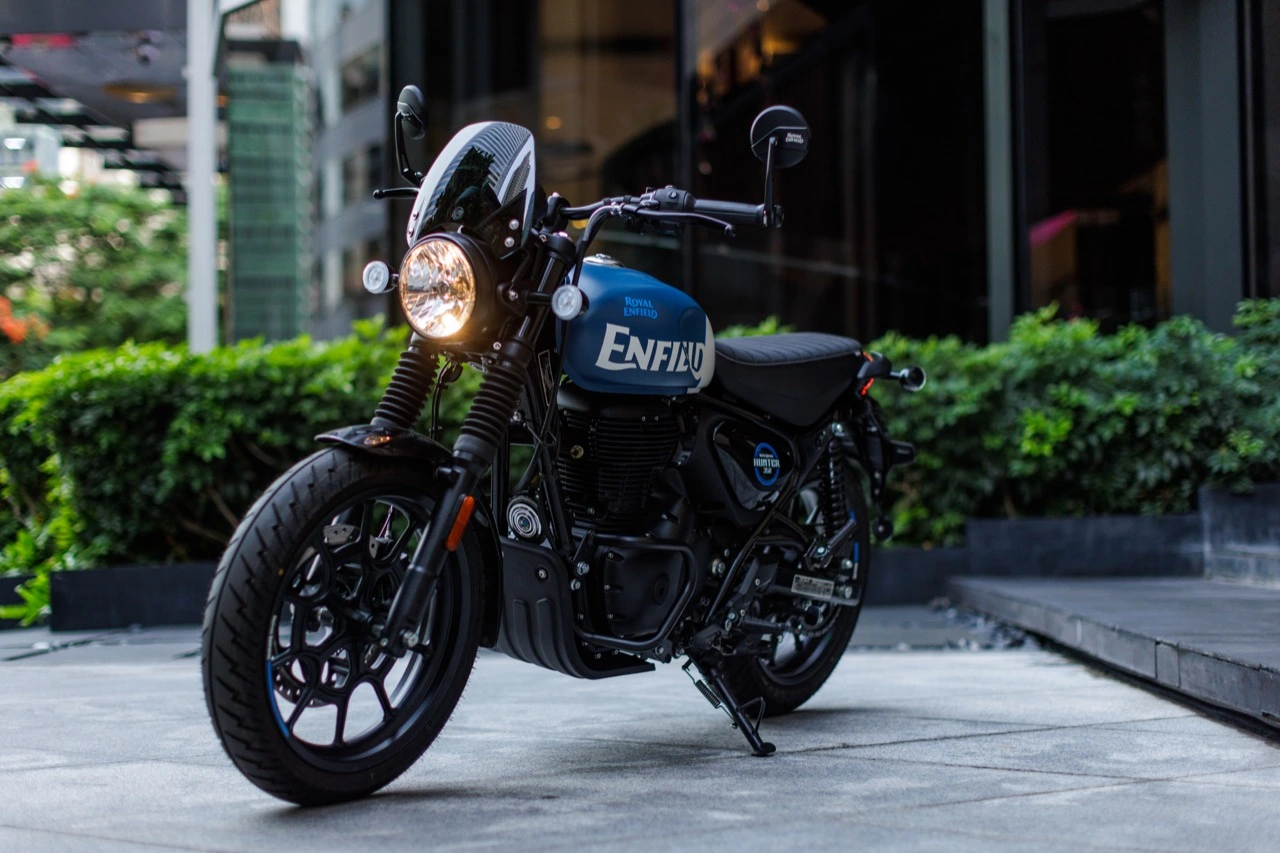
Another point is the seat. It does not scream luxury, but it does provide comfort. Even after a long ride, you do not feel tired. Both the shape and materials have been carefully thought out.
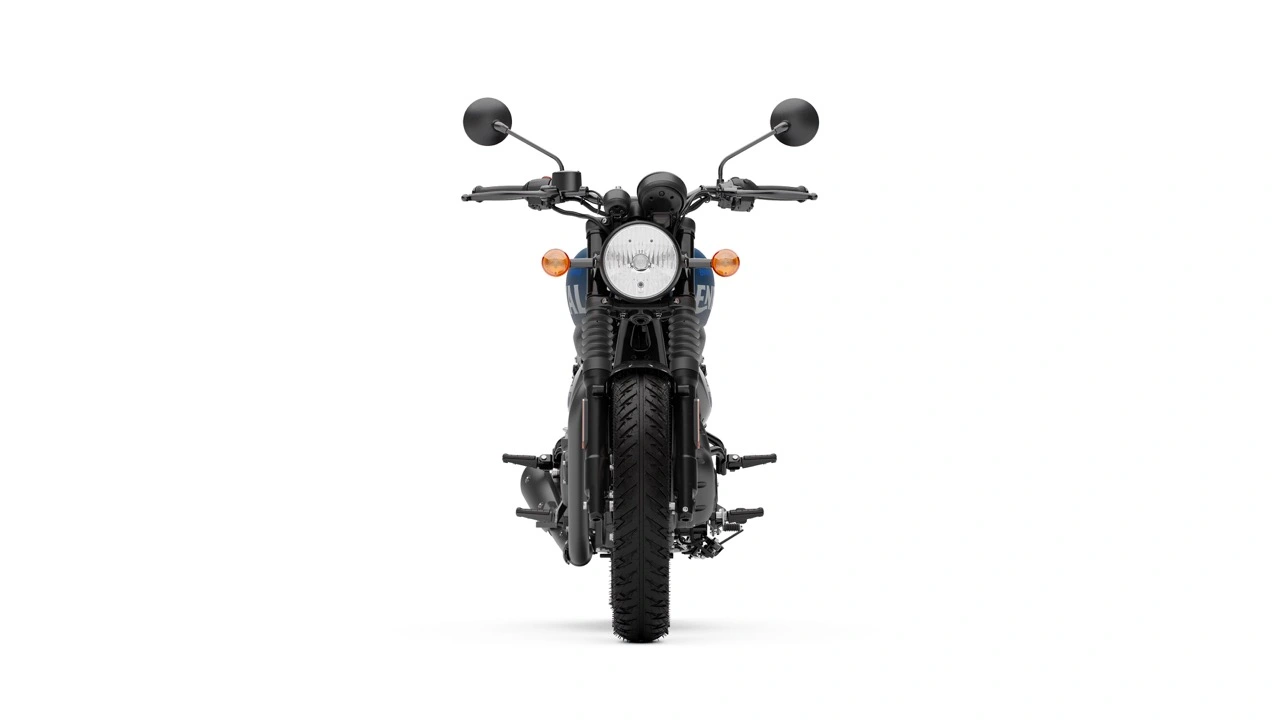
And the headlight? That's a whole other story. The new LED optics look cool and shine so brightly that even the night seems less gloomy. At the same time, the round shape reminds you: "Hey, I'm a real Royal Enfield."
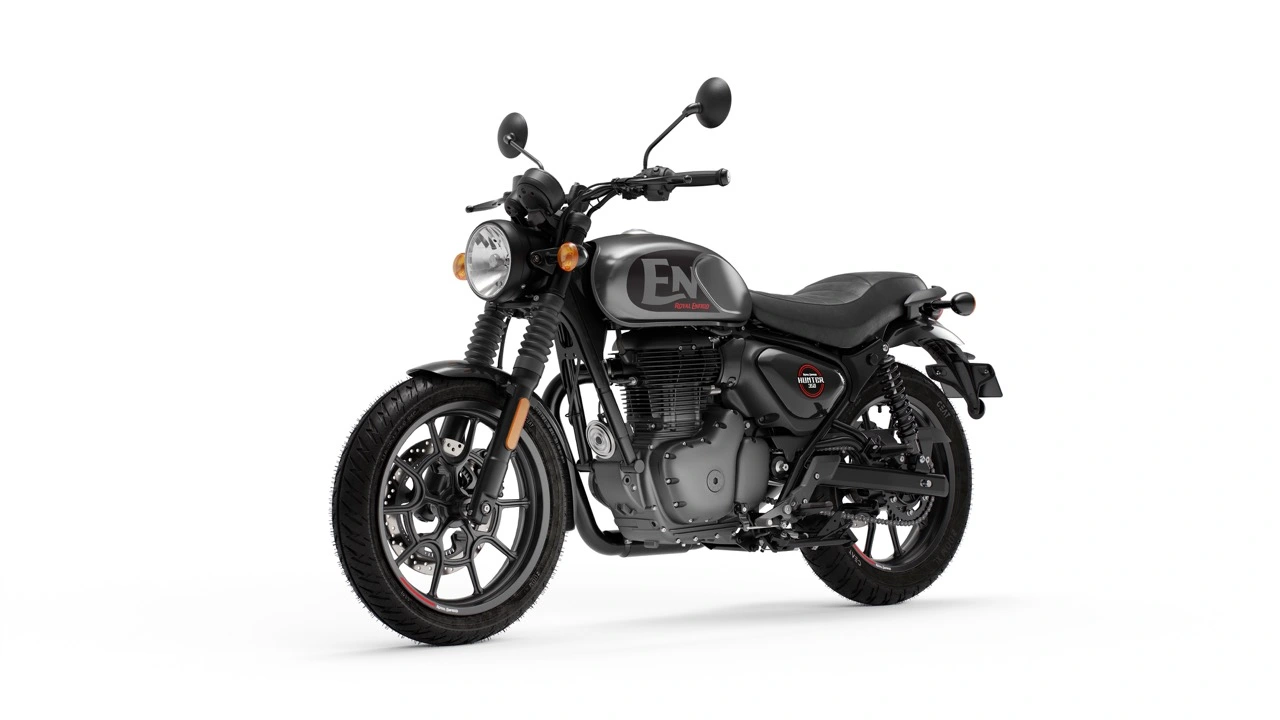
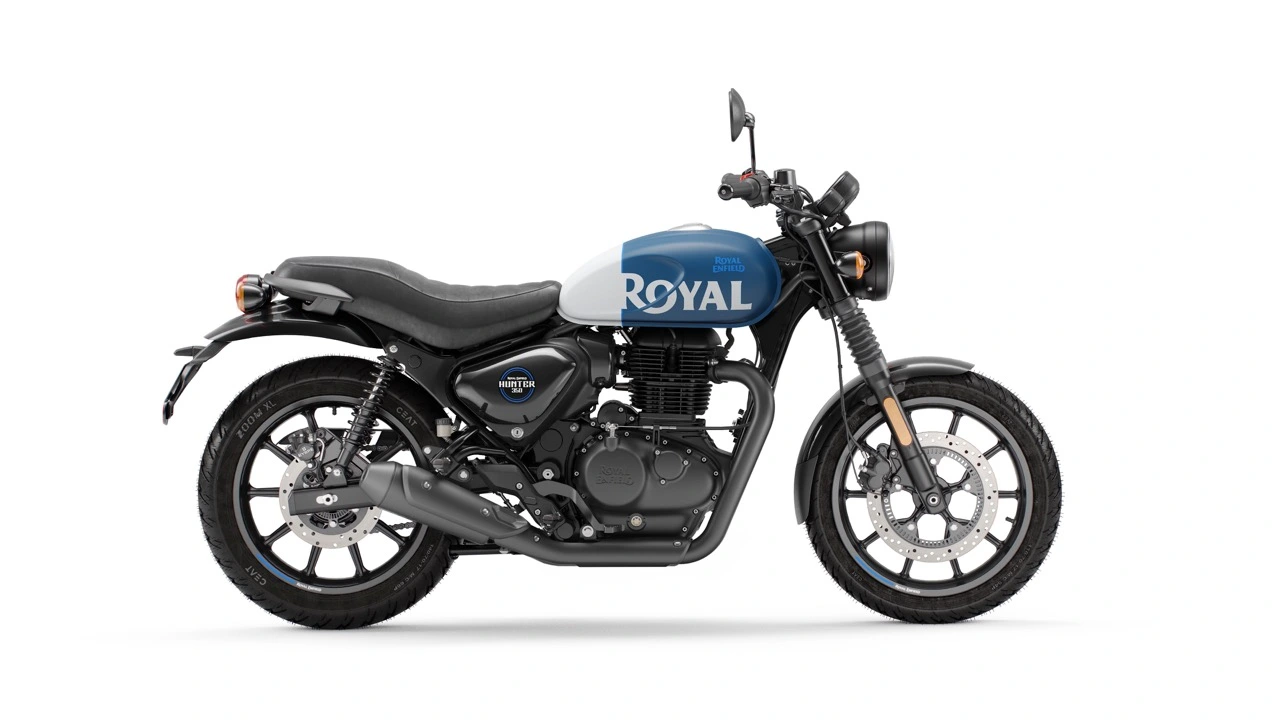
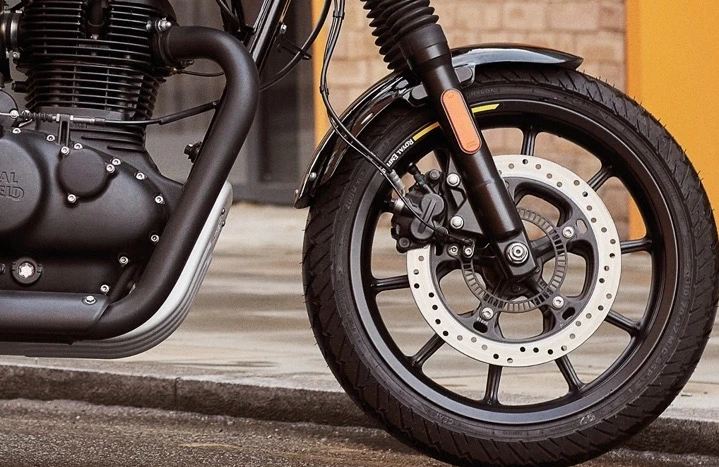
The wheels are also worth mentioning. They are simple but look confident. Thanks to them, the bike has a serious stance, even if you just park it outside a coffee shop.
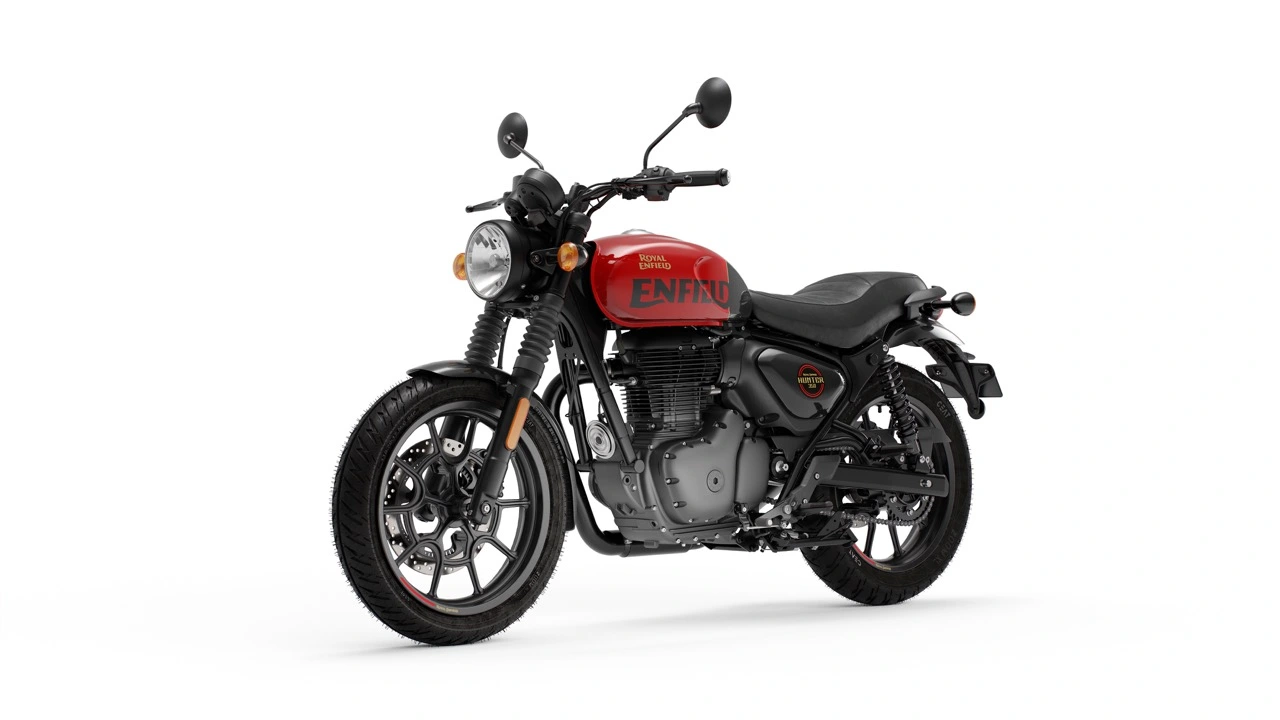
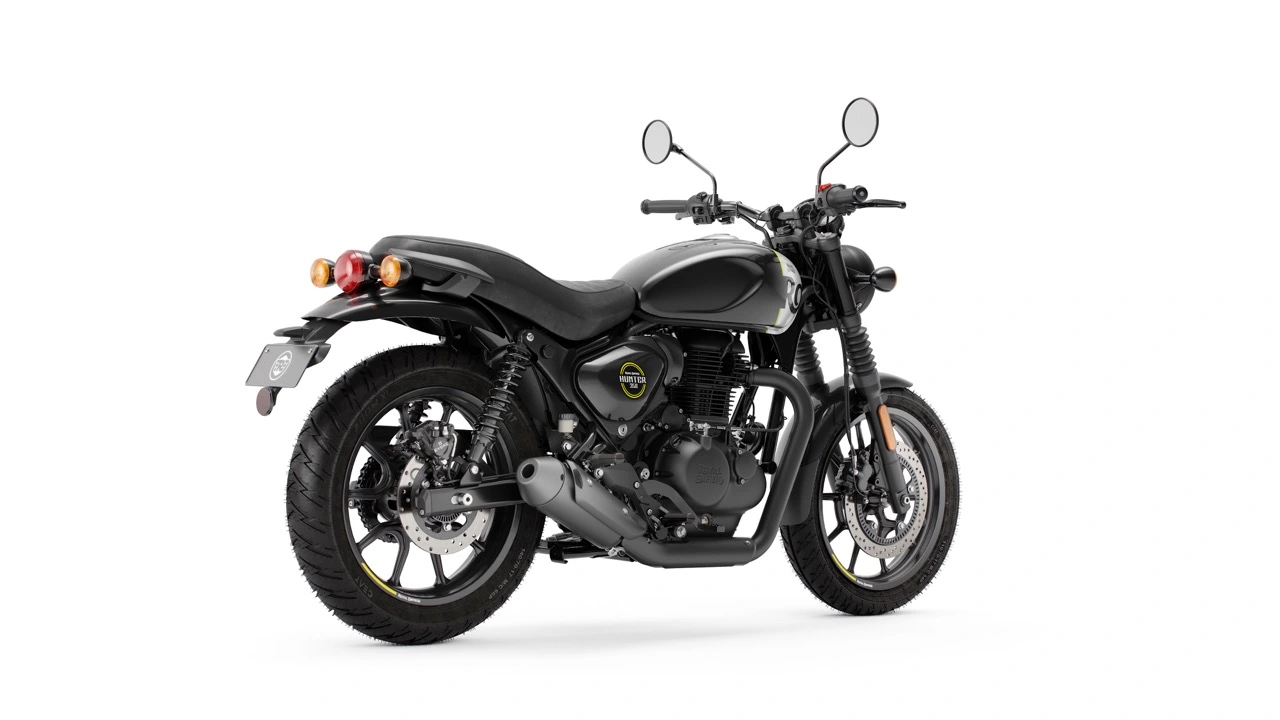
As for colours, there is plenty to choose from. Both classic and bright shades are available. The most interesting thing is the combination of matte and glossy details. This adds character to the bike and makes it youthful, but without excesses.
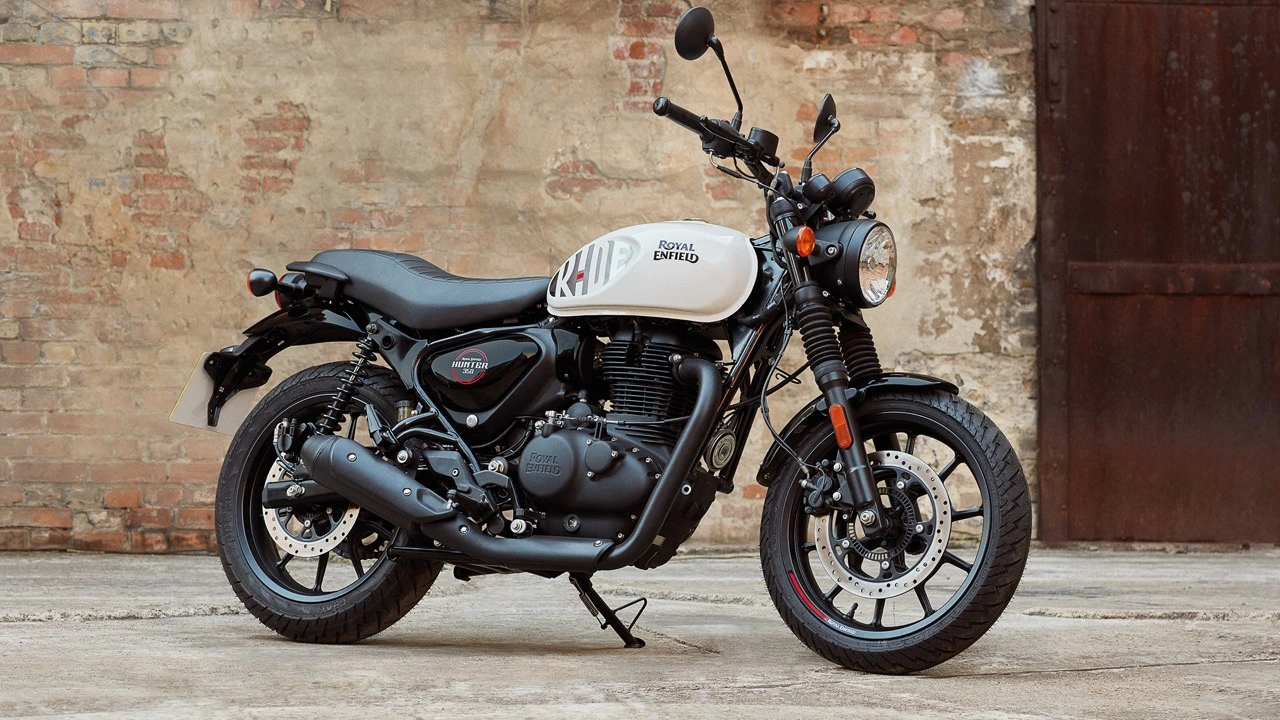
Mirrors, metal elements, small details — everything looks high-quality and neat. These are like little ‘touches’ that complete the picture.
So, the Hunter 350 (2025) doesn't try to be anything else. It's simple but stylish. Classic and modern are in harmony here. And best of all, it looks expensive but remains affordable.
RELATED
Best Motorcycle Helmets for Beginners
Chassis and Handling
When you sit on the Royal Enfield Hunter 350 (2025), you immediately feel: "Wow, it's really responsive!" This is not just another classic bike, but a motorcycle that was created for city traffic.
Hunter engineers added a Twin Downtube Spine Frame, which you can feel from the very first metres of riding this bike. This motorcycle does not wobble or vibrate, even when the road is far from perfect. The wheelbase is 1370 mm, which is not bad, so it feels compact. In traffic, it's a real lifesaver.
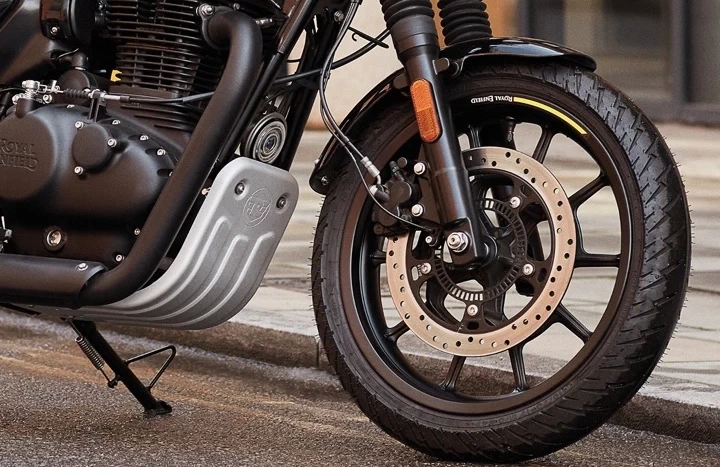
A 41 mm telescopic fork with 130 mm of travel is installed at the front. It easily swallows potholes and kerbs. At the rear, there is a double shock absorber with adjustable stiffness and 102 mm of travel, which, in my opinion, is too retro; they could have added a bit of high-tech, such as one large shock absorber. When it comes to settings, it all depends on the rider. If you want softness, you adjust it, and if you want a little drive, you make it stiffer.
As for the brakes, we have a 300 mm disc with a two-piston caliper at the front and a 270 mm disc at the rear. The company's engineers have delighted us by installing dual-channel ABS. This means that even on wet roads, the motorcyclist will not panic during sudden braking.
The 17-inch wheels are perfect for our classic bike called Hunter. The front wheel has 110/70 tyres, and the rear wheel has 140/70 tyres. The wide rear tyre is particularly noteworthy. It provides a feeling of stability and confidence while riding, especially when cornering.
Our classic-style motorcycle weighs 181 kg, but you don't feel it on the road. On the contrary, it seems even lighter than its stated weight. The seat height is 800 mm, so even short motorcyclists will feel comfortable in the saddle of this iron horse.
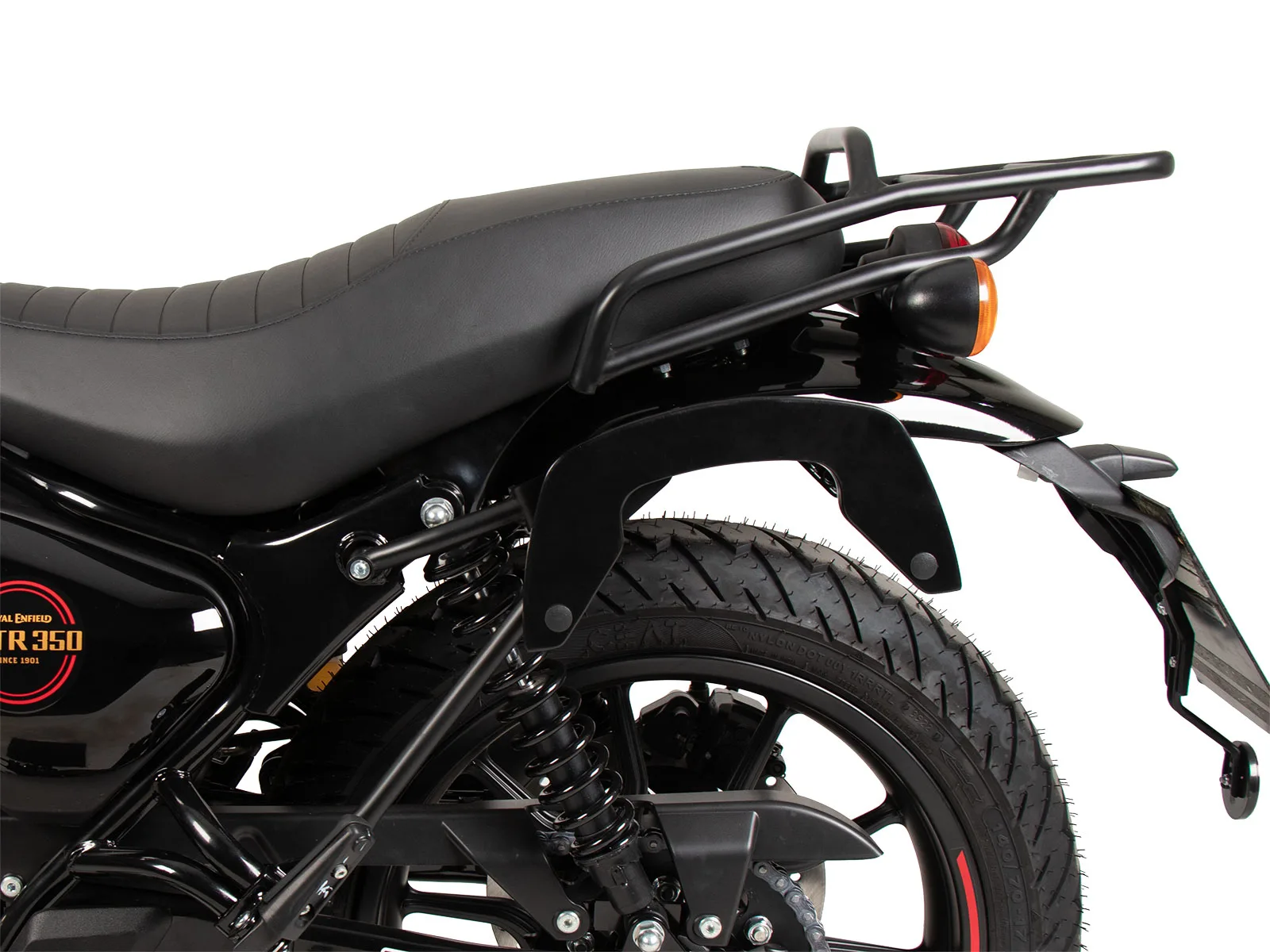
Our motorcyclists say that it's a blast in the city: light, manoeuvrable, obedient. It responds quickly to sharp turns and sudden braking. On the highway, this bike can easily maintain a speed of around 90-100 km/h. It is not a sports bike, but the balance between stability and lightness is ideal here. Below, we will talk more about the riding experience.
So, to sum up the Hunter 350 chassis, this bike is an example of how simplicity can be a strong point. A lightweight frame, comfortable suspension, good brakes — everything works for the comfort of the rider. And most importantly, it gives you confidence and ease of handling, which is exactly what every rider expects from their bike.
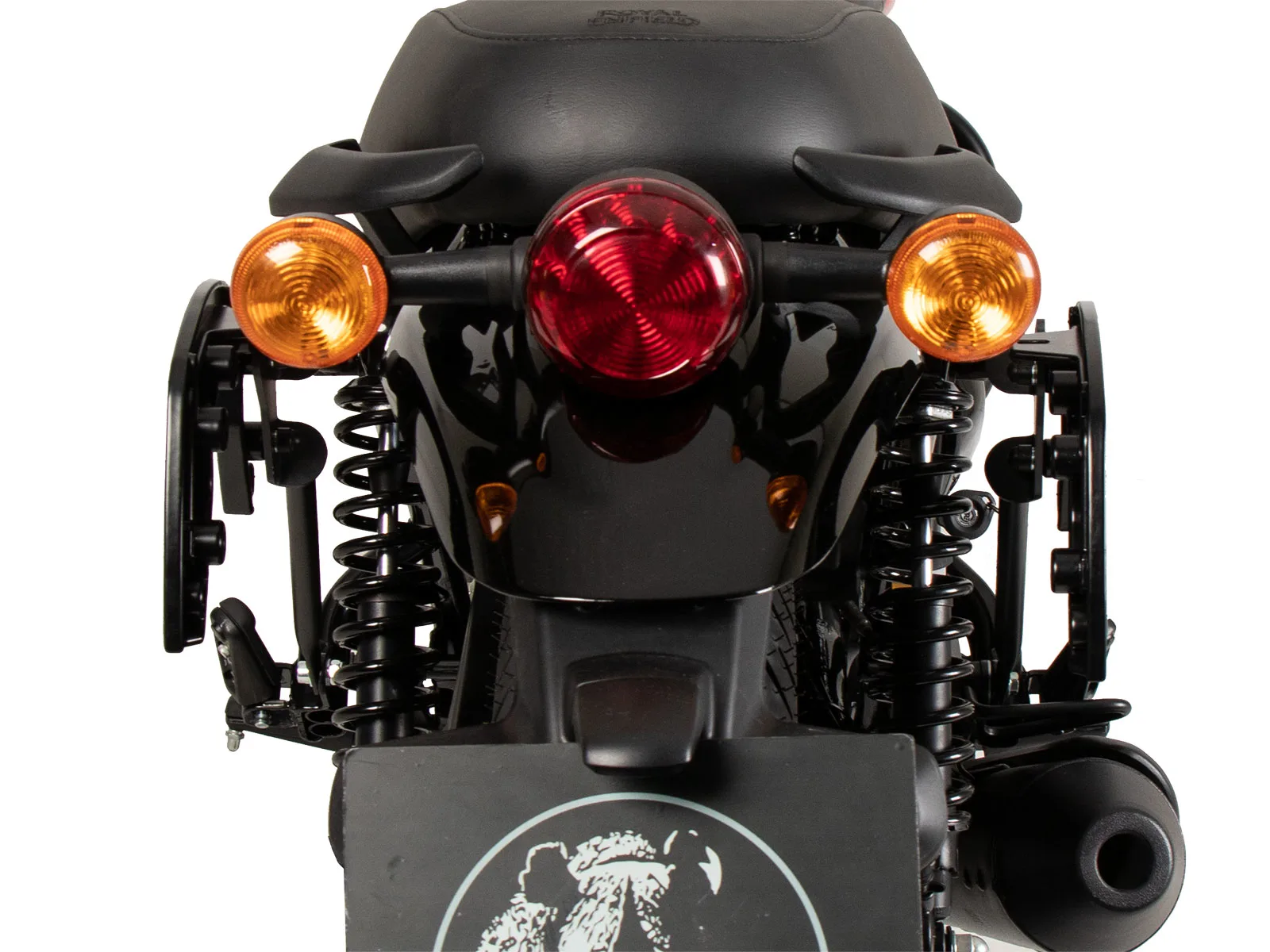
| Dimension | Value |
|---|---|
| Chassis Type | Twin Downtube Spine Frame |
| Rear suspension | Twin shock absorbers with 6-step adjustable preload |
| Ground Clearance | 160 mm |
| Width | 810 mm (without mirrors) |
| Seat Height | 790 mm |
| Fuel Capacity | 13 ltr |
| Front Suspension | Telescopic, 41mm forks |
| Wheel Base | 1370 mm |
| Length | 2055 mm |
| Height | 1070 mm (without mirrors) |
| Kerb Weight | 181 kg (with 90% fuel & oil) |
Royal Enfield Hunter 350 Electronics & Safety
Royal Enfield has always been about style and feel, not a bunch of gauges and sensors. And the Hunter 350 (2025) is no exception. Everything here is simple, but designed to really work on the road.
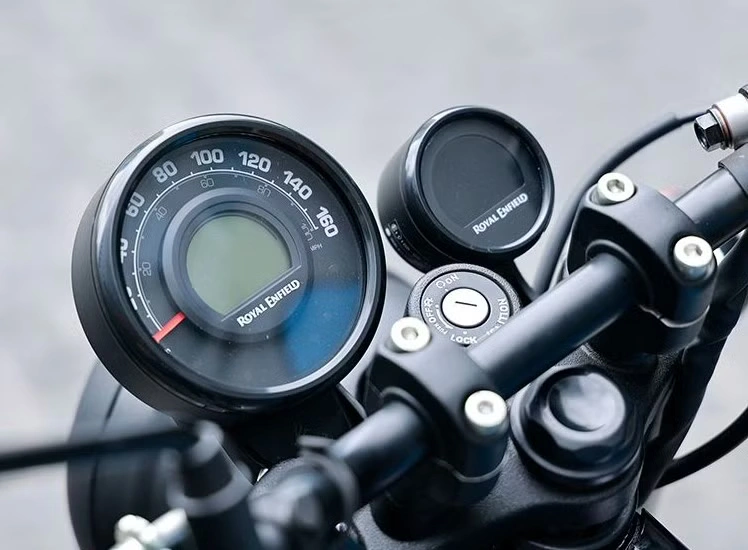
Take a look at the dashboard. It's classic: a round analogue tachometer and a small digital display. It shows speed, mileage, fuel level and indicators. Everything is minimal, without a ‘spaceship’ in front of your eyes. And you know, that's actually a plus. You don't have to be distracted by a bunch of numbers.
But if you want a little bit of modernity, there is an option with Tripper Navigation. It's a small screen for route guidance. Connect your smartphone via Bluetooth, open the Royal Enfield App, and that's it — turn signals right in front of your eyes. The most interesting thing is that it looks stylish and does not spoil the classic look of the bike.
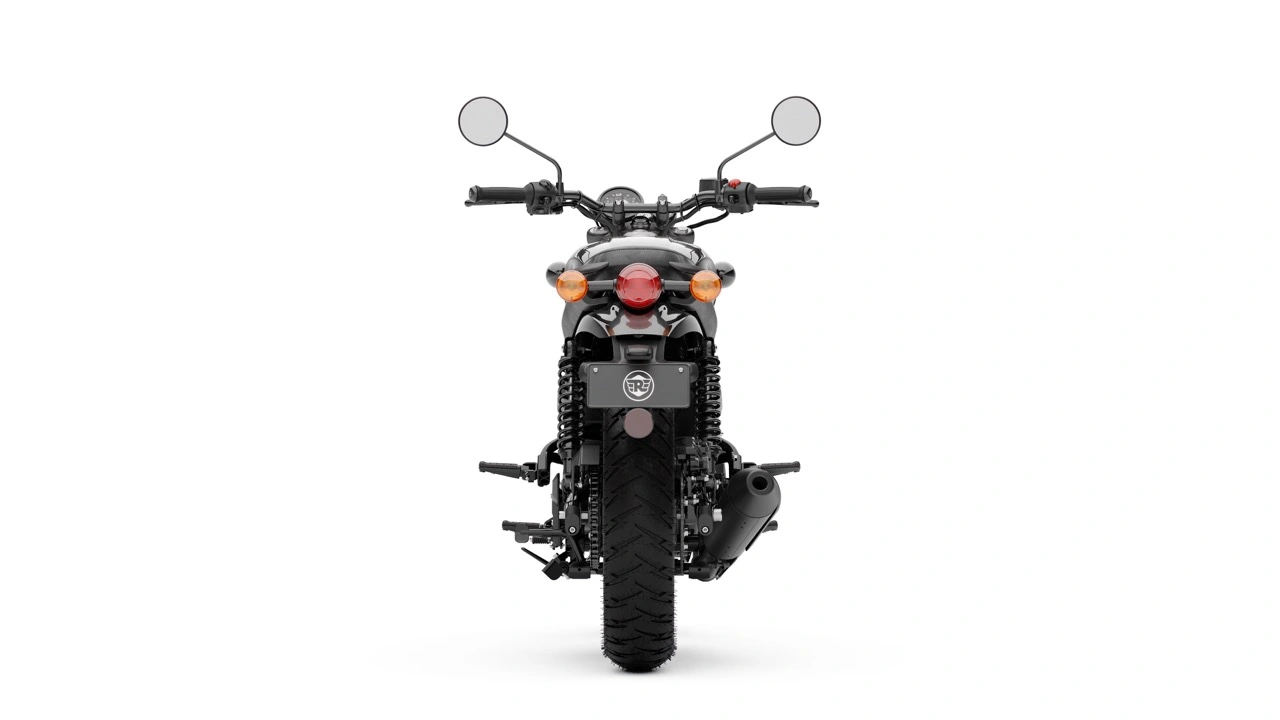
The Hunter's headlight remains halogen, which gives it an ‘old school’ charm. But the rear and turn signals are LED. This is modern: the bike is visible from afar, especially at night, and looks fresher.
Now about safety. Dual-channel ABS helps a lot here. It works so well that you feel calmer even in the rain. Even if you slam on the brakes, the bike still responds well. The 300 mm front and 270 mm rear discs reinforce the feeling of confidence.
There is one more thing that may seem insignificant, but without it, everything would be completely different. This is the electronic fuel injection (EFI) system. It makes the engine smooth, economical and environmentally friendly. Thanks to it, the Hunter starts easily and does not let you down even in cool weather.
The result is a simple screen, optional navigation, LED lights, ABS and EFI. And that's enough. The Hunter doesn't try to pretend to be a superbike with a bunch of sensors. It says straight out: "I'm simple but reliable."
That's the main thing — the Hunter has everything you need for safety and convenience, without any unnecessary frills.
ENGINE SPECIFICATIONS & TRANSMISSION SYSTEM
The Royal Enfield Hunter 350 is a motorcycle that immediately makes you smile. It looks classic, without unnecessary pretension, but when you start the engine, you begin to understand that this guy has character. And the engine and gearbox play the main role here. They shape its mood, its ‘soul’. It is thanks to them that the Hunter either glides easily through traffic or calmly pulls you along the road.
Under the tank of the Hunter 350 is a modest but very stubborn heart – a 349 cm³ single-cylinder engine. Twenty horsepower and 27 Newton metres of torque — these figures may not be enough for racing, but in real life they sound completely different.
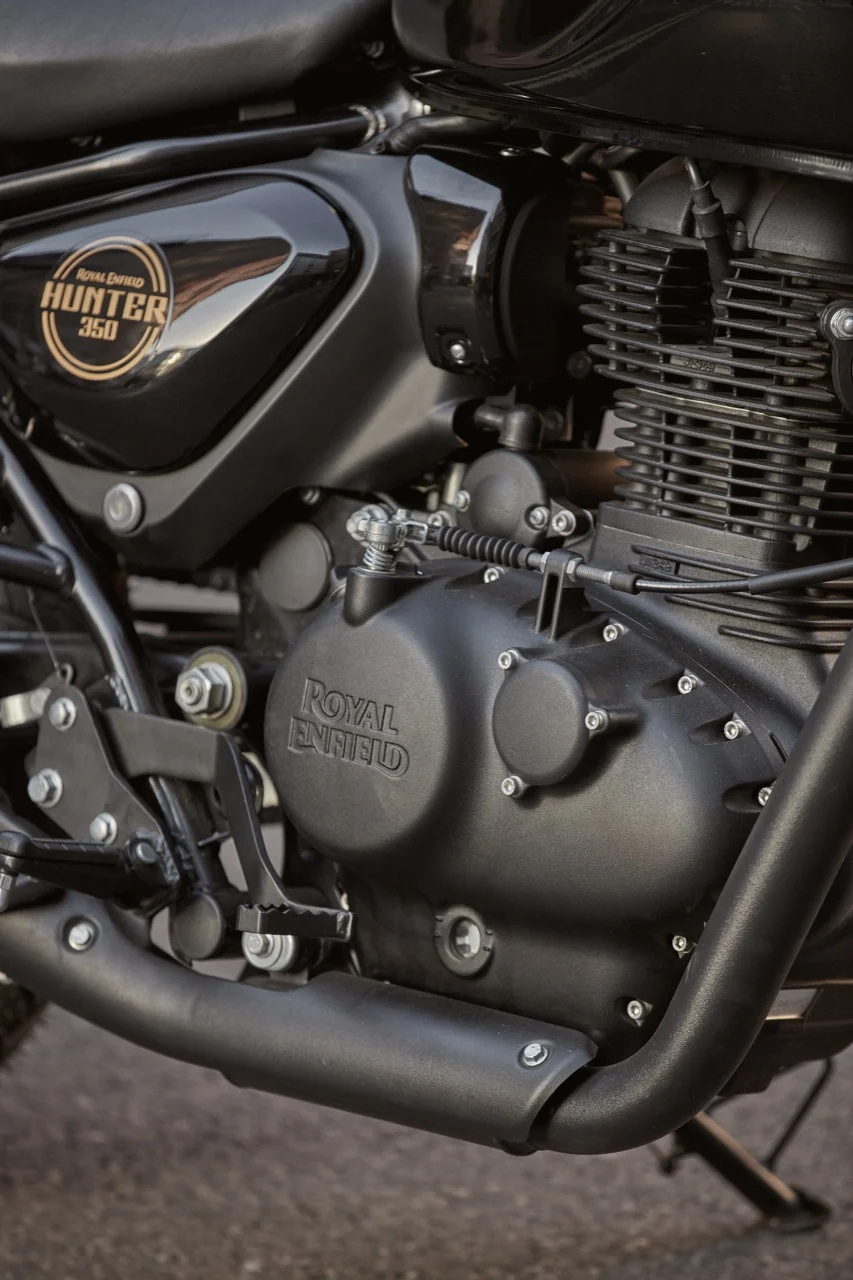
When you twist the throttle, you feel how obediently it responds. In the city, it's just a blast: you press it, and the bike moves immediately, without any fuss or delay. You can calmly glide between cars without pushing it to the max.
On the road, the Hunter doesn't pretend to be a sports bike. Its element is cruising speed, stability and calm. Overtaking is possible, but it's more like it's saying, "Relax, mate, we'll get there in time."
What makes the engine great:
- simplicity and indestructible reliability;
- very pleasant fuel economy – 30–35 km/l, and refuelling becomes a rare occurrence;
- low-end torque: ideal for the city.
What might be annoying:
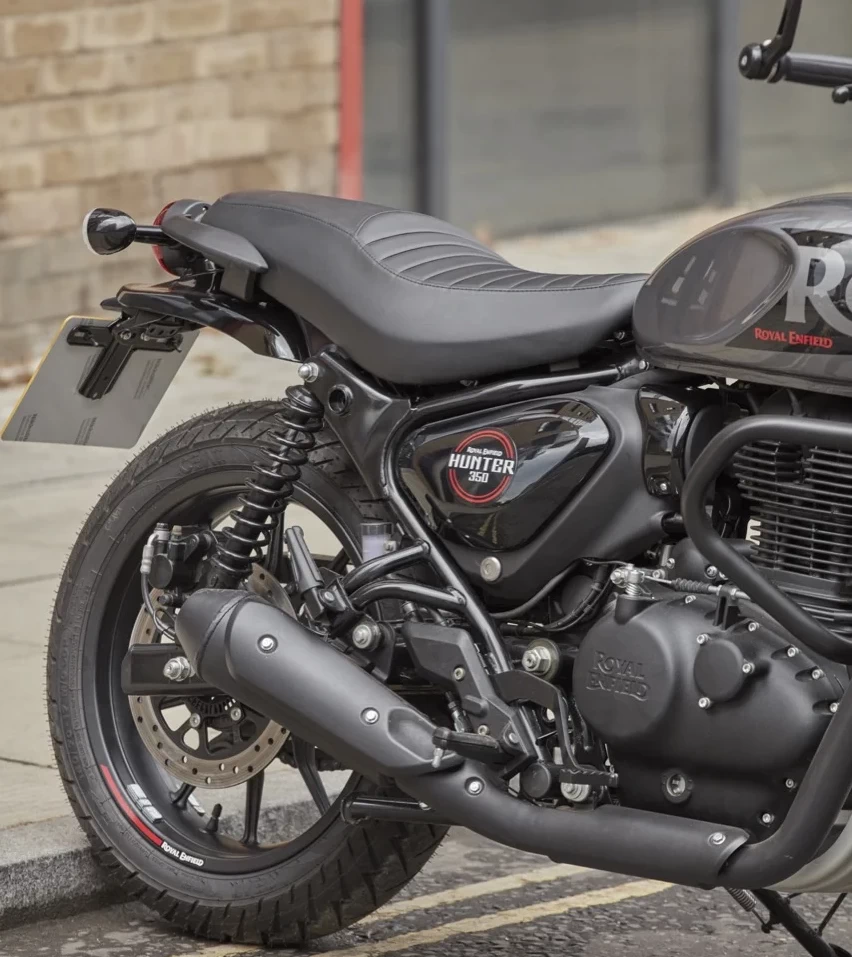
- at high revs, vibrations remind you that it is a single-cylinder engine;
- the top speed is modest, especially when compared to competitors.
The Hunter has a 5-speed manual transmission. The gears shift smoothly, without drama. This is not a ‘racing gearbox’ but a reliable working tool.
The clutch is wet and multi-disc. It works smoothly: starting from a standstill feels predictable, even if you are a beginner and are not yet very familiar with the technology.
✅Pros of the transmission:
- simple as a hammer and just as reliable;
- ideal for city driving;
- the clutch is not nervous and does not throw up any surprises.
❌Cons:
- a 6th gear would be nice, especially for the motorway;
- experienced motorcyclists may find it too ‘calm’.
In the city, Hunter is like your buddy in a group: simple, straightforward, and ready to keep up with any pace. Turn on the gas, and it goes without thinking. It's super manoeuvrable, and the engine is as obedient as a well-trained dog.
On the motorway, it's calm and stable. Yes, without any frills or records, but that's exactly what makes it special.
The fuel economy is out of this world. Three litres per hundred kilometres – and you can ride for half a day without thinking about refuelling.
The Yamaha MT-03 and KTM Duke 390 are, of course, ‘young wild stallions’. They are faster, more aggressive, and more expensive in every way: in price, maintenance, and fuel consumption. The Hunter plays a different game. It doesn't chase power, but wins with simplicity, affordability, and a character that is suitable for everyday life.
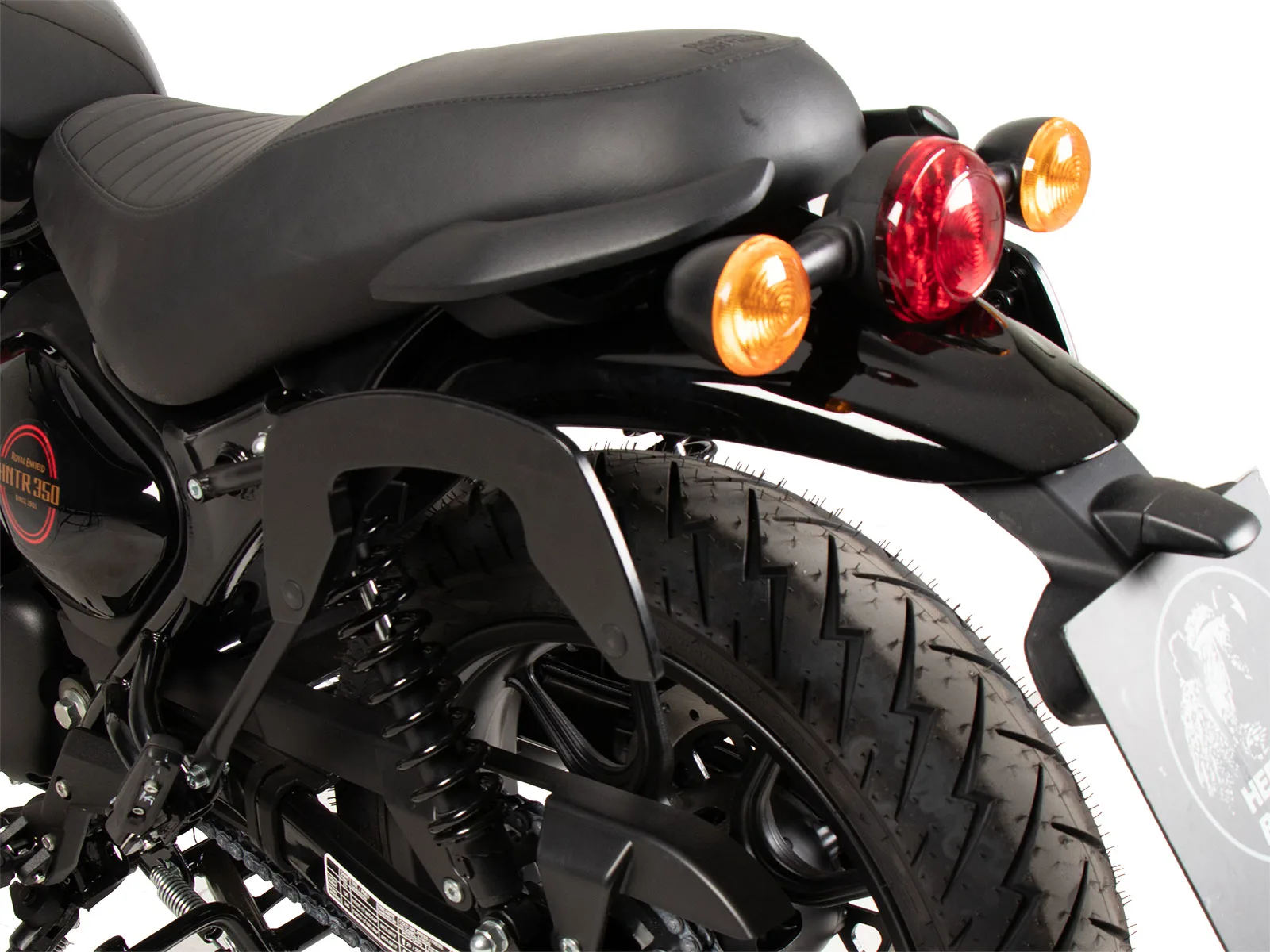
The Hunter 350 is not about speed and driving on the edge. It's about friendship with technology, about being able to start your bike in the morning and know that it will take you to the office and on weekend trips without any headaches.
Ideal for:
- beginners who want a calm and understandable bike;
- city riders who value economy and simplicity;
- those who appreciate it when technology works honestly and without surprises.
| Engine Feature | Specification |
|---|---|
| Engine Type | Single cylinder, 4 stroke, Air-Oil cooled |
| Displacement | 349 cc |
| Bore x Stroke | 72 mm x 85.8 mm |
| Compression Ratio | 9.5:1 |
| Maximum Power | 20.2 BHP @ 6100 rpm (14.87 kW) |
| Maximum Torque | 27 Nm @ 4000 rpm |
| Ignition System | Electronic Fuel Injection(EFI) |
| Gearbox | 5 Speed constant mesh |
| Engine Oil | SAE 15 W 50 API, SL grade, JASO MA 2 Semi Synthetic |
| Engine Start | Electric |
| Clutch | Wet, multi-plates (Assist & Slip) Clutch |
| Transmission | 6-speed manual |
| Lubrication | Wet sump, forced lubrication |
| Air Cleaner | Paper element |
New vs. Used Motorcycles: Pros and Cons for First-Time Buyers
FUEL CONSUMPTION
Everything looks great in the technical passport, but we know that life is not a laboratory. So let's figure out how the Hunter behaves in real conditions: in traffic jams, on the motorway and in a mixed cycle.
Factory figures vs reality
On paper, Royal Enfield promises up to 35 km/l (that's about 3 litres per 100 km). Great figures, you just want to brag to your friends right away. But that's, let's say, in a world without traffic jams, traffic lights and a heavy right hand on the throttle.
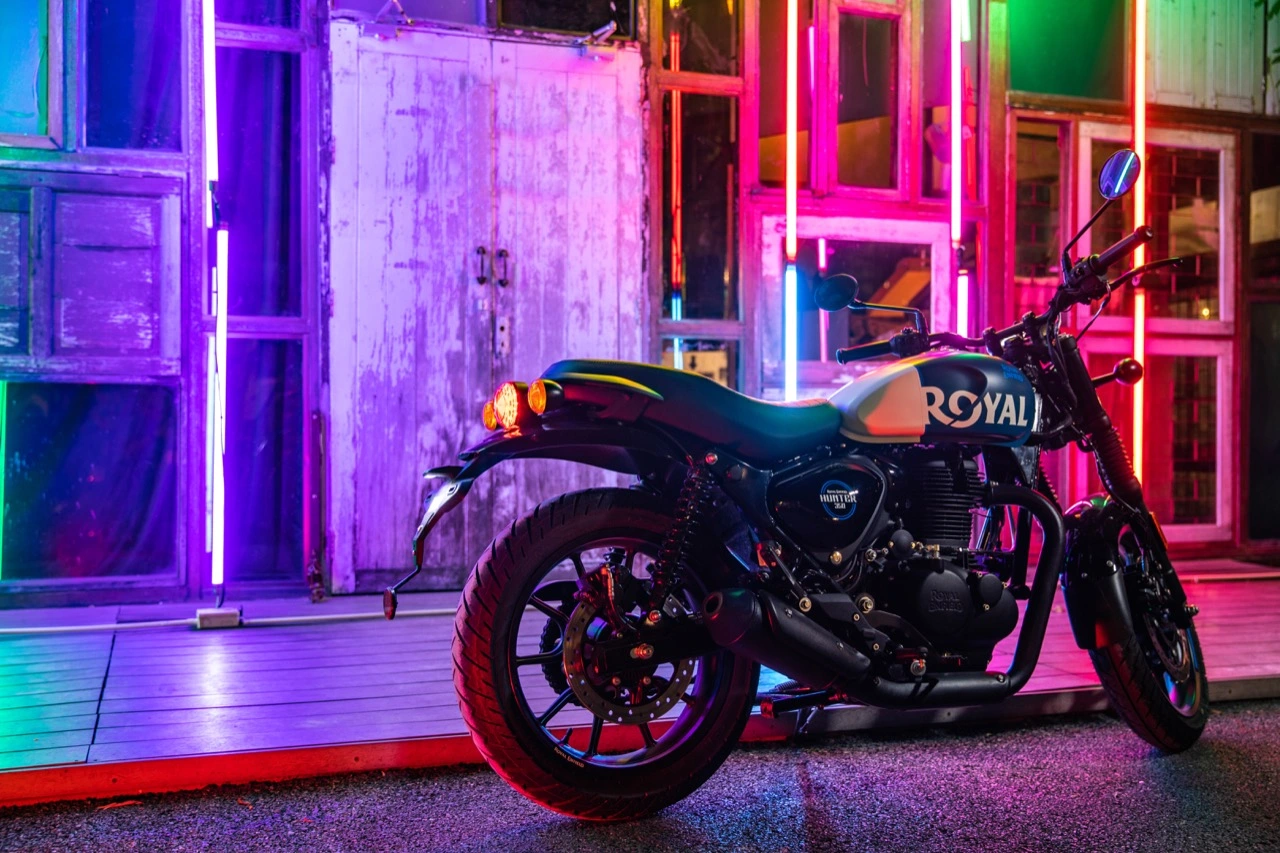
In real life, the figures are more modest, but still quite pleasant. Because the main thing is that the Hunter does not turn the fuel tank into a black hole.
We tested the Hunter in various scenarios, and here are the results:
- City (traffic lights, traffic jams, active riding): Here, fuel consumption increases to 3.8–4.2 l/100 km. If you like to rev the engine sharply, the bike will respond honestly — ‘okay, but I'll also consume a little more.’
- Country road (80–90 km/h): This is the most comfortable mode for the Hunter. Here, fuel consumption drops to 2.9–3.3 l/100 km. The bike seems to relax and say, ‘This is how I like to ride.’
- Highway (100–110 km/h): At higher speeds and with headwinds, the engine works harder. Fuel consumption rises to 3.5–3.7 l/100 km.
- Mixed cycle (city + highway): The most realistic scenario. Here, it averages a stable 3.4–3.6 l/100 km.
What does fuel consumption depend on?
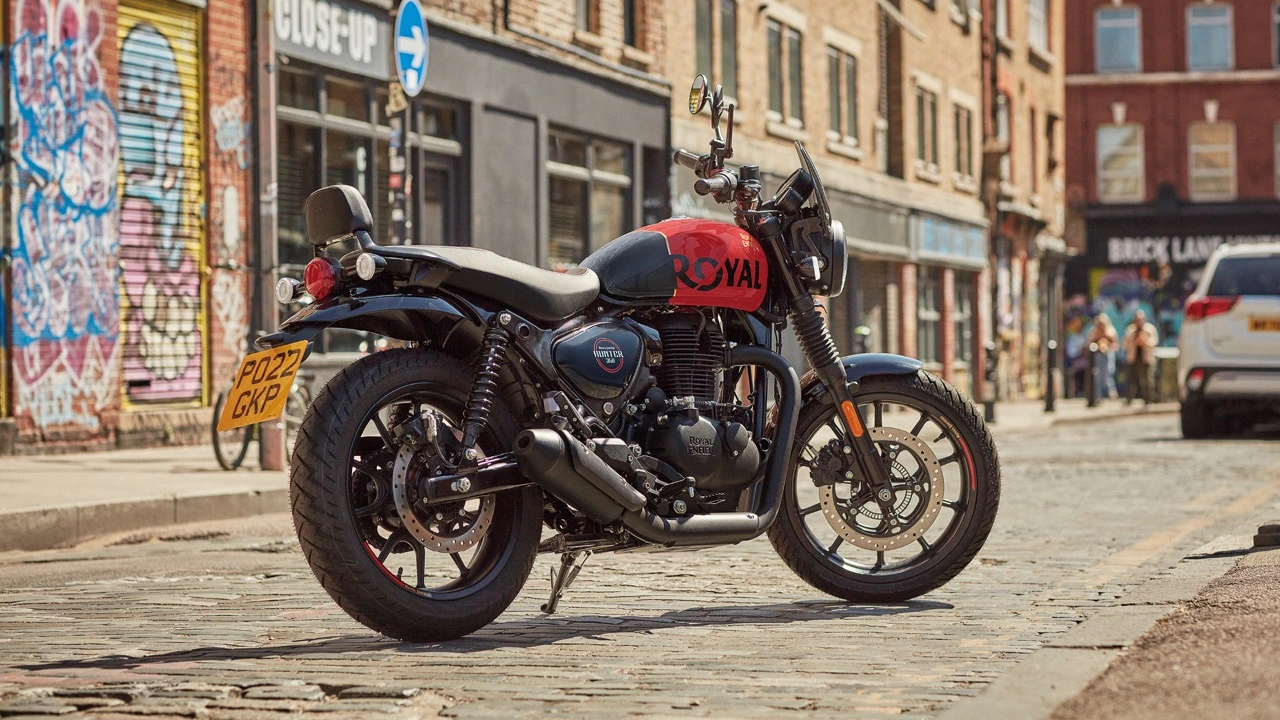
The Hunter 350 is like a friend who behaves differently in company: sometimes calm, sometimes imperceptibly becoming more demanding.
And fuel consumption varies depending on several things:
- Driving style. Moderate = economical, aggressive = plus a litre on top.
- Fuel quality. Poor-quality petrol is bad not only for the engine but also for your wallet.
- Weight. A passenger or a full trunk means the engine is working harder.
- Condition of the bike. A clogged filter or worn spark plug — and fuel consumption creeps up.
Pros and cons: is the Hunter 350 economical?
- in the city, it really doesn't consume more than many scooters;
- Compared to the KTM Duke 390 or Yamaha MT-03, the Hunter looks very economical (their fuel consumption easily reaches 5–6 l/100 km).
- Thanks to its 13-litre fuel tank, you can travel 320 to 400 km without refuelling.
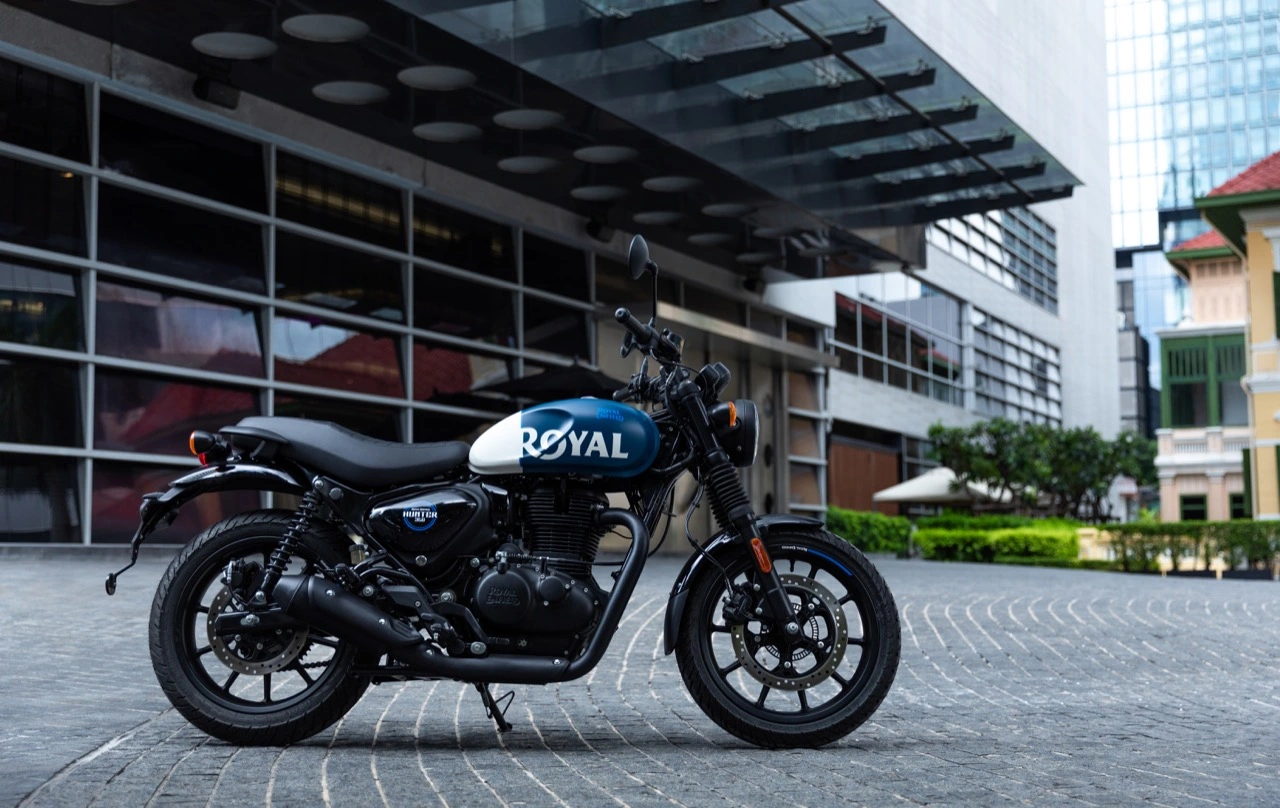
❌Cons:
- it is not the most economical in its class — there are lighter models that consume less;
- it is very sensitive to riding style: if you like to put your foot down, be prepared to see consumption of around 4 litres.
| Condition | Fuel Consumption (L/100 km) | Fuel Consumption (mpg) |
|---|---|---|
| City Riding | 3.8-4.2 | 56-62 |
| Highway Riding | 2.9-3.3 | 71-81 |
| Mixed Riding | 3.4-3.6 | 65-69 |
PRICING
However, ‘affordable’ in Mumbai and “affordable” in Berlin are completely different concepts. The same motorcycle can cost anywhere from two and a half thousand dollars to over five thousand dollars in different countries. Why is this the case, and where does the Hunter really look like a ‘people's bike,’ and where does it look like a luxury item? Let's figure it out.
Price structure: from Delhi to Sydney
In India, the brand's homeland, the Hunter 350 costs approximately 215,000 rupees, which is only about $2,600. This is almost the minimum you can expect, as it is manufactured locally, without customs duties, with cheaper labour and in a world of fierce competition with Bajaj and TVS. In neighbouring countries in Southeast Asia, the price jumps significantly. For example, in Thailand or Vietnam, the Hunter already falls into the $3,300–3,600 range. And it's not just about customs duties or logistics: in these markets, it is promoted as a stylish city bike, not just as everyday transport.
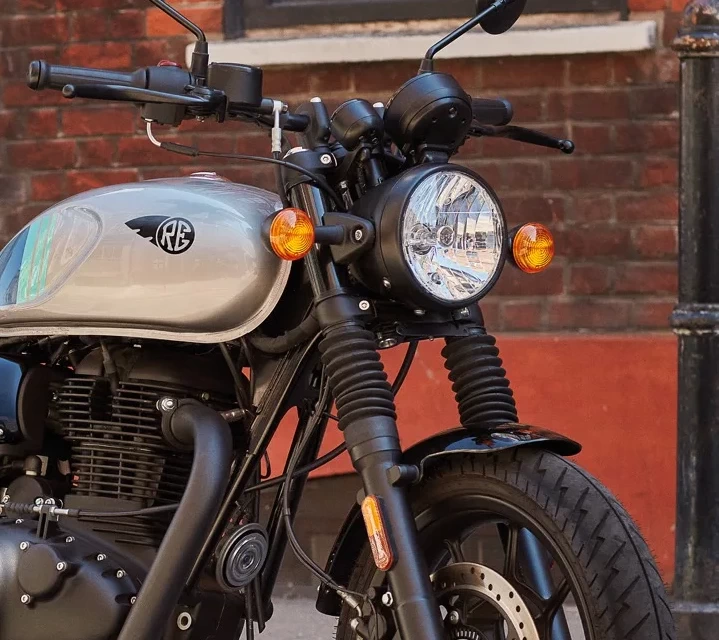
Europe turned out to be the record holder in terms of price: approximately €5,000, or more than $5,400. This is due to certifications, strict environmental standards, high VAT (20-25%) and customs duties, which inflate the price by almost half compared to India. In the US and Canada, the situation is a little simpler: there, the Hunter can be bought for around $4,300–4,600. American bikers get a ‘budget retro style’ and don't suffer as much from taxes, although logistics from India are more expensive. Australia is a different story. There, the bike starts at around AUD 6,200, which is equivalent to about $4,000. A small market, import duties and delivery halfway around the world — and the price goes up.
Why is there such a difference?
In a nutshell: taxes, duties and logistics are to blame. Europe pays the most because motorcycles are imported here with all the associated fees, plus Euro 5 environmental standards do not allow the sale of ‘simplified’ versions. The US and Canada do not burden buyers with taxes as much, but compensate for this with more expensive delivery. Australia is a small market where dealers keep their margins higher, otherwise it is simply not profitable for them. India and neighbouring Asian countries get their own price: here, the Hunter must remain affordable, otherwise it will simply be squeezed out by local manufacturers.
Cost of ownership: not just the price tag
The bike itself is only half the story. In Europe, the owner immediately prepares to pay several hundred euros more each year for transport tax and insurance, which can cost a beginner 400-600 euros. In the US, most states are easier on the wallet: insurance costs between $300 and $500, plus a small registration fee. In Australia, the main ‘pain’ is the so-called rego, which can easily cost AUD 500 per year. In India, however, the costs are symbolic: both insurance and taxes are significantly lower, and maintenance costs are negligible thanks to cheap labour.
| Region / Country | Price (local currency) | Equivalent in USD |
|---|---|---|
| India | ~215,000 INR | ~$2,600 |
| South-East Asia (Thailand, Vietnam, Indonesia) | ~120,000–135,000 THB | ~$3,300–3,600 |
| Europe (Germany, France, Poland) | ~5,000 EUR | ~$5,400 |
| USA / Canada | ~4,300–4,600 USD | ~$4,300–4,600 |
| Australia | ~6,200 AUD | ~$4,000 |
Top 10 Must-Have Motorcycle Accessories for Every Rider
RIDING IMPRESSIONS
I have always been sceptical about the term ‘universal city bike’. In my imagination, it is something of a compromise: not very fast, not very comfortable, and, as a result, not very interesting. But as soon as I sat on the Royal Enfield Hunter 350, these stereotypes began to fall away one by one. So what is it really like? Let's find out together.
The first few seconds: what you feel when you sit down
The Hunter greets you with a classic upright riding position: your back is straight, your hands rest naturally on the handlebars, your legs are slightly bent — everything feels ‘natural’. There is no discomfort, as if you are trying to get into a yoga pose just to keep your balance.
Weight? Yes, it's not a featherweight, but from the very first seconds you can feel that the weight is distributed low. Therefore, even in a tight courtyard turn, the Hunter is as obedient as a motorbike. And then you give it some gas — and the single-cylinder engine comes to life with a dull, slightly hoarse tone. It doesn't ‘roar,’ but rather growls like an old friend saying, ‘Don't worry, we'll manage.’
The city is his element: manoeuvres, traffic lights, traffic jams
Hunter feels right at home in the urban jungle. Weaving through traffic jams? Easy. Its short wheelbase and narrow handlebars make it a real predator in traffic. Stopping at traffic lights is no problem — the bike stays balanced even if you want to put your feet down on the footrests earlier than you should.
And what about traffic jams? This is where the Hunter's Indian roots come into play: it doesn't overheat, even when crawling along in low gears for a long time. Yes, the fan sometimes reminds you of its presence, but there is no feeling of a ‘sauna’ between your legs.
Outside the city: what is the Hunter capable of on the highway?
On the highway, the Hunter 350 shows its character from two sides. At speeds of 80-90 km/h, it runs perfectly smoothly: without excessive vibrations, with a pleasant rumble from the engine. This is the speed at which you can ride for hours, enjoying the scenery.
But if you want to accelerate closer to 110 km/h, there is a slight tremor in the mirrors and steering wheel. It's not critical, but it is noticeable. There is a slight lack of dynamics for high-speed overtaking — it is better to overtake with calculation rather than on a whim. And here you immediately understand: the Hunter is not for high-speed driving at all costs, but for calm, measured driving.
As for comfort over distance, the seat is firm but not ‘wooden’. After two hours in the saddle, you don't feel broken, although the suspension could be a little softer. It bounces on bumps, which is probably the most noticeable drawback.
What do you like and what annoys you? A subjective view
What immediately captivates you: ease of handling, natural seating position, fuel efficiency (consumption of ~3.5 l/100 km is a real treat for your wallet) and that characteristic engine sound that creates the feeling of a ‘live’ bike. The Hunter seems to communicate with you with every turn of the throttle.
But there are also things that can be annoying. First, vibrations at high revs. They don't destroy comfort, but the mirrors become decorative accessories. Secondly, the suspension is a bit stiff for rough city roads. And thirdly, the maximum speed — if you like to ‘go fast’, the Hunter will quickly remind you: ‘Racing isn't my thing.’
FAQ on servicing the Royal Enfield Hunter 350
1. What is the service interval for the Hunter 350?
The first service is after 500 km of mileage. Subsequent services are every 5,000 km or annually (whichever comes first).2. What engine oil should be used?
The recommended viscosity is 10W-50 API SN/JASO MA2. It is best to use original Royal Enfield oil or high-quality equivalents (e.g. Motul, Shell).3. Do the valves need to be adjusted?
Yes, the valves need to be checked and adjusted every 10,000 km.4. How often should the air filter be changed?
The standard interval is every 10,000 km. When riding in dusty conditions, change it more often.5. What is the optimal tyre pressure?
Front wheel — 25-28 PSI, rear wheel — 32-36 PSI (check on cold tyres).6. Are there any nuances in chain maintenance?
Clean and lubricate the chain every 500 km. Check the tension (free travel 20-30 mm).7. How to take care of the battery?
Check the electrolyte level (if maintenance-free, check the charge). Disconnect the terminals during prolonged downtime.8. What to do if the motorcycle has not been used for a long time?
Fill the tank completely, disconnect the battery, and raise the wheels off the ground.9. What are the typical problems after a long period of inactivity?
Carburettor clogging (if applicable), battery discharge, ‘greyed’ tyres.10. Do I need to wash my motorcycle after winter storage?
Yes, thoroughly wash and check all components before the start of the season.11. How often should spark plugs be replaced?
Every 10,000 km or sooner if ignition quality deteriorates.12. Can I perform maintenance myself?
Yes, if you have experience and tools. But to maintain the warranty, it is better to contact an official service centre.
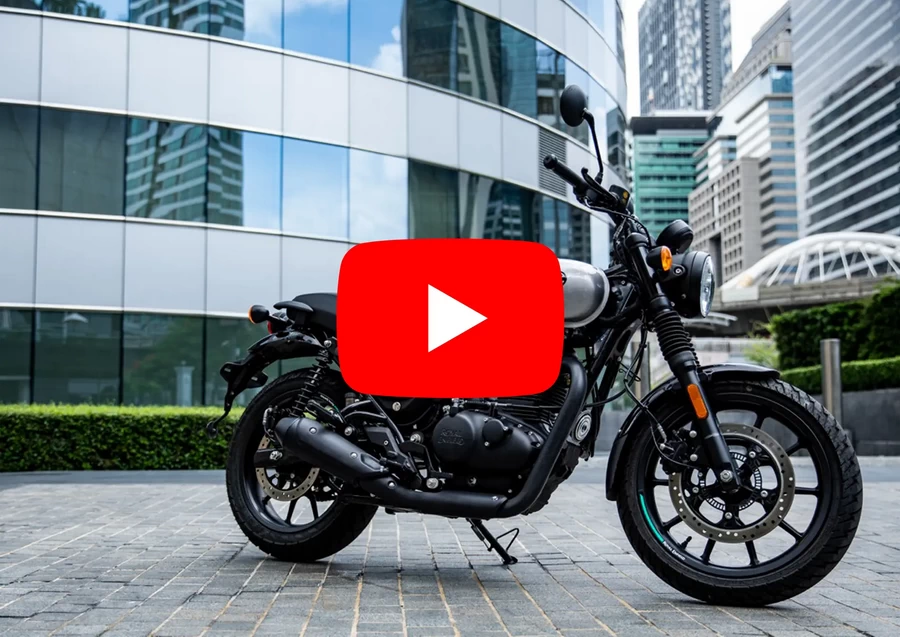
Royal Enfield Hunter 350 Video Review


JoomShopping Download & Support