DESIGN
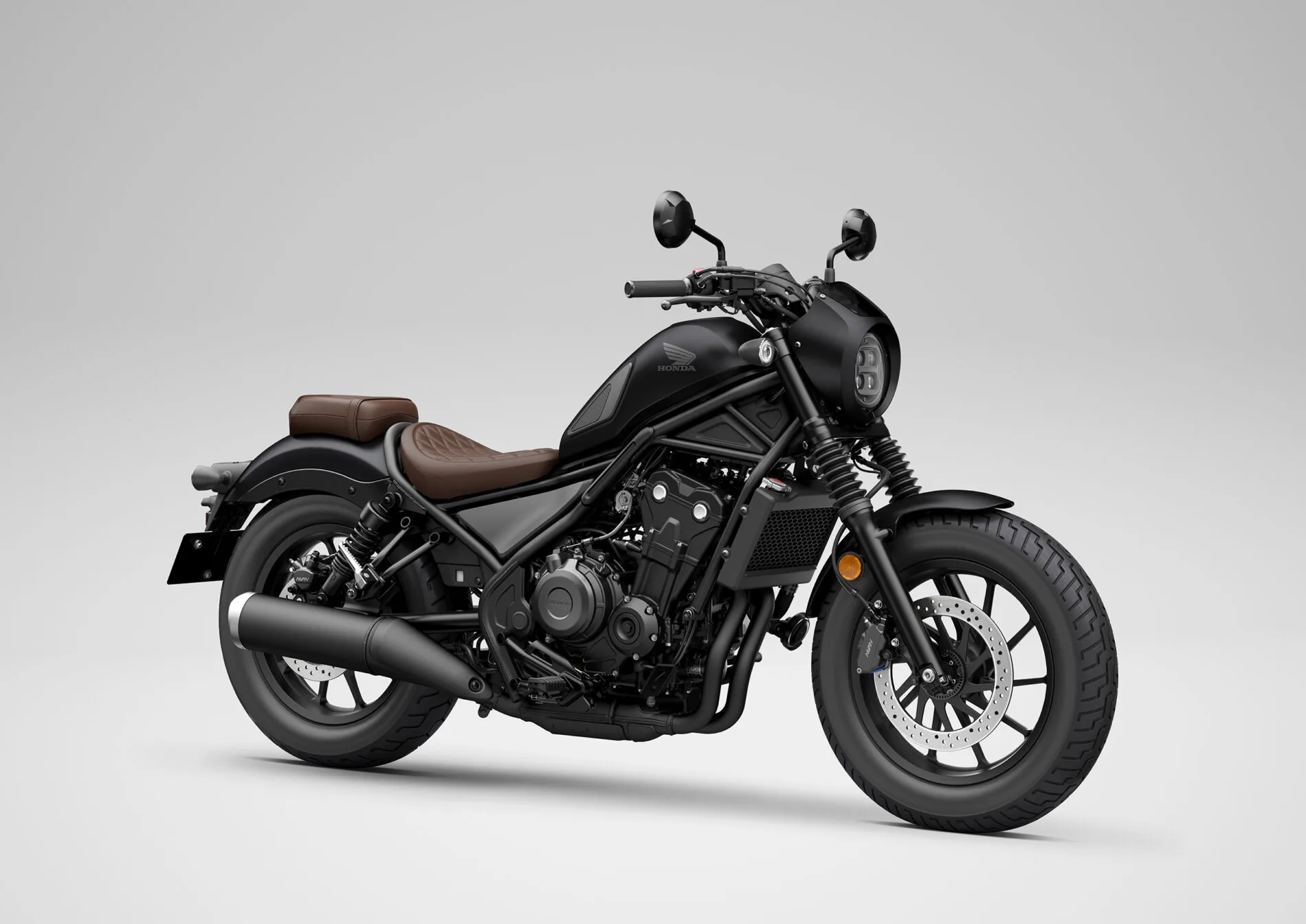
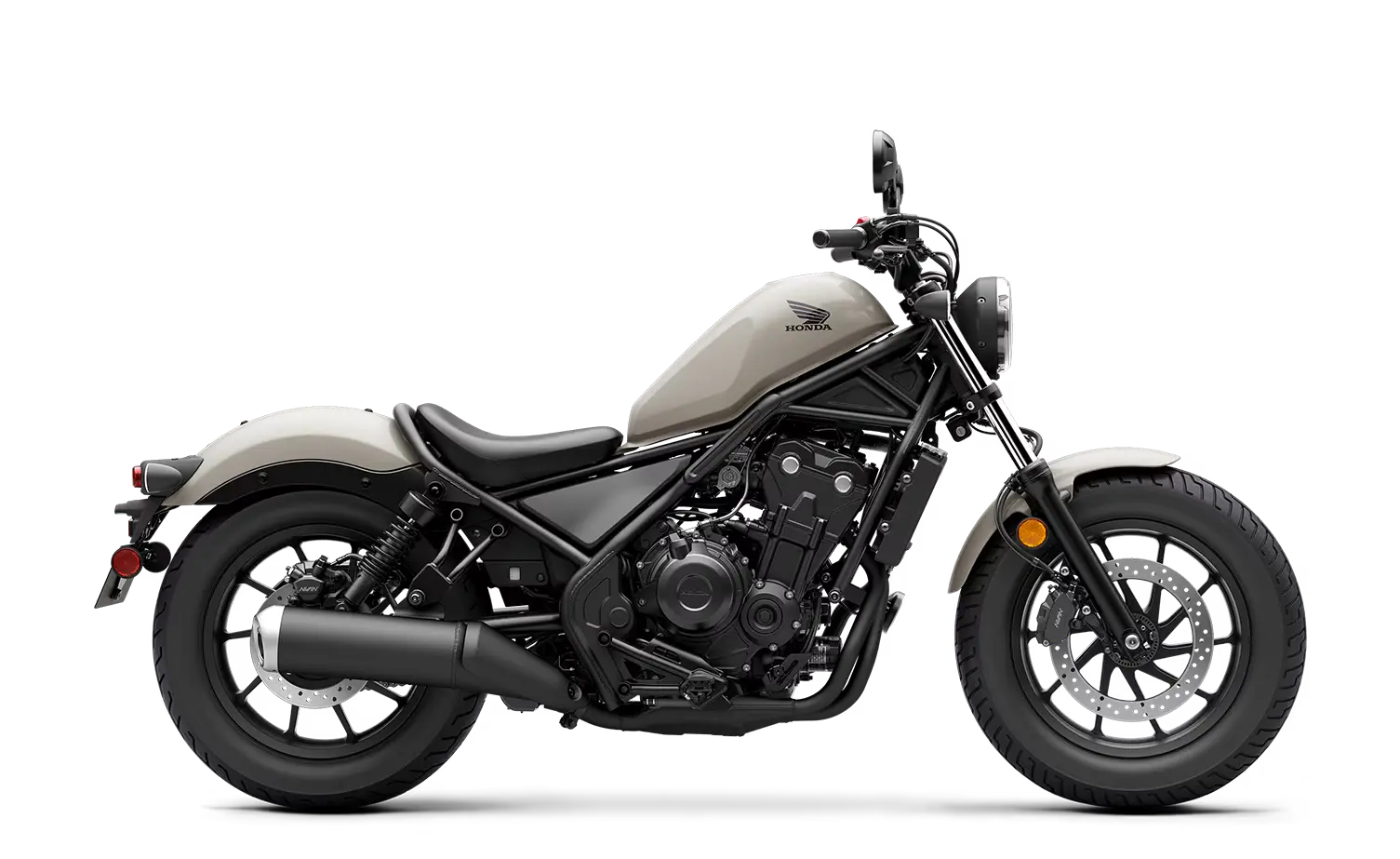
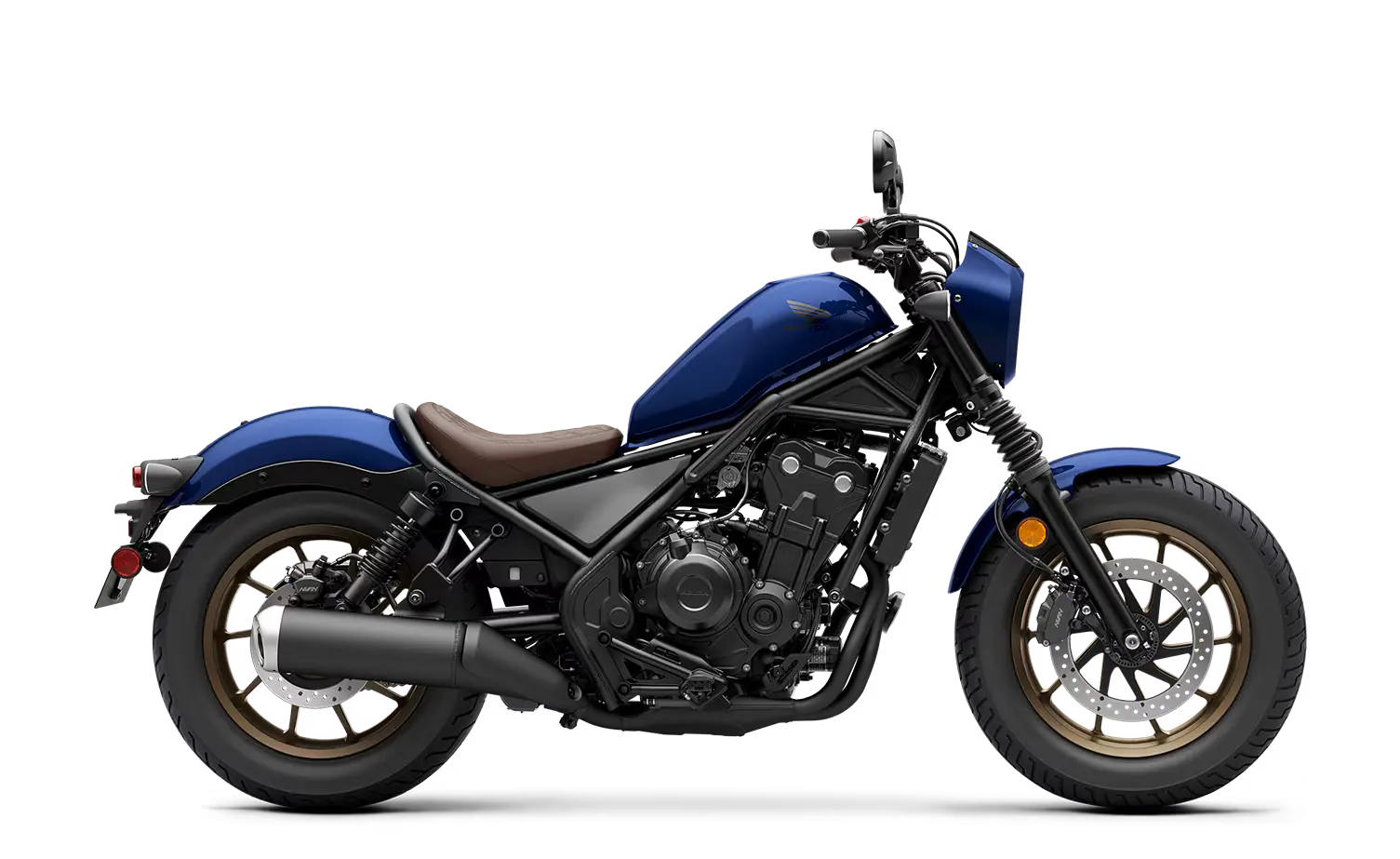
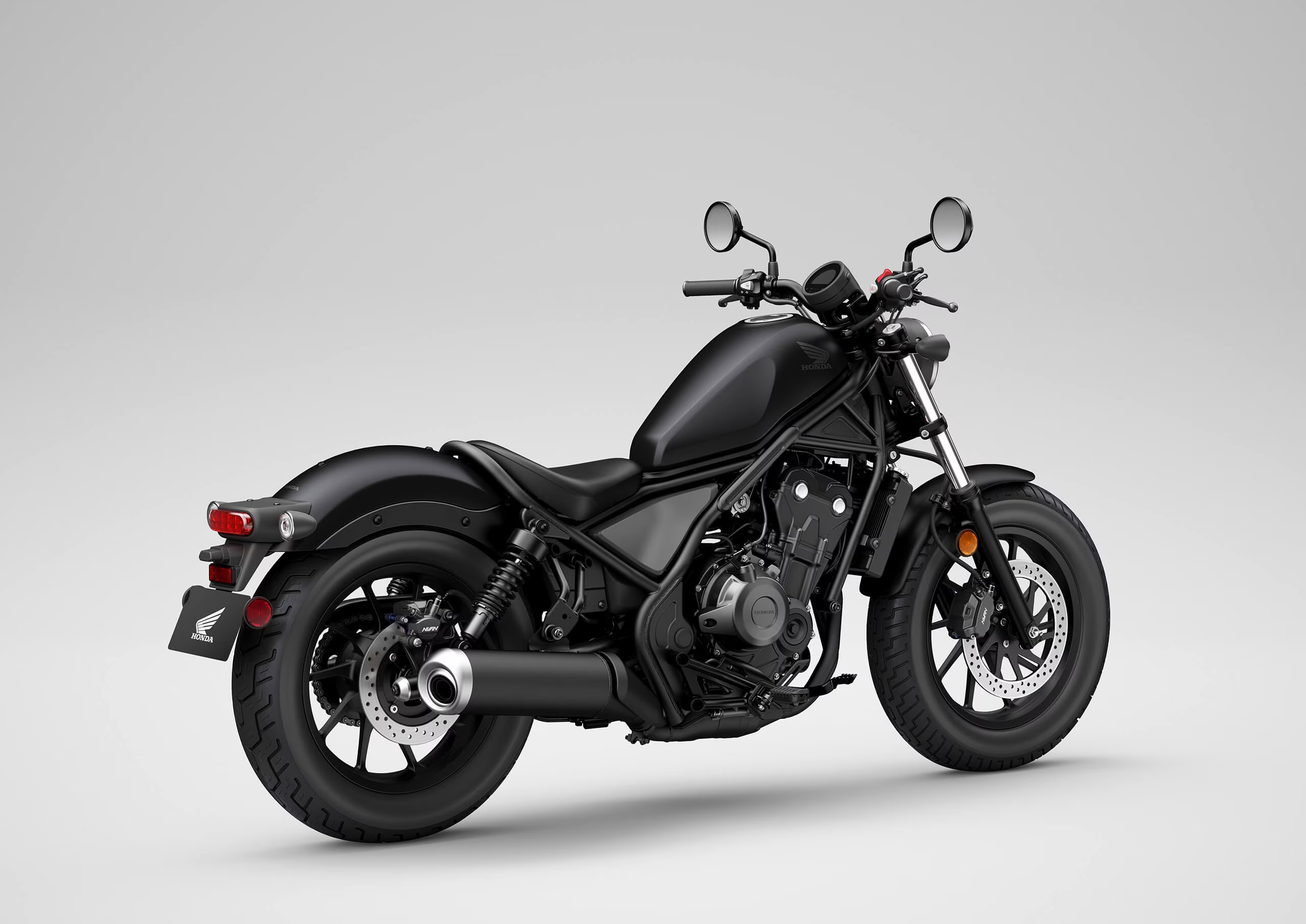
The Honda Rebel 500 boasts a minimalist, stripped-down design that blends classic cruiser aesthetics with modern touches. At first glance, it’s immediately recognizable thanks to its low-slung stance, bobber-inspired silhouette, and blacked-out components that give it a sleek, aggressive look.
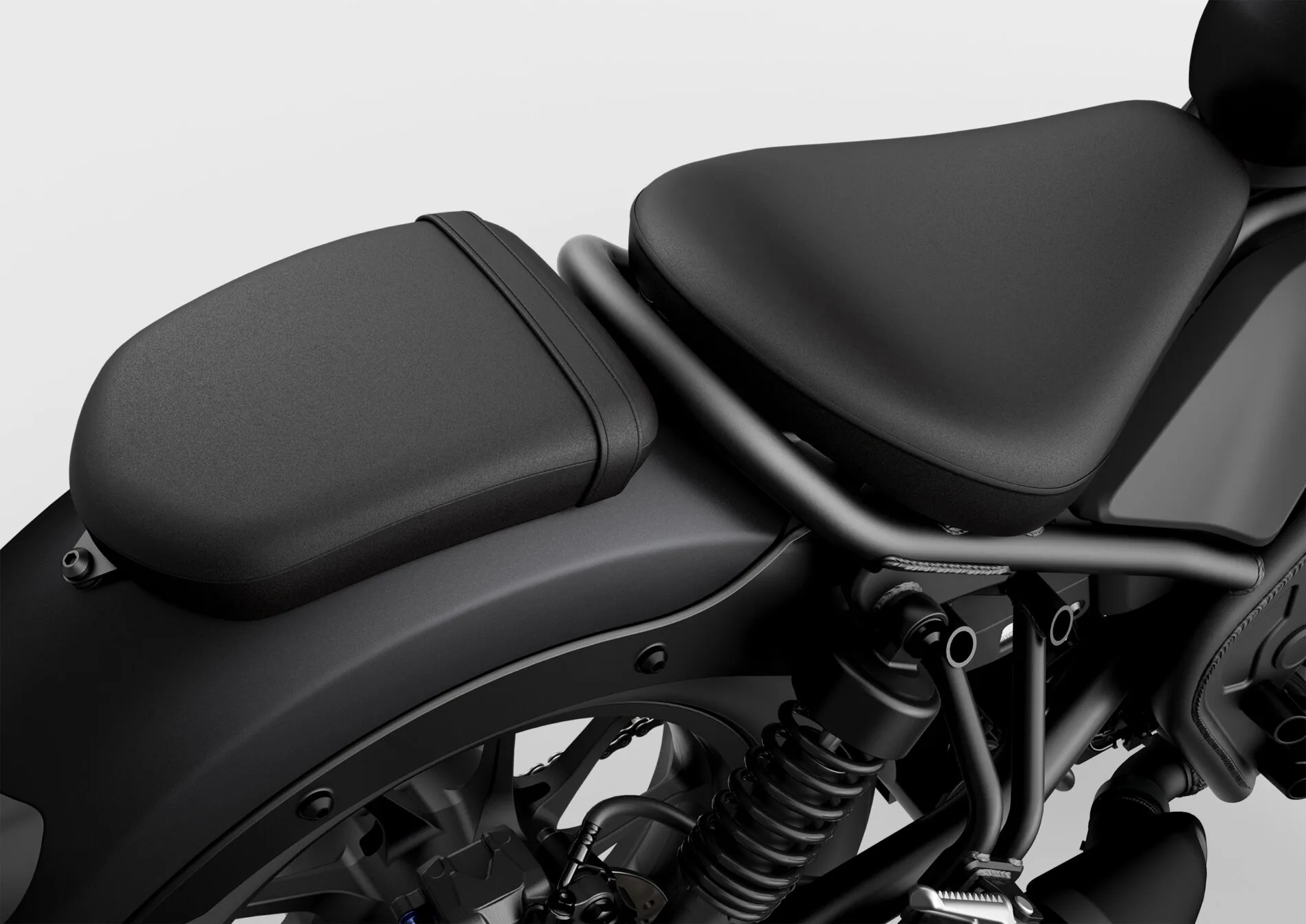
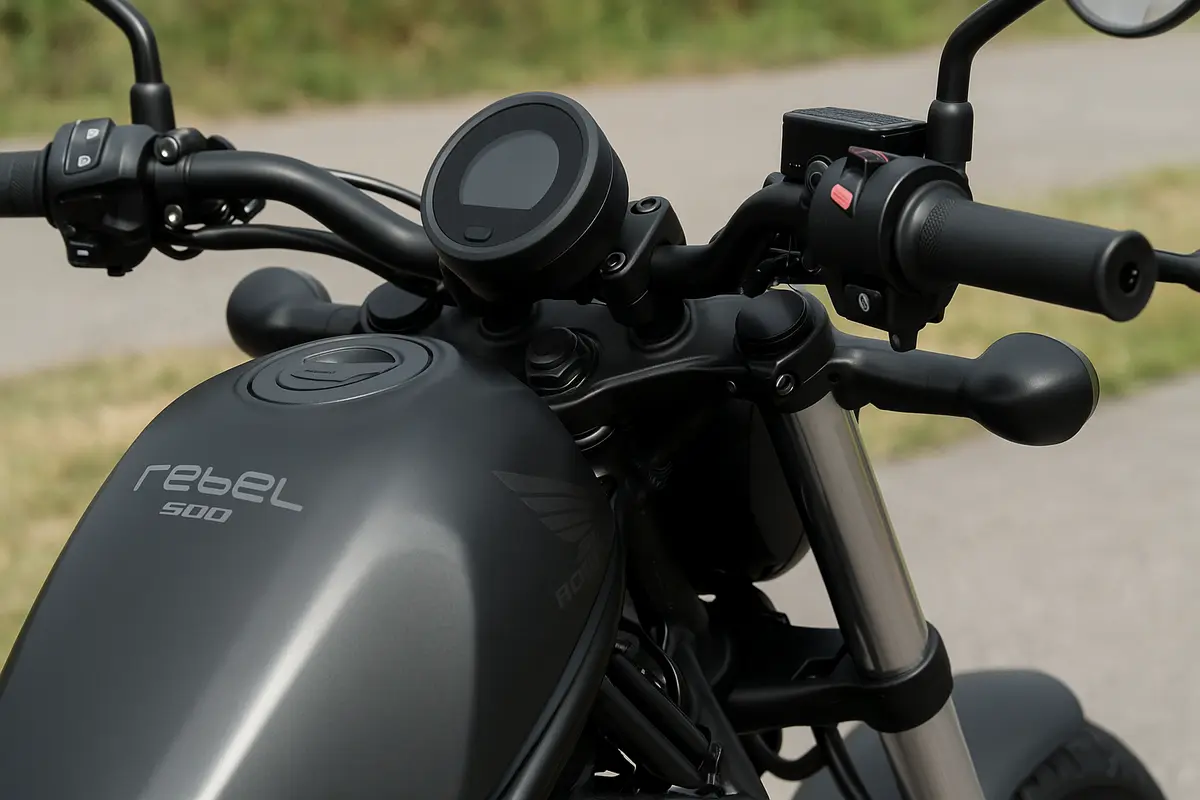
The bike features a low seat height of around 27.2 inches (690 mm), which not only contributes to its laid-back cruiser posture but also makes it accessible for shorter riders. The teardrop-shaped fuel tank — slightly angled and positioned to flow smoothly into the frame — adds to the bike’s vintage charm while maintaining a modern edge.
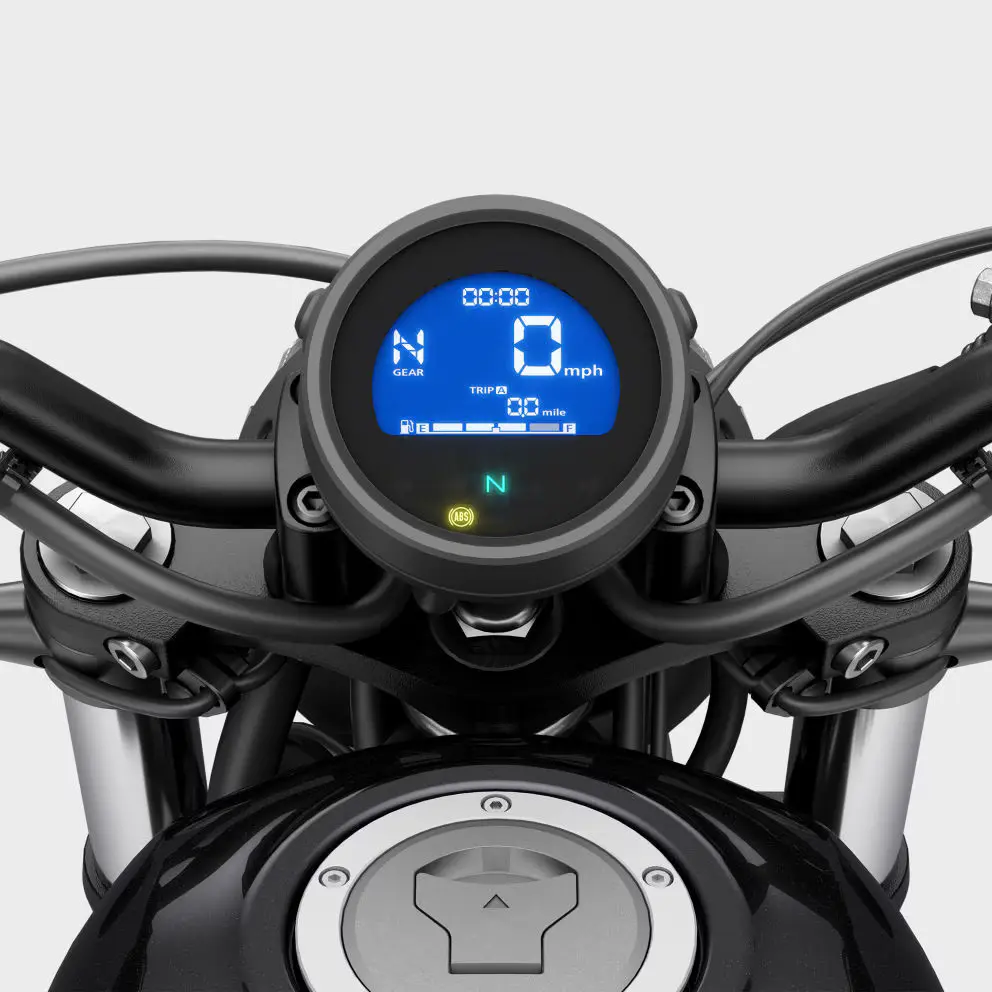
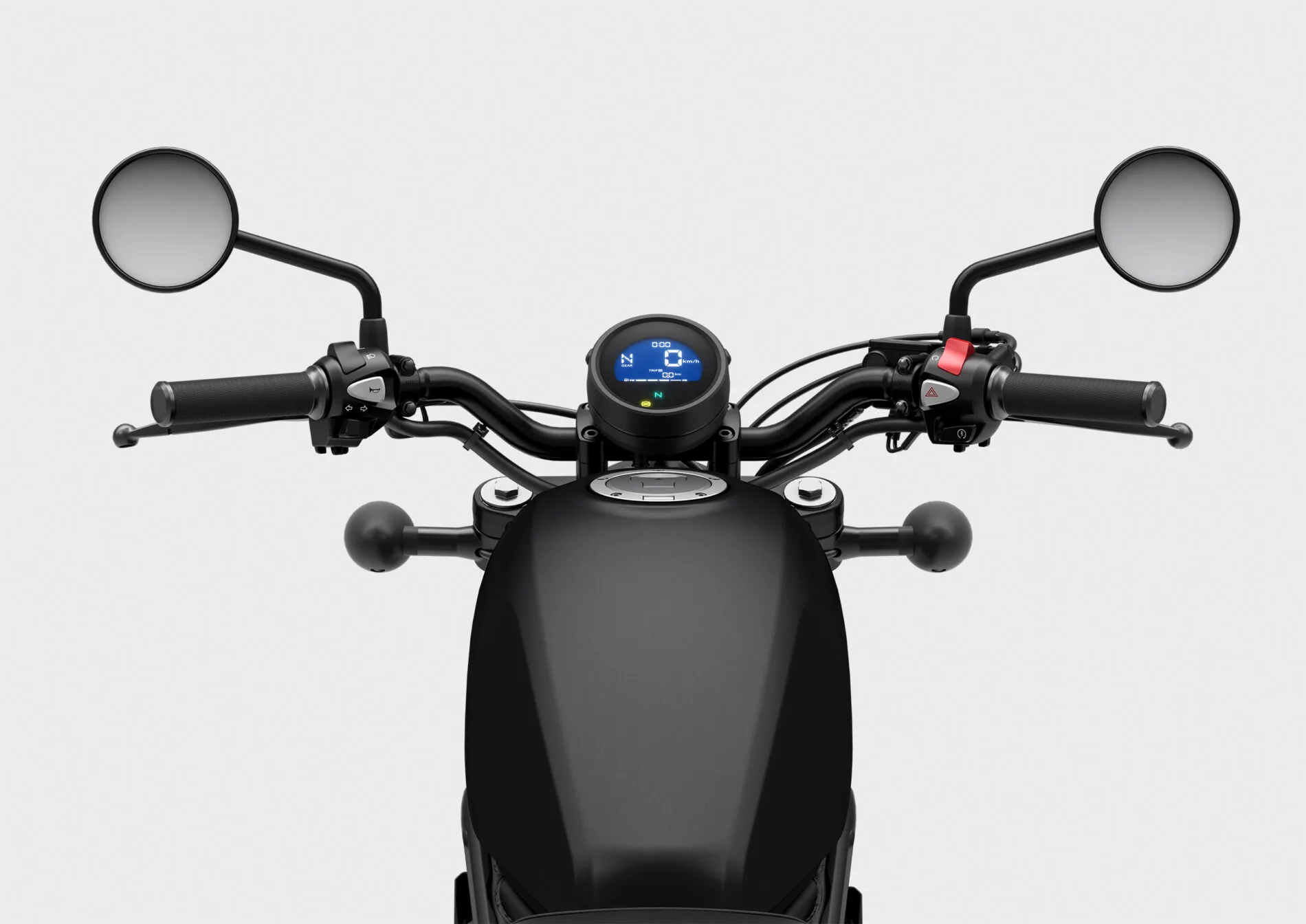
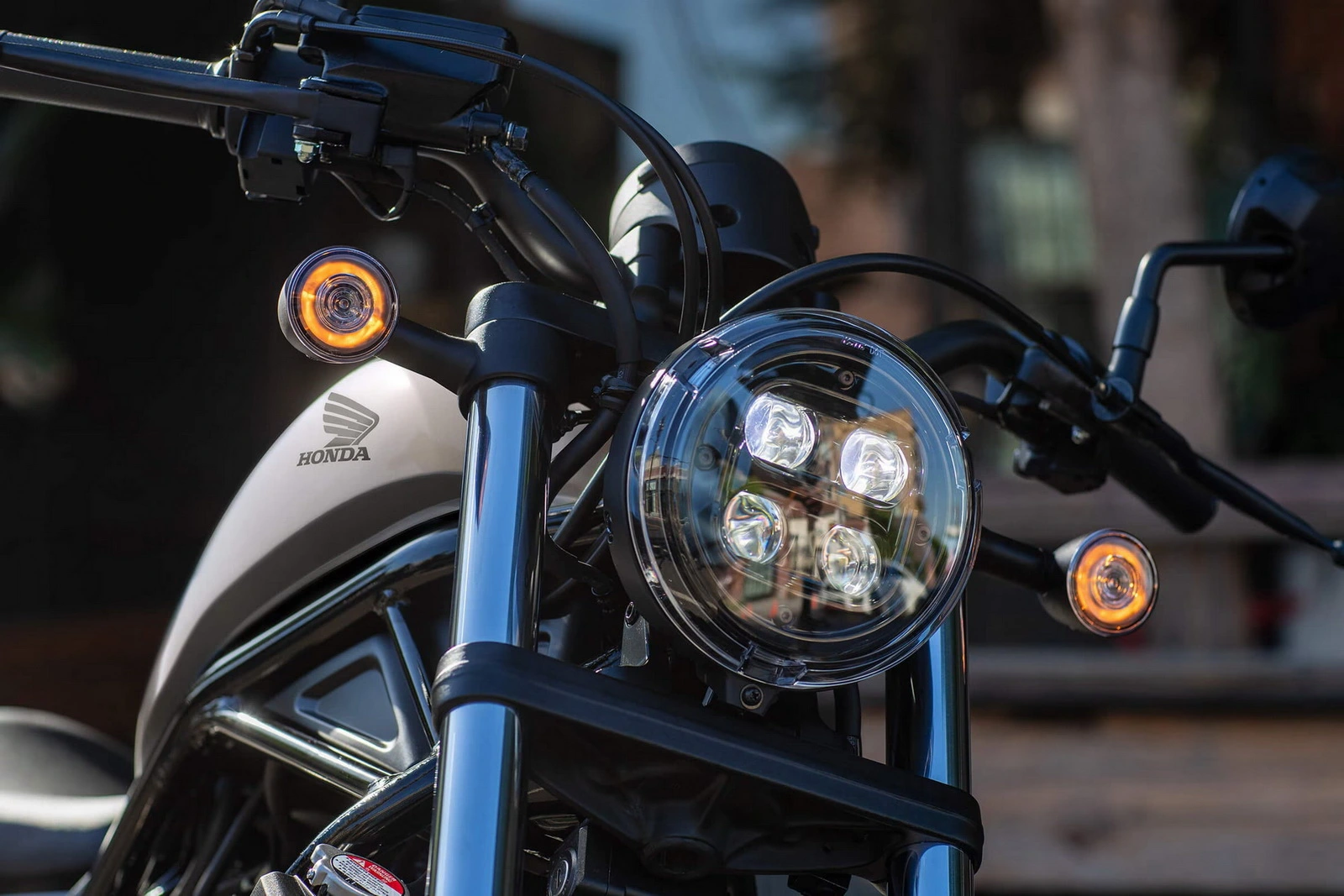
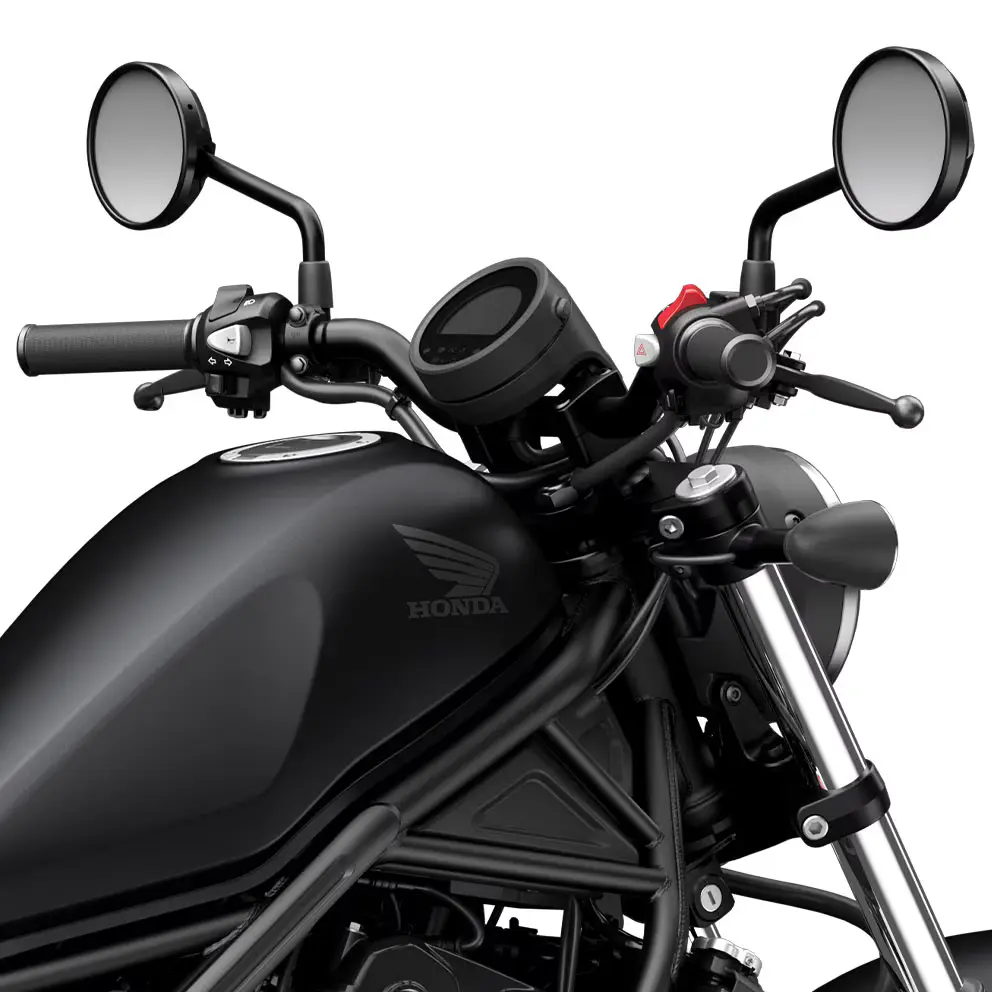
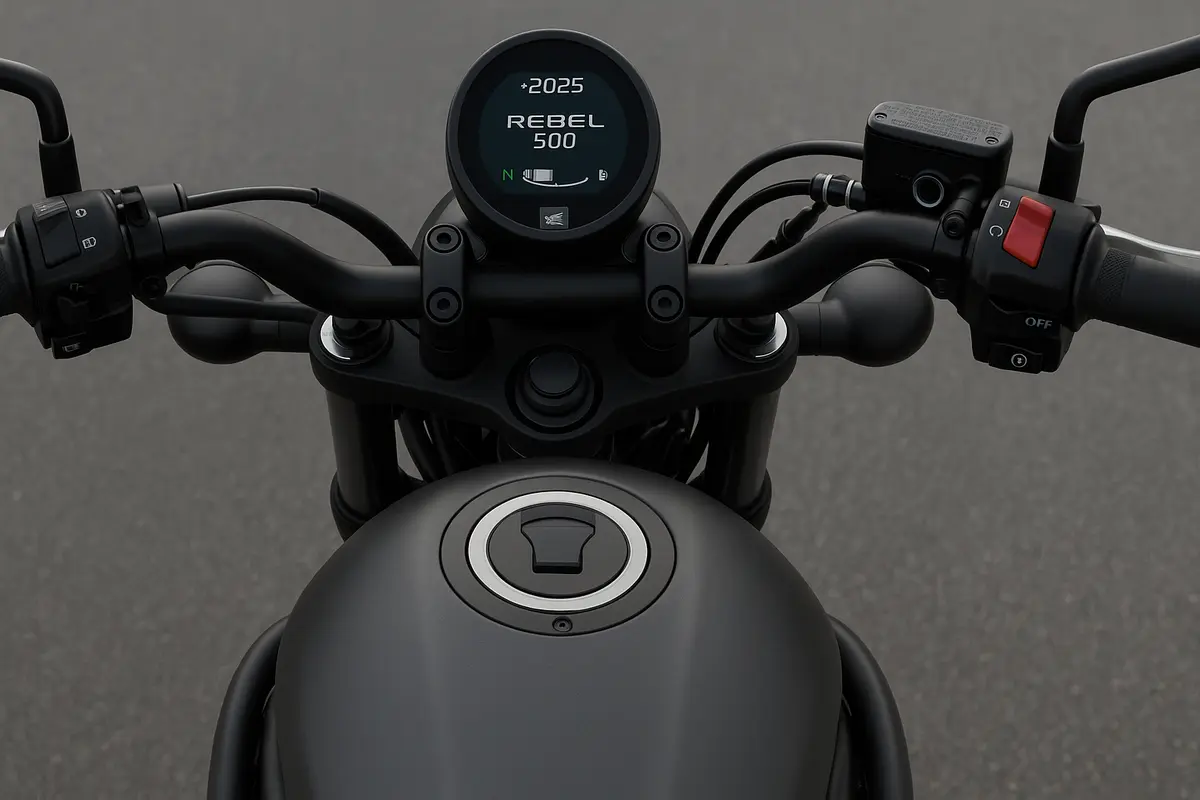
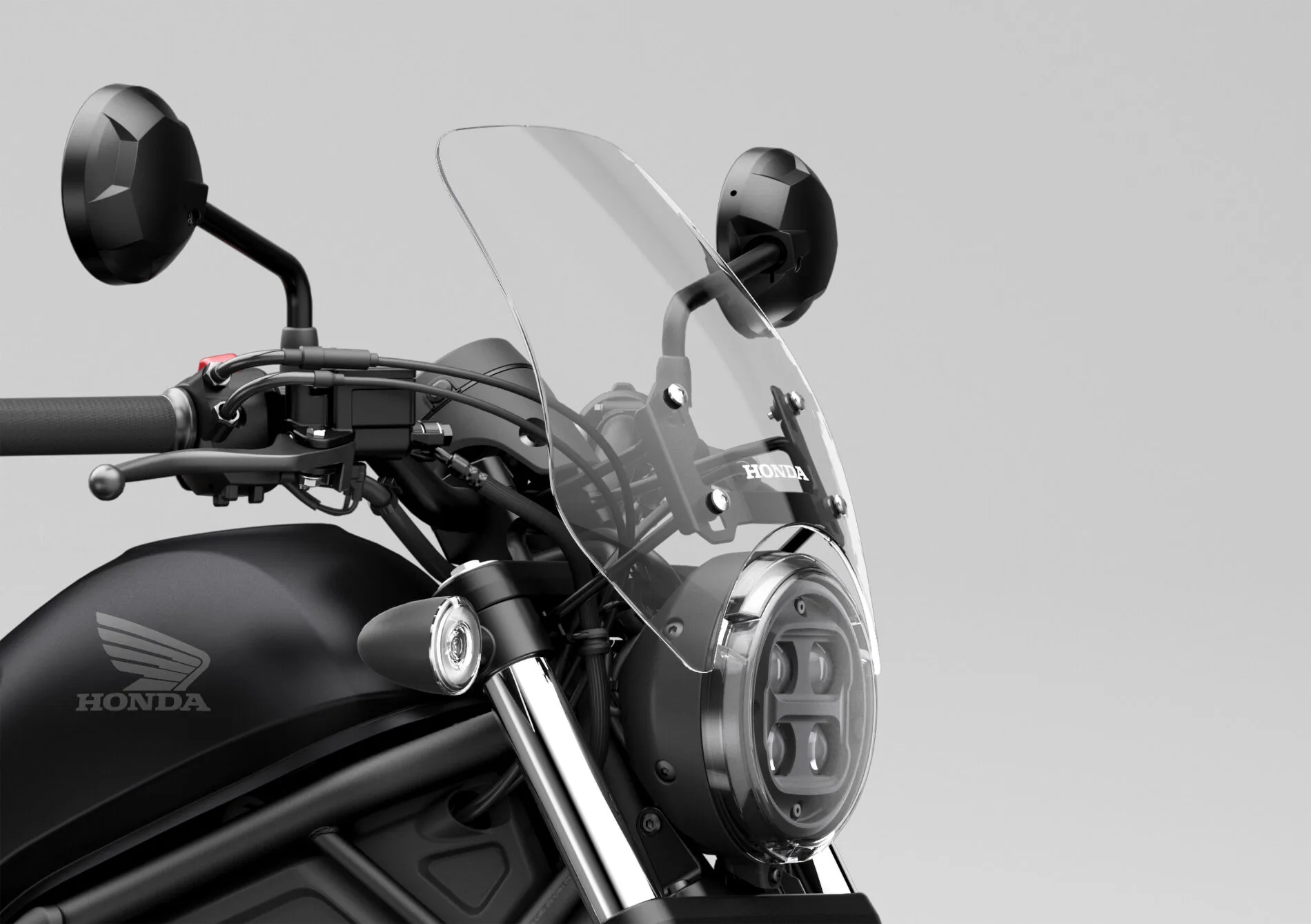
One of the standout elements of the Rebel 500's design is its use of round, retro-style LED lighting, including the headlight, turn signals, and taillight. These lighting features enhance visibility while preserving the bike’s classic appeal. The digital LCD instrument cluster is compact and easy to read, offering essential information without disrupting the clean look of the handlebars.
The blacked-out frame, engine casing, exhaust, and wheels give the bike a dark, cohesive aesthetic that’s both stylish and understated. At the same time, subtle detailing like the exposed rear shock absorbers and minimalist fenders keeps the design raw and authentic.
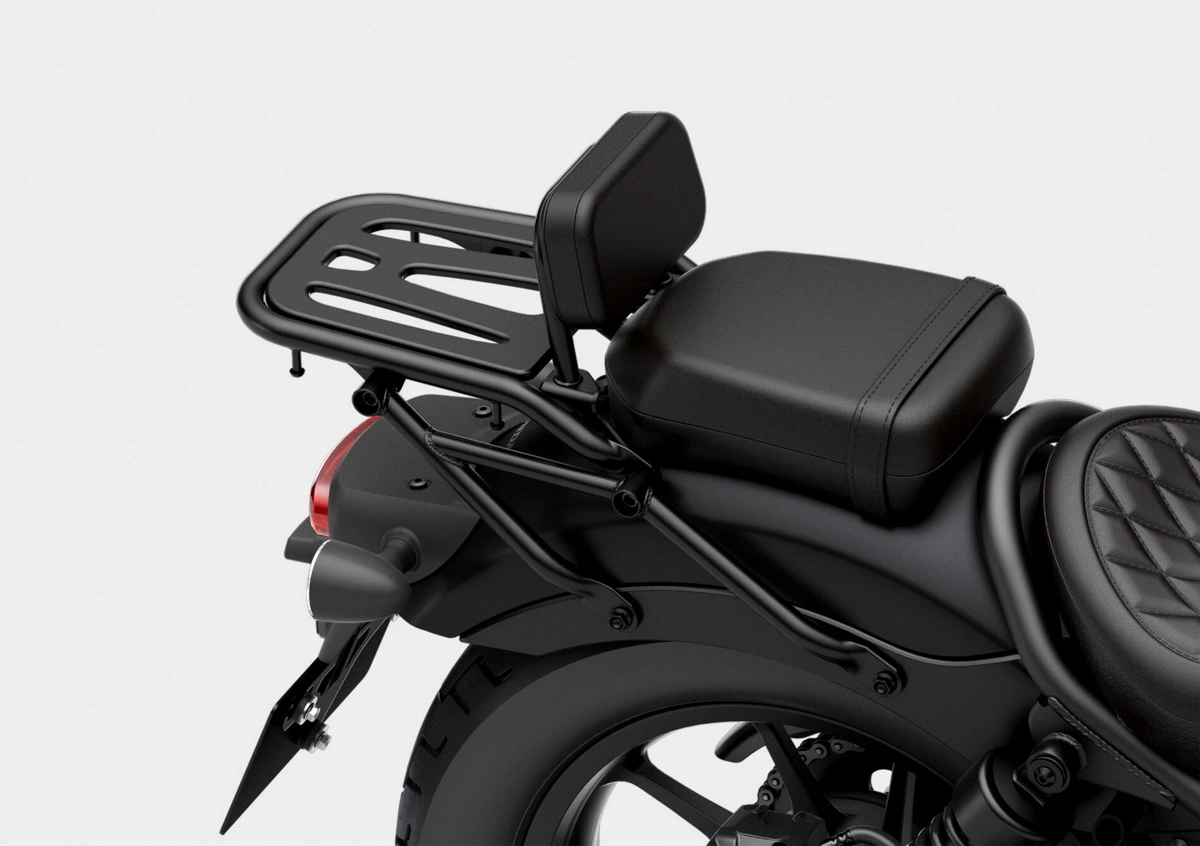
Another highlight is its customization potential. Honda designed the Rebel 500 with personalization in mind, offering a range of accessories and allowing owners to easily modify parts like the seat, handlebars, and lighting to suit their individual style.
In essence, the Rebel 500’s design is a successful fusion of old-school cruiser attitude and modern-day refinement—simple, bold, and unmistakably unique.
| Feature | Specification |
|---|---|
| Overall Length | 2,205 mm (86.8 in) |
| Overall Width | 820 mm (32.3 in) |
| Overall Height | 1,090 mm (42.9 in) |
| Wheelbase | 1,490 mm (58.7 in) |
| Seat Height | 690 mm (27.2 in) |
| Ground Clearance | 125 mm (4.9 in) |
| Curb Weight | 191 kg (421 lbs) |
| Fuel Tank Capacity | 11.2 liters (2.96 gallons) |
| Lighting | Full LED (headlight, taillight, indicators) |
| Instrument Panel | LCD digital display with gear position indicator |
| Frame Type | Steel diamond frame |
| Color Options | Varies by market (typically includes Matte Black, Pearl Smoky Gray, etc.) |
| Wheels | Cast aluminum, black finish |
| Fenders | Minimalist, bobber-style |
| Handlebars | Mid-rise, wide for relaxed control |
| Exhaust | Blacked-out, low-slung exhaust with modern styling |
CHASSIS and HANDLING
The Honda Rebel 500 is engineered around a well-balanced, confidence-inspiring chassis that makes it exceptionally approachable for a wide range of riders—from beginners to more experienced motorcyclists looking for a light, agile cruiser. Its frame, suspension geometry, and overall layout are all designed to create a smooth, stable, and predictable riding experience, whether you're cruising through city streets or winding down country roads.
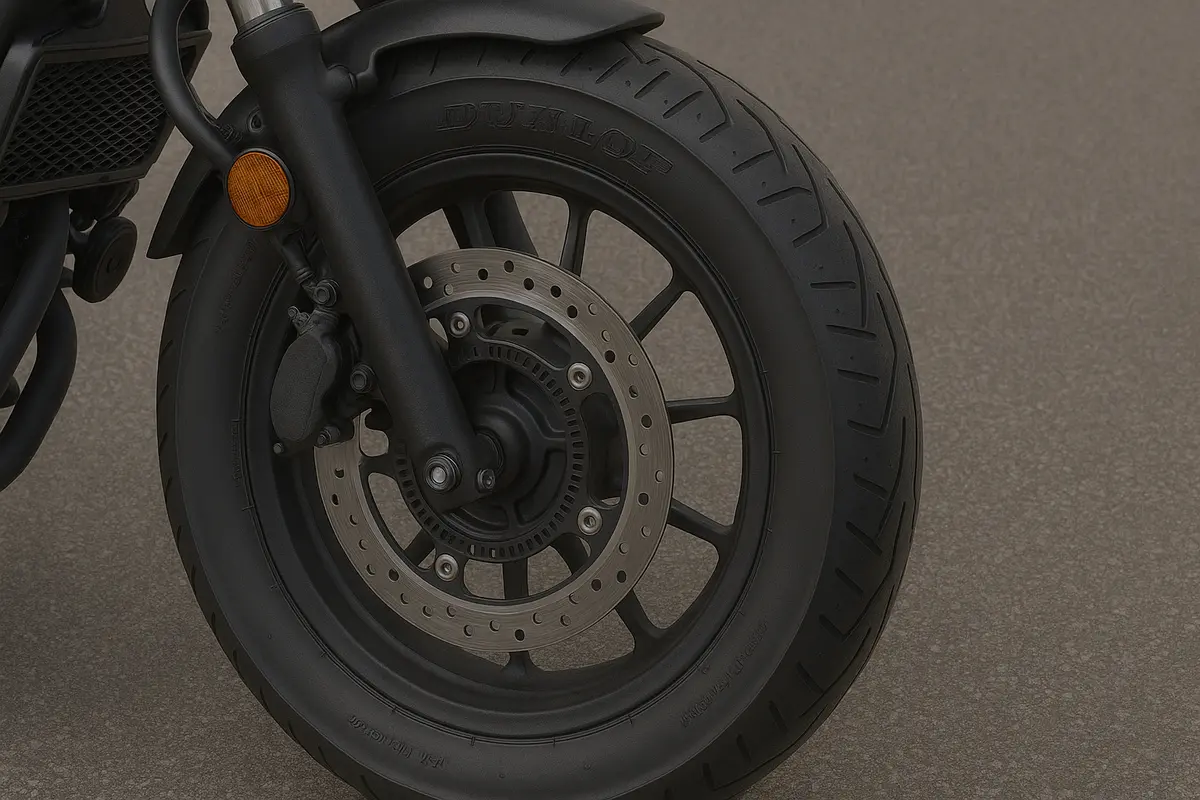
At the heart of the Rebel 500 is a steel diamond-tube frame, designed with both simplicity and strength in mind. The frame is compact and minimalist, helping to reduce overall weight while maintaining rigidity. This translates to a solid and planted feel on the road without being overly stiff or unyielding. The frame design also allows for a low seat height and a narrow midsection, making the bike easy to handle, especially for shorter riders or those new to motorcycling.
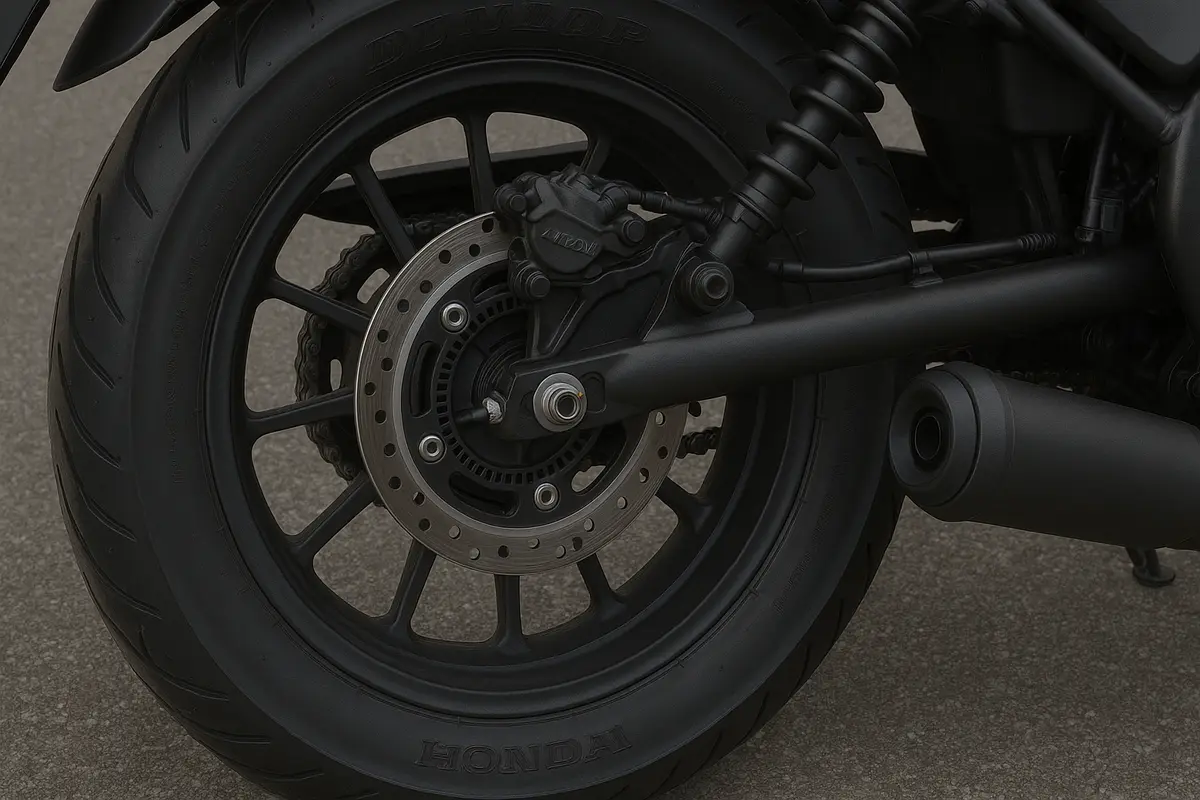
The exposed tubular structure of the frame is not just functional but also contributes to the bike’s raw, bobber-inspired aesthetic. Its blacked-out finish enhances the bike’s modern-retro appearance, while the open triangle under the seat area maintains a clean and classic visual line.
The Rebel 500 features a 41 mm telescopic front fork and dual rear shock absorbers, tuned for everyday comfort and responsive handling. The front suspension offers about 4.8 inches (121 mm) of travel, while the twin rear shocks provide 3.8 inches (96 mm). This combination is optimized to absorb road imperfections without compromising the bike’s cruiser character.
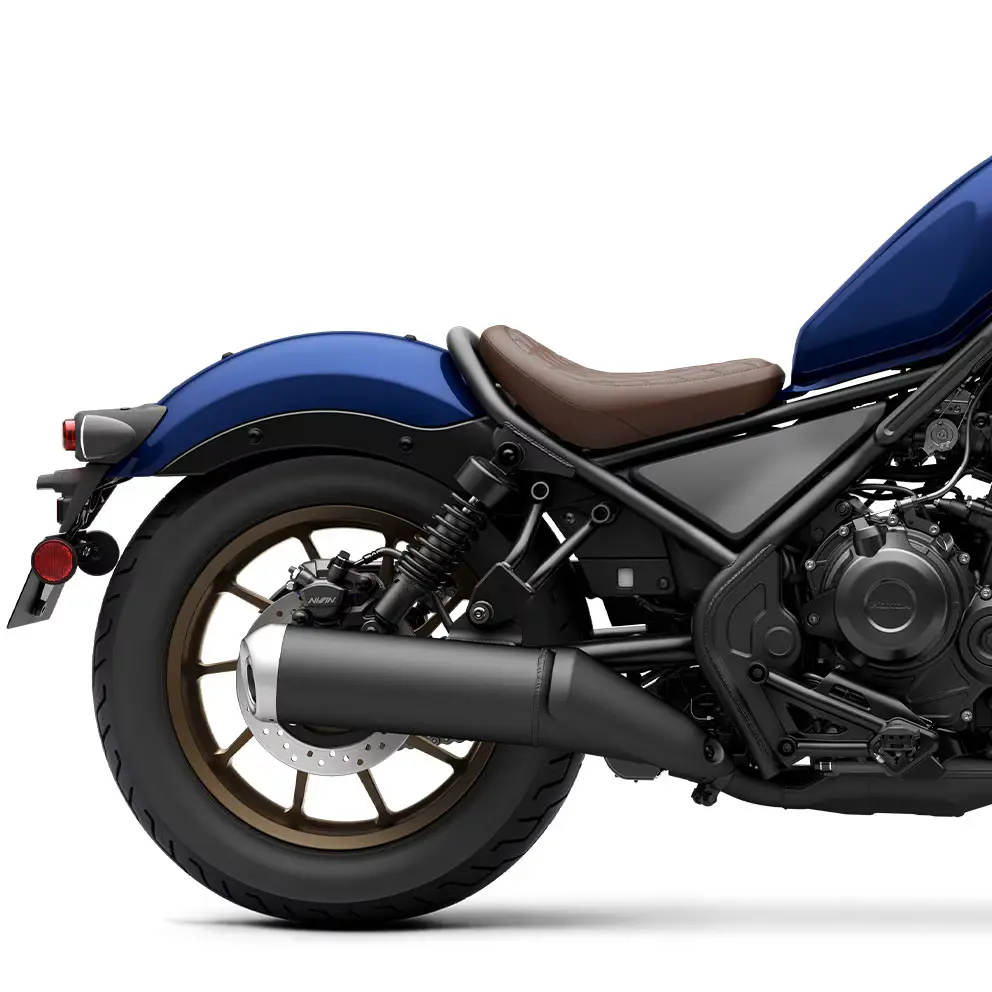
While the suspension is on the softer side—which aligns with its laid-back riding style—it provides a balanced ride that feels comfortable in urban settings and stable on longer journeys. For more spirited riding or rougher terrain, some riders may choose to upgrade the rear shocks, but out of the box, the setup is forgiving and user-friendly.
One of the standout features of the Rebel 500’s handling is its natural and intuitive steering. The bike has a relatively short wheelbase (1,490 mm) and a rake of 28° with a trail of 110 mm, which give it a nimble, agile feel for a cruiser. Cornering is smooth and confidence-inspiring, and the low center of gravity helps the bike stay stable even at lower speeds or when maneuvering in tight spaces.
The wide handlebars provide excellent leverage, allowing riders to steer with minimal effort, which is especially helpful in stop-and-go traffic or while making tight U-turns. Combined with mid-mounted footpegs and a relaxed seating position, the overall ergonomics promote a laid-back yet controlled ride.
The Rebel 500 is equipped with a 296 mm front disc brake with a two-piston caliper and a 240 mm rear disc with a single-piston caliper. The braking feel is progressive and predictable—perfect for riders building confidence. An ABS system is available (standard in many markets), offering additional safety in wet or slippery conditions by preventing wheel lock-up under hard braking.
The bike rides on fat, wide tires—a 130/90-16 in the front and 150/80-16 in the rear. These tires not only enhance the Rebel’s muscular cruiser look but also provide ample surface contact for grip and stability. The rounded tire profile supports smooth turn-in and helps maintain traction throughout cornering, boosting overall rider confidence.
SAFETY SYSTEMS
While the Honda Rebel 500 may appear minimalist in its stripped-down, bobber-inspired design, it integrates several modern safety features that enhance rider confidence and road security. These systems are designed to be subtle yet effective, contributing to a smooth and predictable riding experience without overwhelming new riders or detracting from the pure feel that experienced motorcyclists appreciate.
One of the most important safety features on the Rebel 500 is the optional (or standard, depending on region) Anti-lock Braking System (ABS). This system is available as a factory-equipped feature and plays a crucial role in enhancing braking performance, especially in adverse or emergency conditions.
- How It Works: ABS monitors wheel speed using sensors and automatically modulates brake pressure during hard braking to prevent the wheels from locking up.
- Benefit: This helps the rider maintain control of the motorcycle during sudden stops, particularly on slippery or uneven surfaces such as wet pavement or gravel.
- User Impact: Especially valuable for newer riders, ABS allows for more confident and controlled braking without the fear of skidding or losing stability.
Although not a standalone electronic safety feature, the low center of gravity on the Rebel 500 contributes significantly to overall stability. The low seat height (690 mm / 27.2 in), combined with the weight distribution and compact chassis, makes the bike easier to balance and control, particularly at low speeds or during stop-and-go traffic.
- ▸ Safety Benefit: Easier maneuvering and a reduced likelihood of tip-overs make the bike safer and more accessible for beginners.
The Honda Rebel 500 features a full LED lighting system, which includes the headlight, tail light, turn signals, and license plate light.
- ▸ LED Headlight: Provides a brighter, more focused beam that enhances nighttime visibility and ensures the rider is easily seen by other road users.
- ▸ LED Indicators and Brake Light: Offer quick illumination response and higher visibility, which helps prevent rear-end collisions or lane-change incidents.
- ▸ Design Advantage: These lights not only improve visibility but also contribute to the bike’s modern-retro style.
While not a "system" in the electronic sense, the overall handling characteristics of the Rebel 500 inherently enhance rider safety:
- Neutral steering geometry, low weight (around 191 kg / 421 lbs), and predictable behavior mean the rider is less likely to be caught off guard during turns or while navigating urban environments.
- Wide handlebars and mid-mounted foot controls provide better rider control, especially in emergency swerves or quick directional changes.
The Rebel 500 is equipped with a compact but informative LCD digital instrument display, which includes:
- Speedometer
- Odometer
- Trip meters
- Fuel gauge
- Gear position indicator
- Gear Indicator Benefit: Especially useful for newer riders, knowing which gear you're in at a glance helps avoid stalling, over-revving, or shifting errors that could lead to unsafe situations.
The riding ergonomics of the Rebel 500 are designed to naturally promote safer riding:
- ▸ Low, comfortable seat keeps both feet flat on the ground at stops, improving balance and control.
- ▸ Relaxed riding position with minimal forward lean reduces fatigue and enhances alertness.
- ▸ Accessible handlebar reach ensures that even riders with smaller frames can maintain full control of the bike.
While not standard, Honda and third-party suppliers offer security accessories for the Rebel 500 such as:
- ▸ Engine cutoff switches
- ▸ Disc lock alarms
- ▸ GPS tracking systems. These can help prevent theft and add an extra layer of protection when the bike is parked in public areas.
ENGINE SPECIFICATIONS & PERFORMANCE
At the core of the Honda Rebel 500 lies a responsive, reliable, and surprisingly refined engine that delivers both approachability and excitement. Whether you're a novice rider exploring your first mid-size cruiser or an experienced motorcyclist seeking a stylish yet capable everyday bike, the Rebel 500’s powerplant is engineered to strike the perfect balance between performance, smoothness, and efficiency.
Engine Configuration and Architecture
- Type: Liquid-cooled, 4-stroke, DOHC parallel-twin
- Displacement: 471 cc
- Bore x Stroke: 67.0 mm x 66.8 mm
- Compression Ratio: 10.7:1
The Rebel 500 features a 471cc parallel-twin engine, a proven unit derived from Honda’s popular CB500 series. This engine architecture—two cylinders positioned side by side—offers a compact design that fits perfectly within the Rebel’s minimalist chassis while ensuring a smooth and balanced power delivery.
The dual overhead camshaft (DOHC) setup with four valves per cylinder ensures efficient airflow, contributing to better combustion, more responsive acceleration, and smoother high-rev performance.
Performance and Power Delivery
- ▸ Maximum Power Output: Approx. 47 hp (35 kW) @ 8,500 rpm
- ▸ Maximum Torque: Approx. 43 Nm (31.7 lb-ft) @ 6,000 rpm
The Rebel 500’s engine produces a healthy amount of torque low in the rev range, which means you get strong, usable power without the need to rev the engine too hard. This makes it especially friendly for urban riding and highway cruising alike.
The throttle response is linear and predictable, offering just the right amount of feedback to the rider without being intimidating. Power delivery is smooth across the rev band, with a subtle increase in urgency as you climb toward the redline—perfect for both relaxed riding and the occasional spirited twist of the wrist.
Fuel Injection and Efficiency
- ▸ Fuel System: PGM-FI (Programmed Fuel Injection)
- ▸ Estimated Fuel Economy: Approx. 27–30 km/l (63–70 mpg US)
Honda's PGM-FI system precisely meters fuel delivery based on a range of sensor inputs, ensuring smooth throttle response, consistent performance, and excellent fuel efficiency. The result is a bike that not only performs well but also keeps operating costs low—an important factor for daily riders or those commuting long distances.
The Rebel 500 is known for its fuel-sipping nature, often achieving over 250 km (155+ miles) on a single tank thanks to its 11.2-liter (2.96-gallon) fuel capacity.
Exhaust and Sound Character
The Rebel 500 features a blacked-out, low-mounted exhaust system with a tuned muffler that delivers a deep, throaty rumble. While not overly loud, the engine note is satisfying—giving just enough cruiser character without being intrusive in neighborhoods or on long rides.
The exhaust is designed to be Euro 5-compliant in newer models, minimizing emissions while retaining a pleasing acoustic presence. Its design also contributes to the bike’s sleek, modern-bobber look.
Transmission and Gear Shifting
- ▸ Transmission: 6-speed manual
- ▸ Final Drive: O-ring sealed chain
The engine is mated to a 6-speed gearbox, offering smooth and precise shifts. The gear ratios are well-spaced for a mix of city and highway riding: low gears provide strong acceleration, while higher gears allow for relaxed cruising at lower RPMs.
The clutch feel is light and progressive, ideal for newer riders still mastering clutch control. Combined with a forgiving power curve, the Rebel 500 delivers an easy and enjoyable shifting experience.
Engine Cooling and Longevity
The liquid cooling system ensures the engine maintains optimal operating temperatures even during prolonged city rides or high-speed cruising. This increases reliability, reduces wear on internal components, and contributes to the bike’s overall longevity.
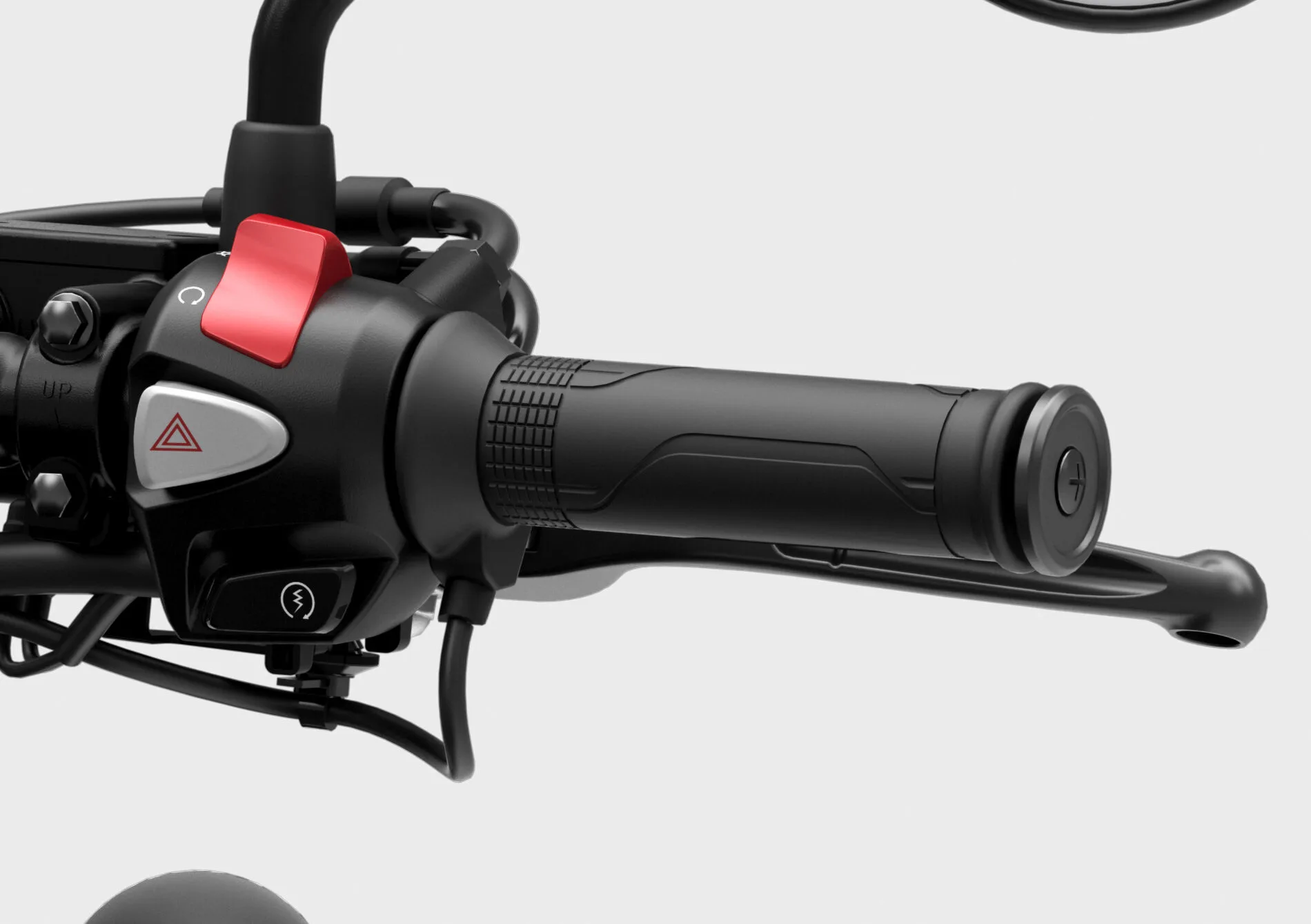
Honda engines are legendary for their durability, and the Rebel 500 is no exception—it's known for requiring minimal maintenance while delivering consistent, dependable performance over the long haul.
The Honda Rebel 500’s engine is a standout in the mid-weight cruiser segment, offering a perfect combination of reliability, efficiency, and accessible performance. With a smooth parallel-twin configuration, fuel-injection, strong low-end torque, and a user-friendly 6-speed gearbox, it provides both new and experienced riders with a satisfying, versatile riding experience.
Whether you're commuting, cruising, or customizing, the Rebel’s powerplant delivers enough punch to keep things engaging without overwhelming the rider. It’s a classic example of Honda’s engineering philosophy: refined simplicity, long-term dependability, and all-around rideability.
| Engine Feature | Specification |
|---|---|
| Engine Type | Liquid-cooled, 4-stroke, DOHC, parallel-twin |
| Displacement | 471 cc |
| Bore x Stroke | 67.0 mm x 66.8 mm |
| Compression Ratio | 10.7:1 |
| Maximum Power Output | Approx. 47 hp (35 kW) @ 8,500 rpm |
| Maximum Torque | Approx. 43 Nm (31.7 lb-ft) @ 6,000 rpm |
| Fuel System | PGM-FI (Programmed Fuel Injection) |
| Ignition Type | Full transistorized |
| Starter | Electric |
| Exhaust | Low-slung, blacked-out exhaust with Euro 5 compliance (latest models) |
| Cooling System | Liquid-cooled |
| Transmission | 6-speed manual |
| Final Drive | O-ring sealed chain |
| Fuel Efficiency | Approx. 27–30 km/l (63–70 mpg US) |
| Engine Sound | Deep, throaty tone with a modern cruiser character |
FUEL CONSUMPTION
Fuel efficiency is one of the key considerations for modern motorcycle riders—especially those who use their bike for daily commuting or long-distance travel. The Honda Rebel 500 has earned a strong reputation not just for its sleek bobber-inspired design and approachable performance, but also for its impressive fuel economy. Whether you’re navigating urban streets or cruising down the highway, the Rebel 500 is engineered to be both powerful and fuel-conscious.
Estimated Fuel Economy:
- ▸ 27 to 30 km/l (kilometers per liter)
- ▸ 63 to 70 mpg (US)
- ▸ 76 to 84 mpg (UK)
These figures place the Rebel 500 among the more fuel-efficient motorcycles in the mid-weight cruiser category. Real-world mileage can vary depending on riding habits, terrain, load, and maintenance, but many riders report consistently reaching or even exceeding 250 kilometers (around 155 miles) on a single tank under moderate riding conditions.
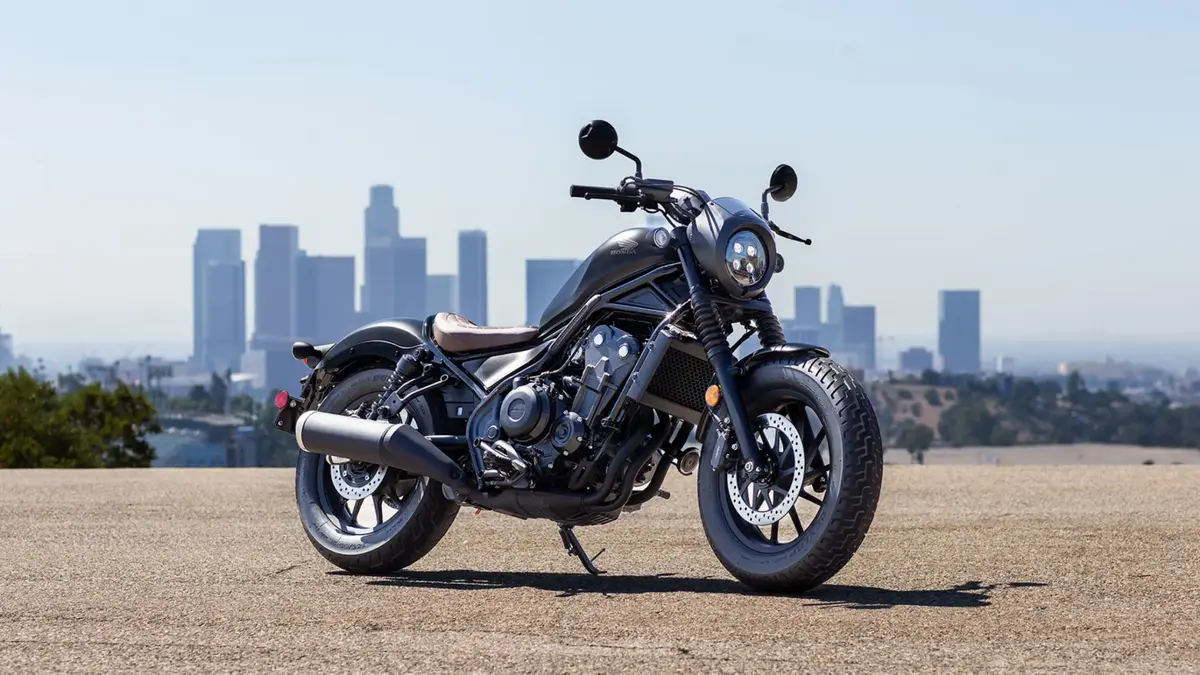
Fuel Tank Capacity and Range
- ▸Fuel Tank Size: 11.2 liters (2.96 US gallons)
- ▸Estimated Riding Range per Tank: ~250–330 km (155–205 miles)
Thanks to its efficient 471cc parallel-twin engine and conservative fuel consumption, the Rebel 500 offers a practical riding range on a full tank. This makes it well-suited for:
- ▸ Urban commuting with fewer fuel stops,
- ▸ Weekend rides without constant refueling,
- ▸ And even longer road trips, especially in areas with accessible gas stations.
The Rebel 500 is equipped with PGM-FI (Programmed Fuel Injection), Honda’s trusted fuel delivery system:
- ▸ It uses multiple sensors to monitor engine parameters in real time (e.g., air intake, throttle position, engine temperature).
- ▸ Based on this data, it adjusts the air-fuel ratio for optimal combustion and minimal waste.
- ▸ This ensures efficient fuel usage across different riding conditions—whether idling in city traffic or cruising steadily on highways.
The result is consistent fuel efficiency, cleaner emissions, and smooth throttle response, all while helping reduce long-term fuel costs.
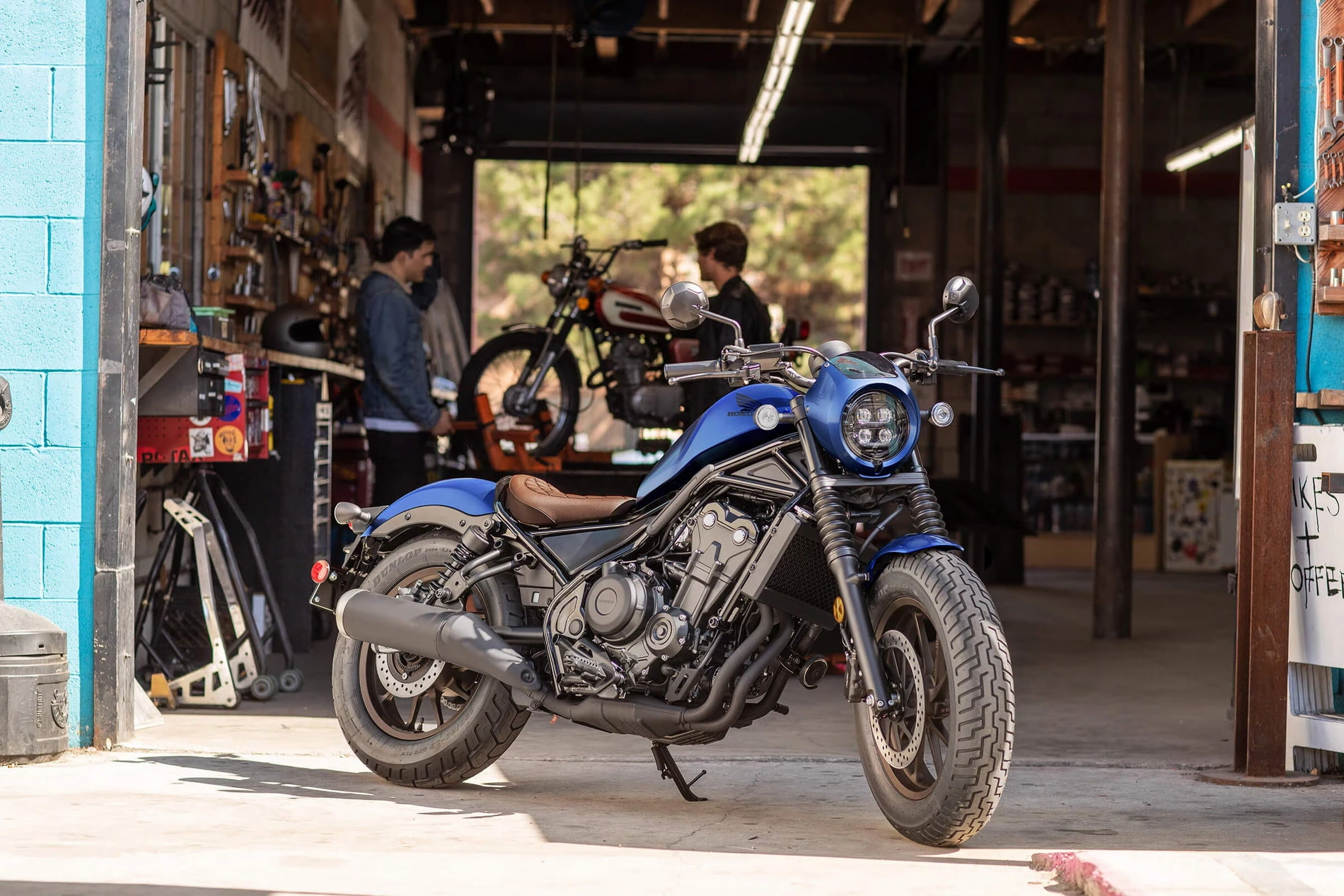
While Honda's engineering makes the Rebel 500 very efficient, fuel economy will still vary based on a few key factors:
| Factor | Effect on Fuel Consumption |
|---|---|
| Riding Style | Aggressive acceleration and frequent braking increase fuel use. |
| Speed and Gear Usage | Riding at high RPMs or low gears at high speeds consumes more fuel. |
| Tire Pressure | Underinflated tires reduce efficiency and increase rolling resistance. |
| Load and Passenger | Carrying heavy cargo or a passenger can slightly reduce efficiency. |
| Wind and Terrain | Headwinds, hills, or frequent elevation changes impact fuel usage. |
| Maintenance | A well-maintained engine, clean air filter, and fresh oil help preserve optimal fuel efficiency. |
Real-World Feedback from Riders
Many Honda Rebel 500 owners praise the bike's low operating cost, and fuel efficiency is a major contributor. On forums and rider communities, it’s not uncommon to find users reporting fuel consumption figures in the 28–32 km/l range (66–75 mpg US) under ideal conditions with moderate speeds and smooth riding.
For daily commuting, this translates to significant savings over time, especially compared to larger-displacement cruisers or sportbikes.
The Honda Rebel 500 stands out as one of the most fuel-efficient mid-size cruisers on the market today. With its lightweight design, advanced fuel injection, and smart engine tuning, it delivers both performance and excellent mileage. Whether you're looking to save money at the pump, reduce your environmental footprint, or simply go further between fill-ups, the Rebel 500 is a reliable, economical choice that doesn’t compromise on style or enjoyment.
PRICING
The Honda Rebel 500 is a popular mid-sized cruiser motorcycle known for its minimalist design, approachable performance, and excellent value. Pricing for the Rebel 500 can vary depending on the region, model year, optional features, dealer fees, taxes, and any custom modifications or accessories. Here's a detailed overview of how its pricing typically breaks down:
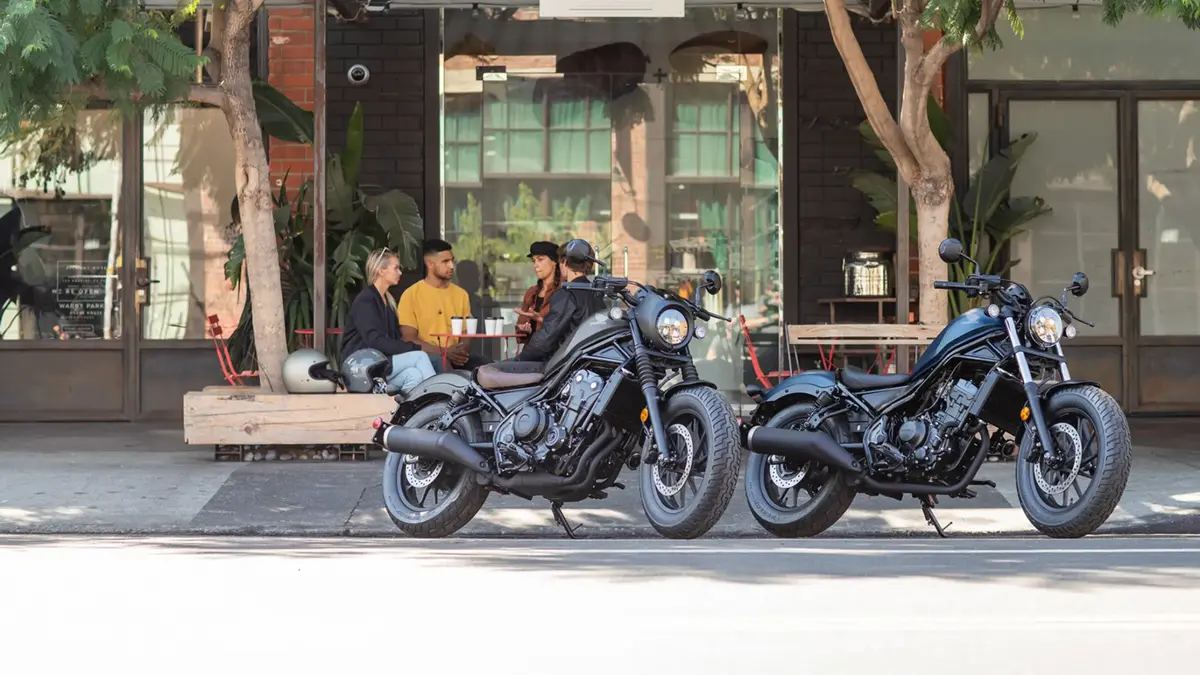
1. Base MSRP (Manufacturer's Suggested Retail Price)
- ▸ The base price of the Honda Rebel 500 in the U.S. for the 2025 model year is around $6,499 – $6,899, depending on the color and ABS configuration.
- ▸ Two main variants:
- ▸ Standard (non-ABS): ~$6,499
- ▸ ABS version: ~$6,899
- ▸ Color choices sometimes impact price slightly depending on market demand.
2. Optional Features and Accessories
Honda and third-party manufacturers offer a wide range of optional equipment, which can add significantly to the total cost:
- ▸ Saddlebags: $300–$600
- ▸ Passenger seat & pegs: $100–$250
- ▸ Windshield: $150–$400
- ▸ LED lighting upgrades, custom exhausts, handlebar swaps: vary widely from $100 up to $1,000+
3. Dealer Fees
- ▸ Freight/Shipping Charge: Typically between $400–$600
- ▸ Assembly/Setup Fee: Around $200–$500
- ▸ Documentation Fee: $100–$300
These are non-negotiable at many dealerships, although some may offer discounts or waive certain fees during promotions.
4. Sales Tax
- ▸ Sales tax depends on state or country laws. In the U.S., this ranges from 0%–10%.
- ▸ Example: In California, a 7.25%–10.25% tax could add $500–$700 to the final price.
5. Registration, Title, and Insurance
- ▸ Registration & title fees: $50–$200 depending on location.
- ▸ Motorcycle insurance: Highly variable, generally $200–$800/year depending on:
- ▸ Age and riding history
- ▸ Coverage type (liability, full coverage)
- ▸ Location
6. Out-the-Door (OTD) Price
The total OTD price typically ends up being $7,500 to $9,000 after all fees, taxes, and optional equipment are included.
7. Used Market Prices
If you're considering a used Rebel 500, prices vary by:
- ▸ Year: Older models (2017–2019) are typically $4,500–$6,000
- ▸ Condition & mileage: Well-kept bikes with low miles command higher prices
- ▸ Modifications: Custom builds may add value or reduce it depending on buyer preferences
| Item | Approximate Cost (USD) |
|---|---|
| Base MSRP (Standard/ABS) | $6,499 / $6,899 |
| Freight & Setup Fees | $600–$1,000 |
| Sales Tax | $500–$700 |
| Accessories (optional) | $200–$1,000+ |
| Registration & Title | $50–$200 |
| Estimated OTD Price | $7,500–$9,000 |
Riding Impressions
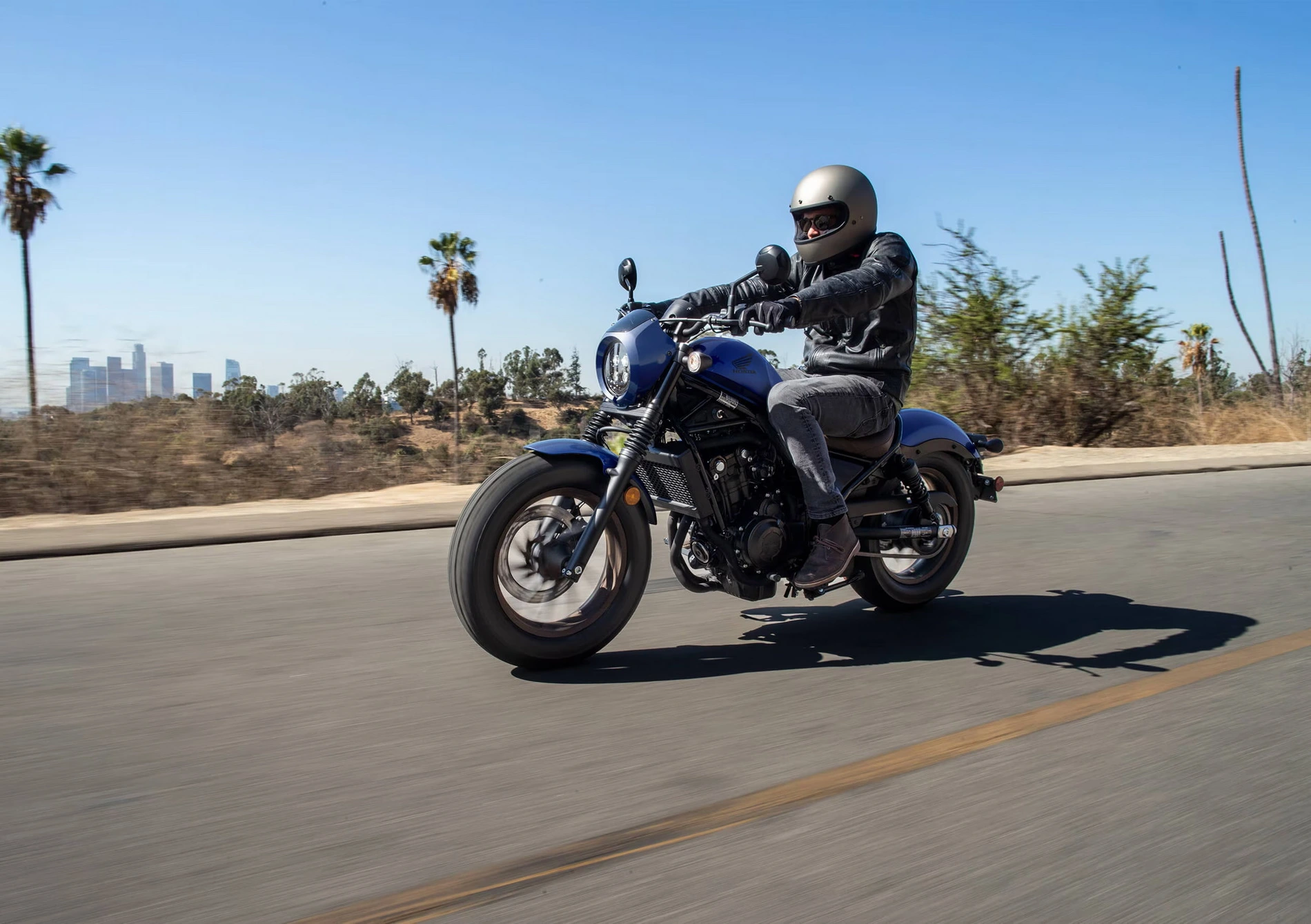
Riding the Honda Rebel 500 is an experience that feels both welcoming and engaging, blending the best qualities of a cruiser with the nimbleness of a lighter middleweight motorcycle. From the moment you swing a leg over the low-slung seat, you’re met with a sense of control and confidence that instantly puts you at ease.
The bike’s approachable ergonomics—particularly its low seat height and relaxed upright posture—make it feel natural even for new riders, while the mid-mounted foot pegs and slightly pulled-back handlebars provide a comfortable, balanced riding stance that encourages long hours in the saddle.
As you ease out the light clutch and roll on the throttle, the 471cc parallel-twin engine responds with a smooth and linear surge of power. It’s not aggressive or overwhelming, but it has just enough punch to feel alive, especially in city traffic or on twisty backroads.
At higher speeds, particularly on the highway, the Rebel 500 remains stable and planted, cruising confidently without excessive vibration or fatigue. It’s a motorcycle that doesn’t demand much from its rider but rewards attentiveness with a satisfying and controllable ride.
Handling is one of the Rebel’s strong suits. Despite its cruiser styling, the bike feels agile and maneuverable, with a lightweight frame that makes weaving through traffic or taking corners feel intuitive. The suspension is tuned for everyday comfort, soaking up bumps and imperfections without feeling overly soft.
The brakes feel reliable and appropriately matched to the bike’s power, delivering confidence under both casual and emergency stops. Riders who opt for the ABS version will appreciate the added security in wet or unpredictable conditions.
The engine remains composed across the rev range, producing a subtle but satisfying exhaust note that hums beneath you without becoming intrusive. It’s the kind of sound that adds to the riding experience without tiring your ears.
In city environments, the Rebel 500 excels thanks to its compact size and easy handling. It’s quick off the line, narrow enough to squeeze through congested streets, and docile enough to never feel like it’s fighting the rider. On longer rides, it holds its own remarkably well.
Though wind protection is minimal, and the stock seat can become a bit firm on extended journeys, these are minor trade-offs considering its overall versatility.
Perhaps the most striking part of the Rebel 500 experience is the way it balances beginner-friendliness with long-term enjoyment. It doesn’t outgrow its rider too quickly, yet it never feels like it’s holding you back.
Whether you're riding for the first time or returning to motorcycling after a break, the Rebel meets you where you are. Its minimalist design and raw, stripped-down aesthetics also contribute to a sense of freedom and individuality, making it feel more like a blank canvas than a mass-produced machine.
Overall, the Honda Rebel 500 offers a riding experience that is calm, composed, and surprisingly dynamic. It’s not just a practical choice—it’s a bike that welcomes you into the world of motorcycling with a sense of style, balance, and genuine rideability that’s hard to find elsewhere in its class.
CONCLUSION
Choosing the Honda Rebel 500 over its competitors ultimately comes down to a unique combination of approachability, reliability, and long-term versatility that few bikes in its class can match. While many mid-sized cruisers offer either bold styling or raw power, the Rebel 500 manages to strike a refined balance that appeals to a wide range of riders.
It’s not just a beginner bike, though it’s certainly beginner-friendly; it’s a thoughtfully engineered machine that grows with the rider, offering enough performance to stay engaging well beyond the learning phase. Compared to similarly priced competitors, the Rebel feels lighter, more manageable, and more refined in its ride quality. And about bike maintenance for beginners at the pro level can be found in our post
Its low seat height and intuitive handling make it one of the easiest cruisers to get comfortable with, especially for those who may be intimidated by heavier or bulkier alternatives.
What truly sets it apart is Honda’s signature build quality and mechanical dependability, which means fewer worries about maintenance issues and a longer lifespan for the machine.
The engine is smooth, responsive, and versatile, delivering power in a way that’s both confidence-inspiring and enjoyable, whether you’re commuting through city traffic or cruising open highways.
Where other bikes in the segment may feel dated or overly styled at the cost of practicality, the Rebel 500 presents a clean, minimalist aesthetic that invites personalization but feels complete right off the showroom floor. Additionally, the aftermarket support and modding potential open the door for riders who want to evolve their bike into something uniquely theirs without starting from scratch.
In a market where many entry-level cruisers are either underpowered, overly heavy, or locked into a very specific design philosophy, the Honda Rebel 500 stands out as a smart, flexible choice. It doesn’t try too hard to be flashy or intimidating—instead, it focuses on delivering a pure, unfiltered riding experience that is rewarding from day one and remains satisfying years down the road.
For those seeking a bike that is as easy to own as it is fun to ride, the Rebel 500 earns its place as a top contender in the modern cruiser segment.
Honda Rebel 500 Maintenance FAQ
1. How often should I service my Honda Rebel 500?
Honda recommends a full service every 8,000 miles (12,800 km) or once a year, whichever comes first. However, regular checks such as oil level, tire pressure, and chain condition should be done more frequently.2. What type of engine oil should I use?
The Honda Rebel 500 requires high-quality 10W-30 motorcycle-specific oil that meets or exceeds API SG or JASO MA standards. Always avoid automotive oils with friction modifiers.3. How often should I change the oil and oil filter?
The oil should typically be changed every 4,000 miles (6,400 km) or 6 months. The oil filter is usually replaced at the same time to ensure proper lubrication and engine longevity.4. How do I maintain the drive chain?
Check the chain tension every 500 miles (800 km). Lubricate it every 300–600 miles (500–1,000 km), especially after riding in rain or dusty conditions. Adjust if slack is outside the recommended range (1.2–1.6 inches / 30–40 mm).5. When should I check and replace the air filter?
Inspect the air filter every 8,000 miles (12,800 km). Replace it if clogged, excessively dirty, or damaged. Riding in dusty environments may require more frequent replacement.6. What about spark plug replacement?
Spark plugs should be inspected at 8,000 miles (12,800 km) and replaced around 16,000 miles (25,600 km), or sooner if performance issues like rough idling or misfires occur.7. How often should I inspect the brakes?
Brake pads and fluid should be inspected regularly—every 4,000 miles (6,400 km) is recommended. Replace brake fluid every 2 years regardless of mileage.8. Do I need to adjust the valve clearance?
Yes, valve clearance should be checked at 16,000 miles (25,600 km) to ensure proper engine performance and efficiency.9. What tire pressure is recommended?
Front tire: 29 psi (200 kPa) Rear tire: 33 psi (230 kPa) when riding solo, 36 psi (250 kPa) with a passenger.10. How do I keep my Honda Rebel 500 in top shape for long-term use?
Regular cleaning, chain care, timely oil changes, battery maintenance, and seasonal storage preparation (fuel stabilizer, covered parking) are key to keeping your Rebel 500 reliable for years.
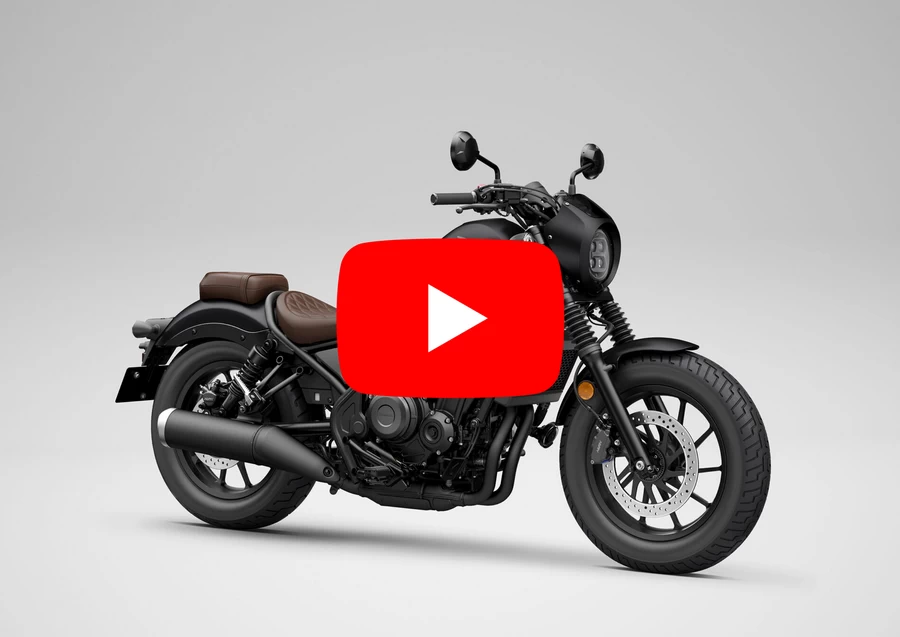
Honda Rebel 500 Full Review - Is it Trash or Terrific?


JoomShopping Download & Support